Transcription
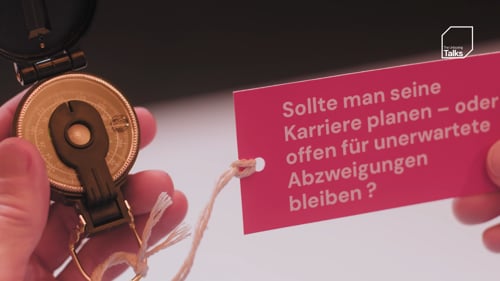
ADAPTATION AS A FORM OF SURVIVAL I'm going to pick something blindly."How has being open to new ideas led to the success of mission-free local public transport?" A fascinating topic,local public transport refers to buses running on fixed routes,which for the past decades, or even centuries,were powered by diesel or gas engines.
And,the last five years of my career were marked by the change in the local public transport sector,from diesel engines to emission-free propulsion.
In other words,to battery-powered engines or to hydrogen-powered solutions.
It was an incredibly exciting period. Why?Because it was practically a new beginning for our company.
We were market leaders with diesel buses.Suddenly, electric buses appeared, and new competitors emerged who,at first, seemed to be able to develop faster since they were more experienced in the field.
It was incredibly stimulating for me,particularly because it was a completely unknown field.
I learned so much in those last five years about propulsion technology, and we, as a company,grew enormously.
Even though it was a huge challenge, we soon realized that we could go beyond just selling hardware,in other words, not just being the supplier of a bus that can run.
We evolved into providers of transport services and solutions for our clients.
These transport services included: charging infrastructure for the vehicles,charge management, and route planning.
We also carried out turnkey projects.For public transport companies, we didn't just supply the hardware,we also executed works at their facilities,together with construction companies,to set up charging points and build them to establish the vehicle route plans.
So, we reached the top by also handling turnkey projects.
Thanks to this development, the step towards providing both transport services and hardware,we were able to gain an advantage over the competition.
That sounds like a huge organizational transformation.
What was the biggest challenge?The truth is, it was an immense transformation of the organization.
We had to put it this way: the technology had completely changed.
That meant all our development had to adapt to the new technology,production staff had to update their skills,sales teams had a lot to learn,and those working in aftersales, service, and vehicle repair also had a lot to learn about.
It was a huge challenge, an incredibly exciting time,but also a time when we noticed a significant change in the profile of employees,in their overall mindset.
Naturally, some skeptics would say:"Come on, let's stick with the old engines.
The new one isn't any good, just leave it as it is." Those people were left behind, in a way. And then,there were those who said: "Absolutely, we're open to whatever comes next." It was a real opportunity to learn something new and then achieve success in this new sector of emission-free vehicles as the market leader in Germany.