Transcription
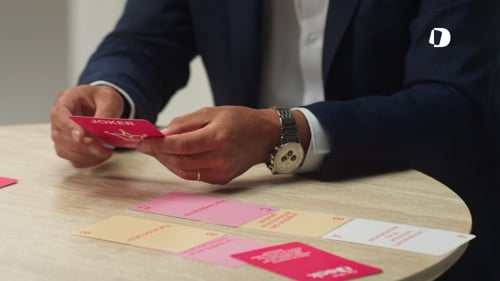
Question number 1: in a critical moment, whether in a cockpit or leading a team, what really makes the difference between a good and a bad decision?
A: technical training and automatic responses.B: emotion management under pressure.
C: the quality of communication within the team.D: the Joker.
Well, this one's a bit tough, because all three are very relevant, in my opinion.
But I'll go with C: the quality of communication within the team.
All of them are interesting, but I'm choosing answer B.
So, I went with C — the quality of communication within the team — because I think it's a very inclusive card.
And regardless of your level of seniority and how well you've developed your automatic responses, if you have good communication and good trust, you'll still manage to solve problems.
There's another really interesting thing I also link to communication:the power of being able to speak up freely, even in situations where you've made a mistake.
I think that when it comes to communication, when you have a team that has built a healthy, responsible, and inclusive communication dynamic,you make room for mistakes.
And knowing how to communicate in a crisis, whether you lack knowledge or have made an error, will allow you to take control of your whole environment and resolve a problem that you might not have otherwise been able to.
But I know you chose a different card and I'm very curious to hear what you have to say.
What you're saying is very interesting, particularly on the dimension of error,because errare humanum est.
And so, that means that when we acknowledge error,we put it back at the heart of the system — we put the human back at the heart of the system.
And that is really what we learned a great deal from when developing what we call Threat and Error Management in aviation.
Why did I choose B?Because indeed, everything is true — there are no wrong answers.
Because for me, it's something of the root cause.Emotion management under pressure — for me, it calls on the notion of cognitive biases.
How do you work around cognitive biases, especially under pressure?
Ultimately, we are human beings and we have automatic behaviors that need to be reshaped through training — new, adapted automatic responses.
But those automatic behaviors are sometimes not well-suited.
One human cognitive bias is also to consider that difference is a threat.
And so, when I perceive someone who is different from me,my tendency is to distance myself from them, or even enter into conflict with them,because their worldview doesn't match mine.
And since I believe my worldview is the truth, I enter into conflict.
And so I degrade collective intelligence, etc.So that's the first cognitive bias — the cognitive bias intrinsic to being human.
We also call them drivers.They're often labels we've stuck on ourselves or had stuck on us during childhood that lead us to have automatic behaviors.
There are five of them — there's a model that describes them.
I call them the self-esteem pilots.It's as if someone else were flying for us, making us follow a trajectory we wouldn't have chosen ourselves.
There's: be perfect, be strong, hurry up,try hard, and please others.
And when a driver is too strong, it leads us to have behaviors that are not well-suited.
So for me, the management dimension means understanding that these cognitive biases degrade our ability to adapt to the situation — whether with the team, the situation, our procedures, etc.
And so, what are we going to put in place to work around them?
Question two.As a pilot or manager, how do you develop emotional and adaptive intelligence in a high-pressure environment?