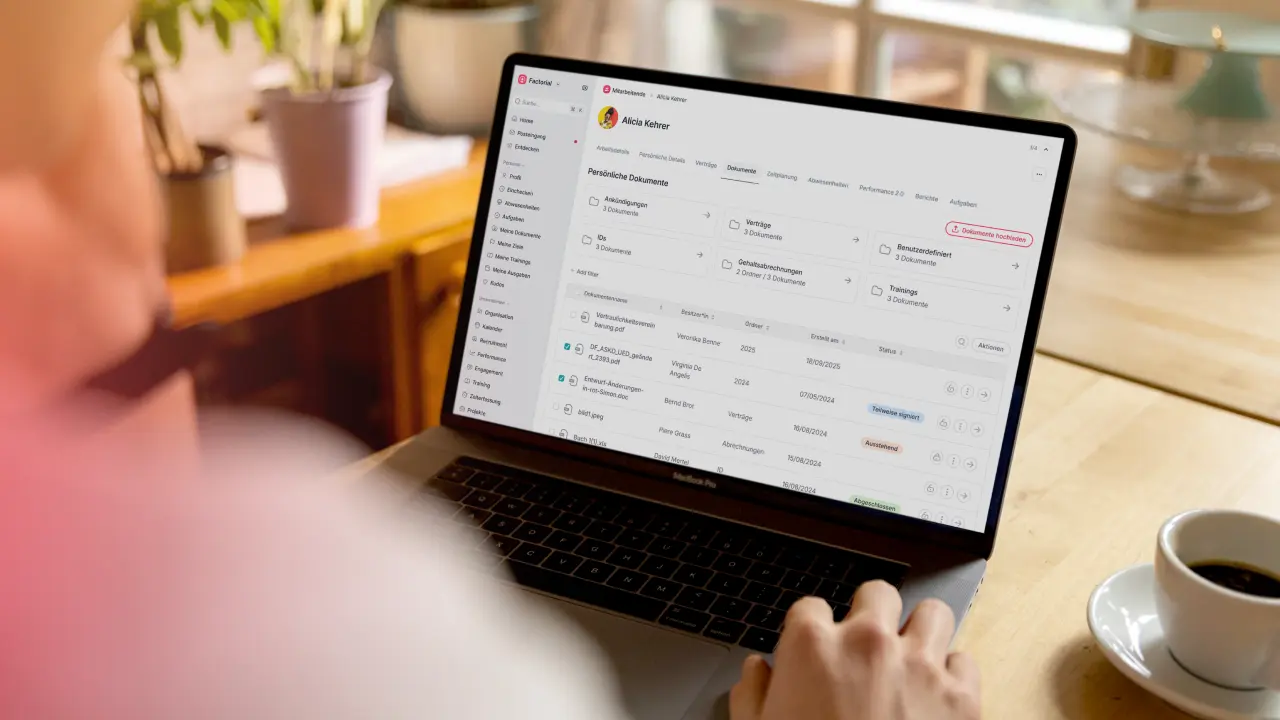
Italy’s business world is changing fast. From stricter compliance rules to the rise of hybrid work, companies across the country are rethinking how they manage their people. The best HR software in Italy can make all the difference, helping organizations save time, cut down on paperwork, and focus on what really matters: supporting their employees.
But not every platform fits every company. A growing startup in Milan has different needs than a large manufacturer in Turin or a professional services firm in Rome. Italian labor law adds another layer of complexity, with specific requirements around payroll, time tracking, and employee contracts that your HR tool must handle well.
In this guide, we compare five of the most popular HR software platforms used in Italy in 2026. We cover their features, strengths, weaknesses, and pricing so you can make the best choice for your business.
What is HR software in Italy?
HR software is a digital platform that helps companies manage all the tasks related to their employees. This includes everything from tracking work hours and managing time off to running payroll, handling recruitment, and organizing employee documents.
In Italy, HR software plays an especially important role because of the country’s detailed labor regulations. Italian businesses must comply with strict rules around employment contracts, payroll calculations, mandatory time tracking, and data protection under GDPR. A good HR platform takes care of these requirements automatically, so your team does not have to worry about missing a deadline or making an error on a payslip.
Over the past few years, Italian companies of all sizes have moved from paper-based processes toward cloud-based HR solutions, driven by the need for more efficiency, better data, and employee self-service.
Best HR software in Italy: Comparison chart
Here is a quick side-by-side look at the five leading HR software platforms used in Italy. This table covers what each platform does best, its standout feature, and how much it costs.
| Platform | Best For | Key Highlight | Price |
| Factorial | All-in-one HR, payroll, finance, and talent | Centralizes HR, payroll, IT, and finance in one platform | From $8/user/month |
| Zucchetti | Enterprise payroll and compliance in Italy | Italy’s leading payroll engine with deep labor law integration | Custom pricing (modular) |
| Dipendenti in Cloud | Simple HR for Italian SMBs | Easy payroll delivery and time tracking for small teams | From €2/employee/month |
| Personio | Automating core HR for European SMBs | Strong recruiting and onboarding workflows | Custom pricing (~€5–15/user/month) |
| TeamSystem | Large Italian businesses needing HR + accounting | Deep integration with finance, ERP, and tax systems | Custom pricing (enterprise) |
Note: Pricing is indicative and subject to change.
Now let us take a closer look at each platform, including what they do well, where they fall short, and what kind of company they are best suited for.
List of the best HR software in Italy
Here is a detailed list of the best software for HR teams to manage their people.
1. Factorial
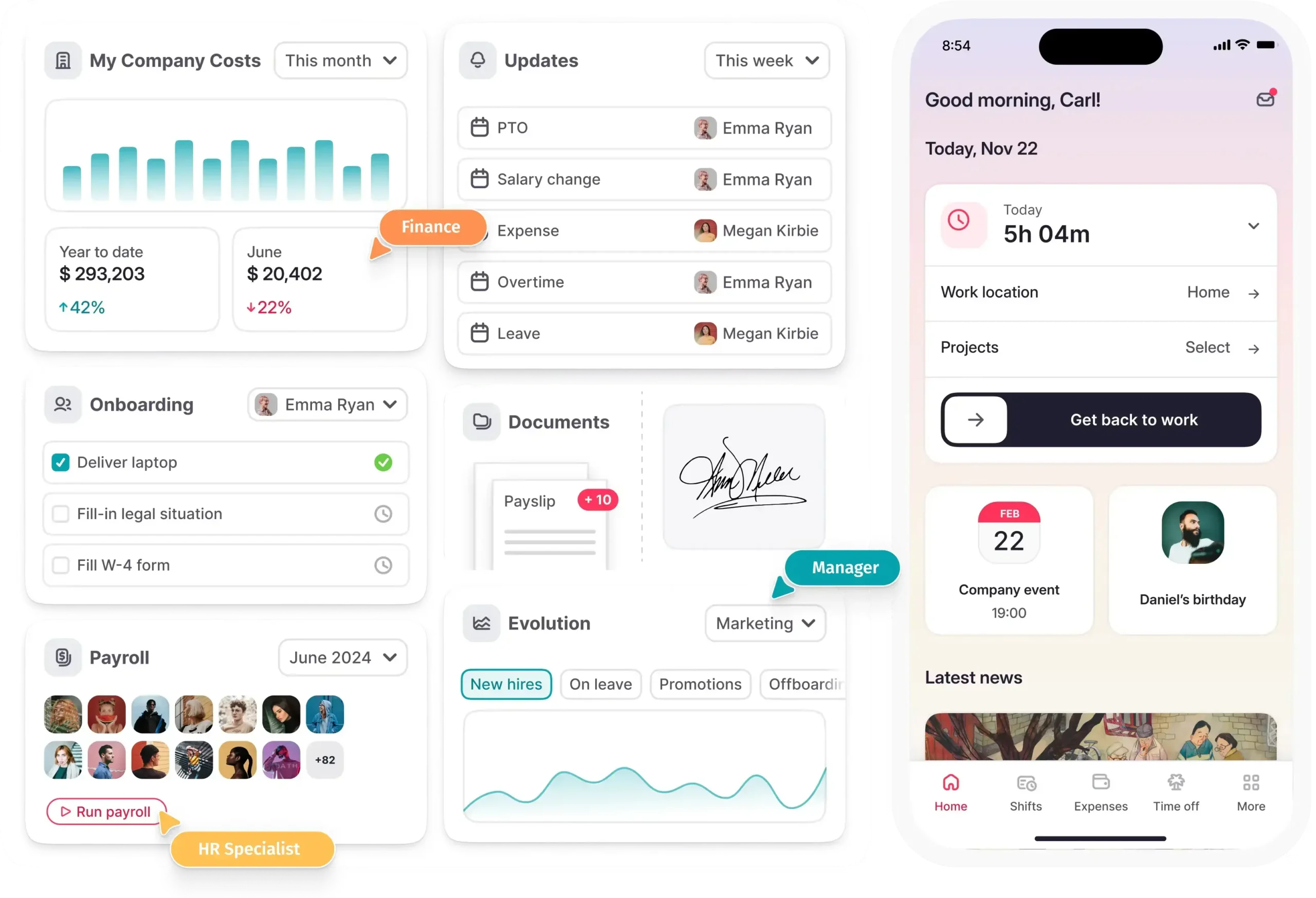
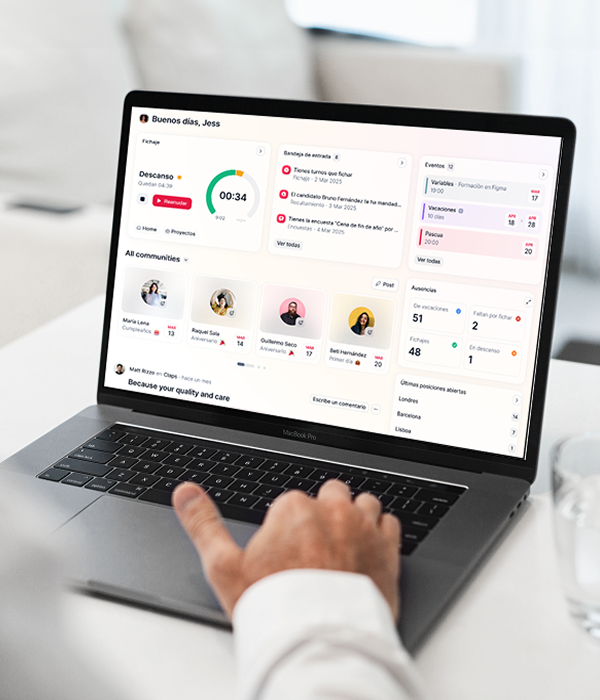
Factorial has become one of the most popular HR solutions in Italy, especially among small and mid-size businesses. It is designed as a real all-in-one platform for business management, combining HR management, payroll, finance, IT, and talent development in a single platform that keeps everything under control. Instead of paying for multiple systems, HR teams can centralize their processes and data in one place.
What makes Factorial stand out in the Italian market is its focus on a perfect balance of depth and simplicity. You get powerful features like 360-degree performance reviews, career path planning, training management, OKR tracking, and AI-powered recruiting. All of this is wrapped in a clean, intuitive interface that does not require a dedicated IT team to manage or maintain. Employees can handle everyday tasks like requesting time off, downloading payslips, and updating their personal information through the self-service portal, which reduces the HR team’s workload.
Factorial also provides real-time dashboards with KPIs on turnover, performance, and employee satisfaction, giving HR leaders the data they need to make informed decisions at a glance. The platform is ISO 27001-certified and SOC2 compliant, so your data stays secure and compliant with regulatory standards. It supports multiple languages, including Italian, and offers local customer support tailored to the needs of businesses operating in Italy.
Pros:
- True all-in-one platform covering HR, payroll, finance, IT, and talent
- Advanced performance management with 360-degree feedback and career paths
- AI-powered tools for recruiting and document management
- Modular pricing so you only pay for what you need
- Intuitive interface with strong mobile app
Cons:
- Reporting features could offer more depth for very complex analytics
- Dashboard customization may take some setup for advanced use cases
Price: Starting from $8/user/month. Modular pricing lets you add only the features you need, and a free trial is available so you can test the platform before committing.
2. Zucchetti
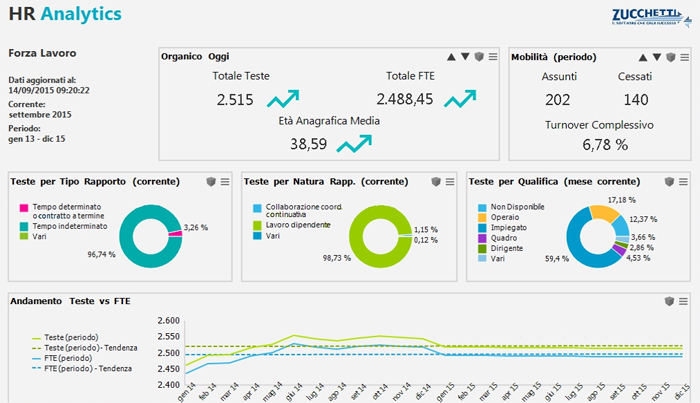
Zucchetti is one of the biggest names in Italian HR software and has been a market leader for decades. It serves hundreds of thousands of businesses across the country and is deeply embedded in the local market. The platform is especially strong in payroll processing, time and attendance tracking, and compliance with Italian labor law, which makes it a trusted choice for organizations with complex needs.
Zucchetti’s HR suite is massive and highly modular. It covers payroll calculations, payslip generation, shift planning, expense management, training, and workforce analytics, giving HR teams a complete toolbox. It also offers an HR Portal for employee self-service and integrates with Zucchetti’s own hardware terminals for badge-based clock-ins, which is useful for companies with large on-site workforces.
However, Zucchetti’s depth comes with complexity that not every business will want to deal with. The interface is not as modern or intuitive as some newer platforms, and setup often requires significant help from Zucchetti’s consulting team. It is best suited for medium to large organizations that need a robust, enterprise-grade system and are willing to invest time and budget into training and implementation to unlock its full potential.
Pros:
- Italy’s most established payroll engine with deep compliance features
- Extensive suite covering payroll, attendance, HR analytics, and more
- Strong integration with physical time-tracking terminals
- Professional and knowledgeable support team
Cons:
- Interface is not modern or intuitive, with a steep learning curve
- Setup and configuration can be time-consuming and complex
- Can slow down during peak payroll periods with many concurrent users
- Better suited for larger companies, may be overkill for small teams
Price: Custom pricing based on modules selected and company size. It uses a modular model with both perpetual licenses and subscription options, and you need to contact Zucchetti for a tailored quote.
3. Dipendenti in Cloud (Italian HR Software)
Dipendenti in Cloud, which translates to “Cloud Employees,” is a lightweight HR platform designed specifically for small and medium businesses in Italy. It focuses on keeping everyday HR tasks simple and accessible, even for teams without a dedicated HR specialist. The tool fits companies that want to move away from spreadsheets but do not need an overly complex enterprise system.
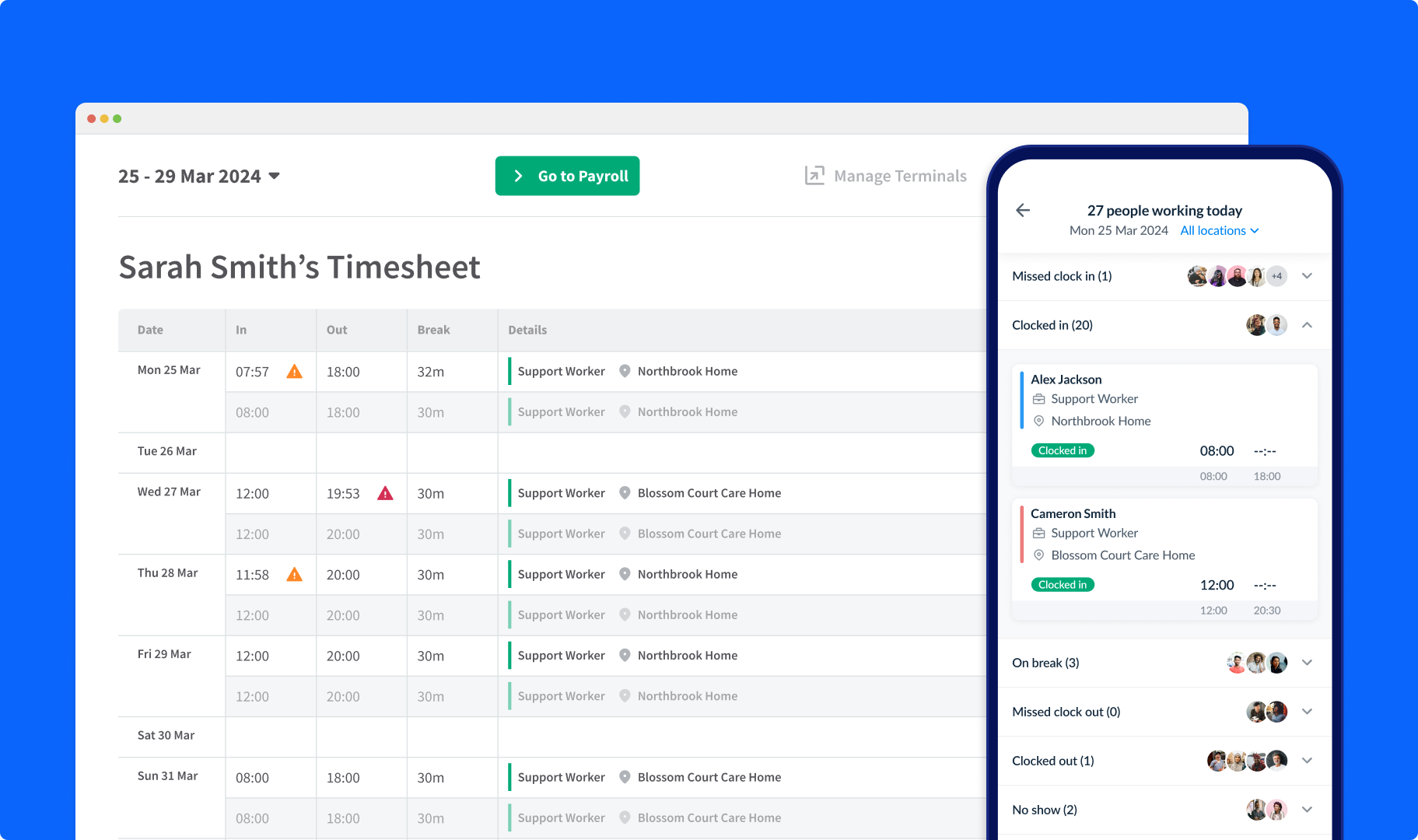
The platform covers the essentials: time tracking with multi-device clock-in, leave and absence management, automatic payroll delivery, expense reporting, and an employee self-service portal. It integrates with TeamSystem’s payroll software, making it a natural fit for companies already using that ecosystem and looking for a straightforward extension on the HR side. This tight connection can significantly reduce manual data entry and payroll errors.
Dipendenti in Cloud’s biggest strength is its affordability and simplicity. It is one of the most budget-friendly options on this list, and it is easy to set up and use without specialized training or long implementation projects. However, it lacks the depth of talent management, performance tracking, and analytics features that growing companies often need as they scale and become more data-driven.
Pros:
- Very affordable starting price, great for small businesses on a budget
- Simple and intuitive interface, with minimal training needed
- Solid time tracking and payroll delivery features
- Integrates with TeamSystem’s payroll tools
Cons:
- Available only in Italian, with limited language support
- No API available, limiting third-party integrations
- Lacks advanced talent management, performance reviews, and analytics
- Mobile app functionality could be improved
Price: Standard plan starts from €2/employee/month (billed annually). Personalized plans with custom pricing are available, and a 30-day free trial lets you try the platform with your team before purchasing.
4. Personio
Personio is an HR platform designed for small and mid-size European businesses that want to centralize their core HR processes. It covers the full employee lifecycle, from recruitment and onboarding to payroll, time tracking, and performance management, providing structure to everyday HR workflows. The platform serves more than 15,000 clients across Europe, which shows how widely it has been adopted.
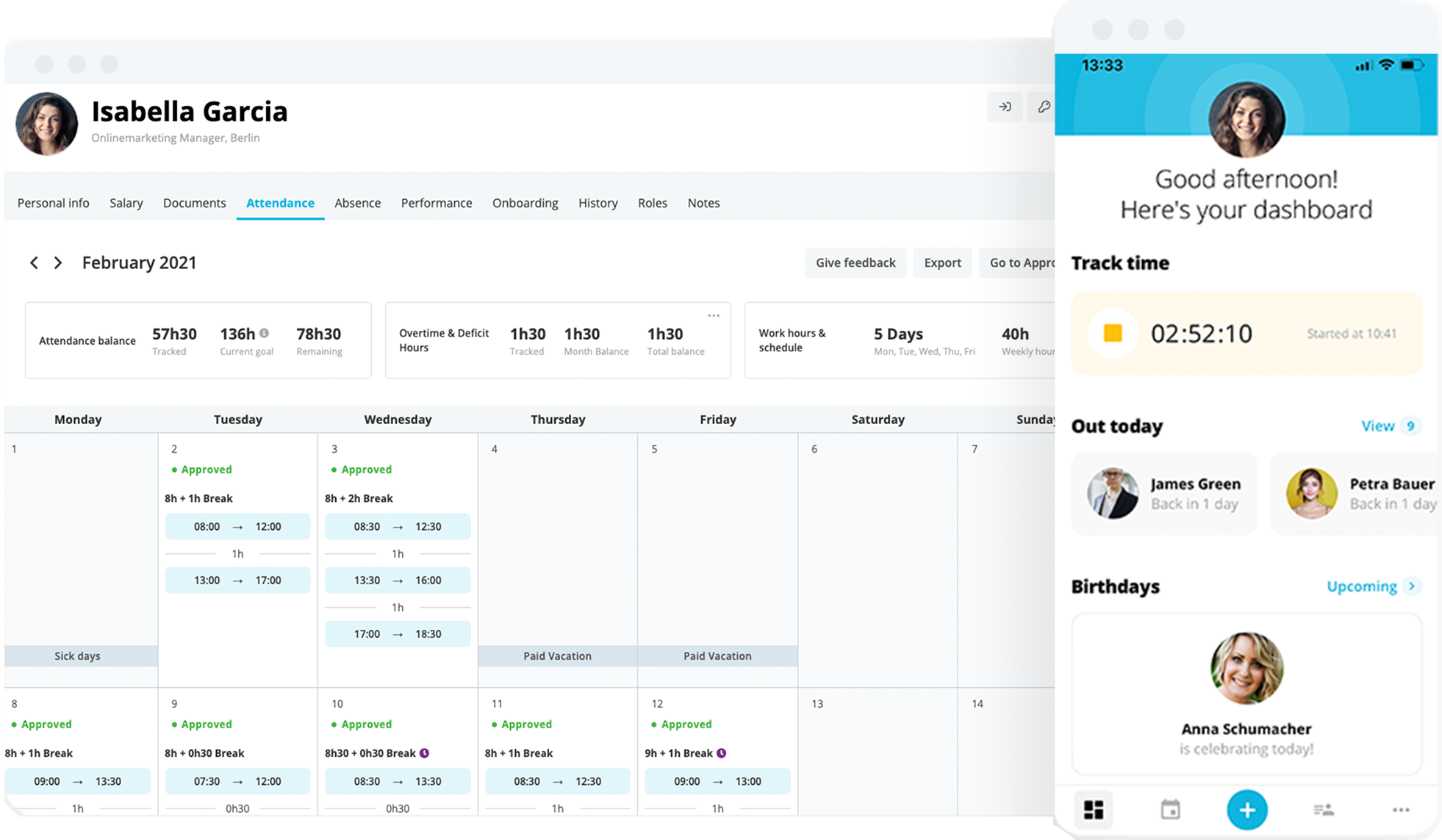
Personio’s strengths lie in its structured workflows and recruiting tools. The applicant tracking system is well-designed and helps standardize hiring, while the onboarding features support consistent new-hire experiences. It also offers GDPR compliance tools, which is especially useful for companies operating across multiple European countries and handling sensitive employee data.
However, Personio’s payroll capabilities are strongest in its main home market. For Italian companies, payroll processing typically requires integration with local providers, which adds complexity and sometimes extra cost. The platform also lacks the depth in talent management and advanced analytics that some competitors offer, and essential features occasionally require paid add-ons, which can make pricing harder to predict.
Pros:
- Strong recruiting and onboarding workflows
- GDPR compliance tools for European operations
- Clean, intuitive interface with good overall usability
- Available in Italian and multiple European languages
Cons:
- Payroll depth is limited in Italy and relies on integrations
- Pricing is not fully transparent and requires contacting sales
- Performance management features can feel rigid
- Some essential features may require paid add-ons
Price: Custom pricing based on company size and features, typically estimated between €5–15/user/month. Personio offers two main plans (Core and Core Pro) with optional add-ons, and a free trial is available.
5. TeamSystem (HR Software only in Italian)
TeamSystem is one of the most established software providers in the Italian business world, with more than 40 years of history and millions of customers. Its HR module is part of a much larger ecosystem that includes ERP, accounting, tax, e-invoicing, and financial management tools, making it a central hub for many organizations. Companies that already rely on TeamSystem for finance often see its HR solution as a logical extension.
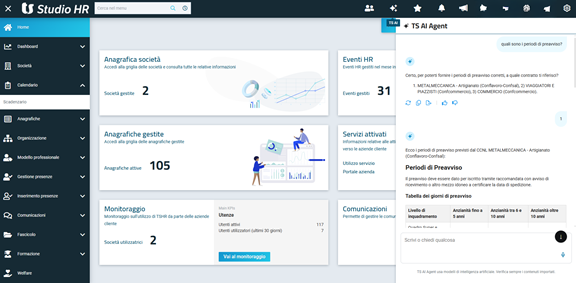
TeamSystem HR automates payroll processing, attendance tracking, shift management, and employee administration. Its biggest advantage is the seamless integration with TeamSystem’s financial and accounting tools, which makes it an excellent choice for companies that want their HR and finance systems to talk to each other without building custom bridges. The platform also includes employee self-service features, compliance tools, and reporting capabilities that support HR teams in their day-to-day operations.
On the downside, TeamSystem HR can be expensive and complex, particularly for smaller businesses that may not need the full power of the suite. Users have reported that customer support response times can be slow, and the interface is not as modern or polished as newer cloud-native platforms, which can affect user adoption. It is best suited for medium to large Italian companies that are already invested in the TeamSystem ecosystem and ready to commit to a long-term, integrated solution.
Pros:
- Deep integration with TeamSystem’s ERP, accounting, and tax tools
- Robust payroll and compliance features for Italian labor law
- Strong presence and long track record in the Italian market
- AI-powered features for document automation and predictive analytics
Cons:
- Interface is not modern, and the system can feel complex
- Customer support response times can be slow
- More expensive than lighter alternatives, suited for larger budgets
- Setup and implementation require significant effort and expertise
Price: Custom pricing based on modules and company size, with an enterprise-oriented pricing model. A free trial is available, but you will need to contact TeamSystem for a tailored quote and detailed proposal.
What are the benefits of HR software in Italy?
Using HR software is not just about making admin easier. It brings real, measurable advantages that affect your bottom line and your team’s daily experience.
- Save time on repetitive tasks. Tasks like processing leave requests, distributing payslips, tracking hours, and filing documents can eat up hours every week. HR software automates these processes, freeing your HR team to focus on strategic work like talent development and employee engagement.
- Stay compliant with Italian labor law. Italy has strict regulations around employment contracts, payroll calculations, mandatory time tracking, and data privacy. A good HR platform keeps you compliant automatically, reducing the risk of fines or legal issues.
- Make better decisions with data. When your employee information is scattered across spreadsheets and email threads, it is hard to see the big picture. HR software gives you centralized dashboards and reports that show trends in turnover, absenteeism, performance, and satisfaction, so you can act before problems grow.
- Improve the employee experience. Self-service portals and mobile apps let employees manage their own information, request time off, and view payslips without contacting HR. This builds trust and creates a more modern, transparent workplace.
- Scale as your company grows. The right HR platform grows with you. Whether you go from 20 to 200 employees, you should not need to switch systems. Modular platforms like Factorial let you add features as your needs evolve.
What to expect from the best HR software in Italy
Not all HR platforms are created equal. Here is what you should expect from a top-tier solution for your Italian business.
- Italian labor law compliance. Your HR software should handle Italy’s specific payroll rules, mandatory time tracking, contract management, and GDPR requirements. Platforms that are built for a global audience but do not localize well for Italy can create more problems than they solve.
- A centralized, cloud-based platform. Everything from employee data and documents to time tracking and payroll should live in one place, accessible from any device. Cloud-based systems keep your data always up to date, whether you are in the office or working remotely.
- Employee self-service and mobile access. Today’s employees expect to manage their own requests, view their payslips, and update their information without emailing HR. A mobile app is essential for teams with deskless or remote workers.
- Performance and talent management tools. Beyond basic admin, the best platforms help you track goals, run performance reviews, manage training programs, and plan career paths. These tools are key to keeping your best people engaged and growing.
- Integrations with your existing tools. Your HR software should connect with your payroll provider, accounting system, and communication tools. Look for platforms with open APIs or native integrations.
For companies in Italy that want to bring all of these capabilities together, Factorial’s all-in-one approach is a strong fit. Instead of juggling separate tools for HR, payroll, finance, and talent, Factorial centralizes everything in one place. Its modular pricing means you start with what you need and add more as your company grows.

Best HR software in Italy FAQs
What is the most popular HR software in Italy?
Zucchetti and TeamSystem are the most widely used HR software in Italy, especially among larger companies. For small and mid-size businesses, Factorial and Dipendenti in Cloud are popular due to their ease of use and modern interfaces.
Do I need HR software that is specifically designed for Italy?
It is strongly recommended. Italian labor law has specific requirements around payroll, time tracking, and employment contracts. A platform that handles these automatically saves time and reduces compliance risk.
Can I use an international HR platform like Personio in Italy?
Yes, but some international platforms have limited payroll support for Italy. You may need to integrate with a local payroll provider. Platforms like Factorial offer both international reach and strong local support for Italy.
How much does HR software cost in Italy?
Prices vary widely. Dipendenti in Cloud starts at around €2/employee/month, while Factorial starts at $8/user/month. Enterprise solutions like Zucchetti and TeamSystem use custom pricing based on company size and modules.
What is the best HR software for small businesses in Italy?
Factorial is an excellent choice for small and mid-size businesses that want a complete, easy to use HR platform. Its all-in-one approach to business management covers HR, payroll prep, finance, IT, and talent management in a single tool, with modular pricing that fits smaller budgets.
Disclaimer: The information presented on this page is based on publicly available sources. The comparisons between Factorial and other providers are intended solely for the illustration of the respective software features, pricing and functionalities. All information regarding features, prices, and integrations may be subject to change without prior notice. Factorial assumes no liability for the accuracy, completeness, or timeliness of the information presented. We recommend contacting the respective providers directly to obtain the most accurate and up-to-date information. All legal regulations regarding Spanish fair advertising and competition law are fully observed by us; if you have any concerns, please reach out to us. The comparisons presented do not constitute a final evaluation or recommendation for any provider, but serve solely as an informational source.