Jamf is, without question, one of the most recognized solutions on the market for Apple device management. Founded in 2002 and with over two decades of specialization in the Apple ecosystem, its native integration with Apple Business Manager, day-one support for new macOS and iOS versions, and advanced features like Declarative Device Management (DDM) make it the reference solution for organizations running 100% Apple fleets.
The problem: that same specialization is also its biggest limitation. In a reality where most IT teams manage hybrid environments with macOS, Windows, Linux, iOS, and Android all coexisting in the same fleet, relying on a tool that only covers Apple means adding more software layers, increasing operational complexity and costs.
Why IT Teams Are Looking for Jamf Alternatives
Beyond the standard multi-OS support argument, the reasons teams start evaluating other options are usually very concrete and operational.
Cost and pricing structure
Jamf Pro starts at approximately €3.67 per device/month for iOS and €7.89 for macOS, with a Business plan around €13.65 per device. For companies managing mixed fleets, this means paying a premium for a tool that only covers part of the device estate. On top of that, users report price increases at renewal time, creating budget uncertainty.
Steep learning curve
Jamf is powerful, but requires significant technical expertise. Configuring Jamf Connect with an identity provider, for example, involves app-level integrations in the IdP, capturing client credentials, assigning roles, and managing configuration profiles. That is a workflow designed for experienced administrators, not for small or generalist IT teams.
Cloud dependency
Some newer features, like DDM, are only available in Jamf Cloud. Organizations that need on-premise or hybrid deployments are finding themselves increasingly constrained.
Too much complexity for basic workflows
Many IT teams really just need to enroll devices, enforce security policies, push apps, and maintain visibility over their inventory. Jamf can do all of that, but often requires more setup and maintenance than these use cases actually justify.
The Main Jamf Competitors in 2026
1. Factorial IT
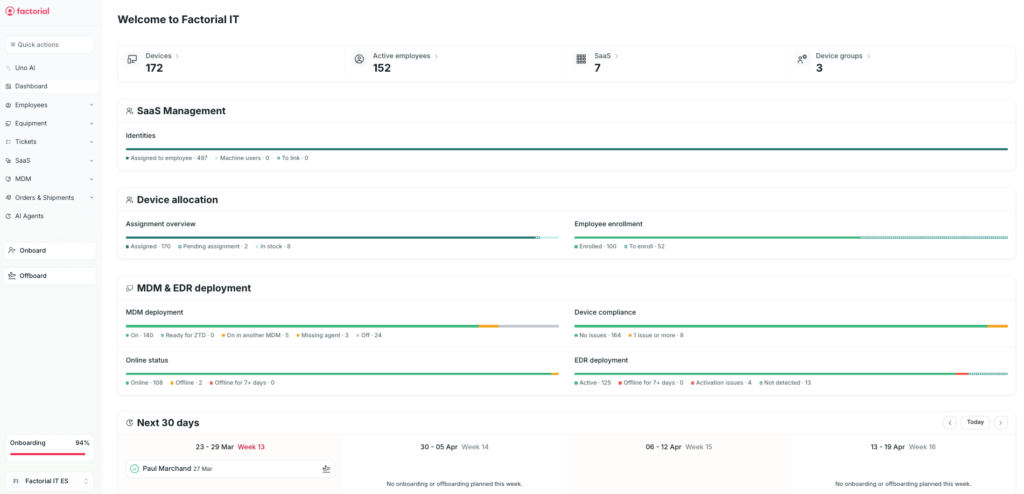
Factorial IT is the Jamf alternative that fits best for companies that need to manage mixed fleets without adding unnecessary complexity. Unlike traditional MDM tools built as purely technical solutions, Factorial IT was designed from the ground up as a platform that connects device management to people processes: onboarding, offboarding, team changes, and compliance are all handled in one place.
Ideal for: SMBs and mid-market companies managing mixed fleets that want a platform simplifying day-to-day IT without requiring highly specialized admin profiles.
Key advantages
- True multi-OS management from a single console: macOS, Windows, Linux, iOS, and Android, with real-time inventory, device health status, and unified remote actions
- Zero-touch enrollment via Apple Business Manager and Windows Autopilot, so pre-configured devices can be shipped directly to employees with no manual IT intervention
- Dynamic policies applied automatically based on role, team, OS, or security status, and updated automatically when someone changes position or leaves the company
- Automated compliance for frameworks like SOC 2, ISO 27001, and GDPR, with centralized logs and audit evidence
- AI Agents for employee lifecycle: identify every access, device, and application assigned to a person and execute full offboarding without manual checklists.
- Centralized SaaS spend visibility: contracts, active licenses, and cost per tool in one console, cross-referencing HR, device, and inventory data.
- Native HR connection: new hires, departures, and department changes automatically reflect in device configuration
- Direct, personalized support without going through resellers
Key disadvantages
- For exclusively Apple environments requiring the deepest level of ecosystem specialization, Jamf still offers technical depth that is hard to match
- Organizations with very specific needs around Apple TV or education environments will find better coverage in Apple-first solutions
💡 Want to see it in action? Request your demo
2. JumpCloud
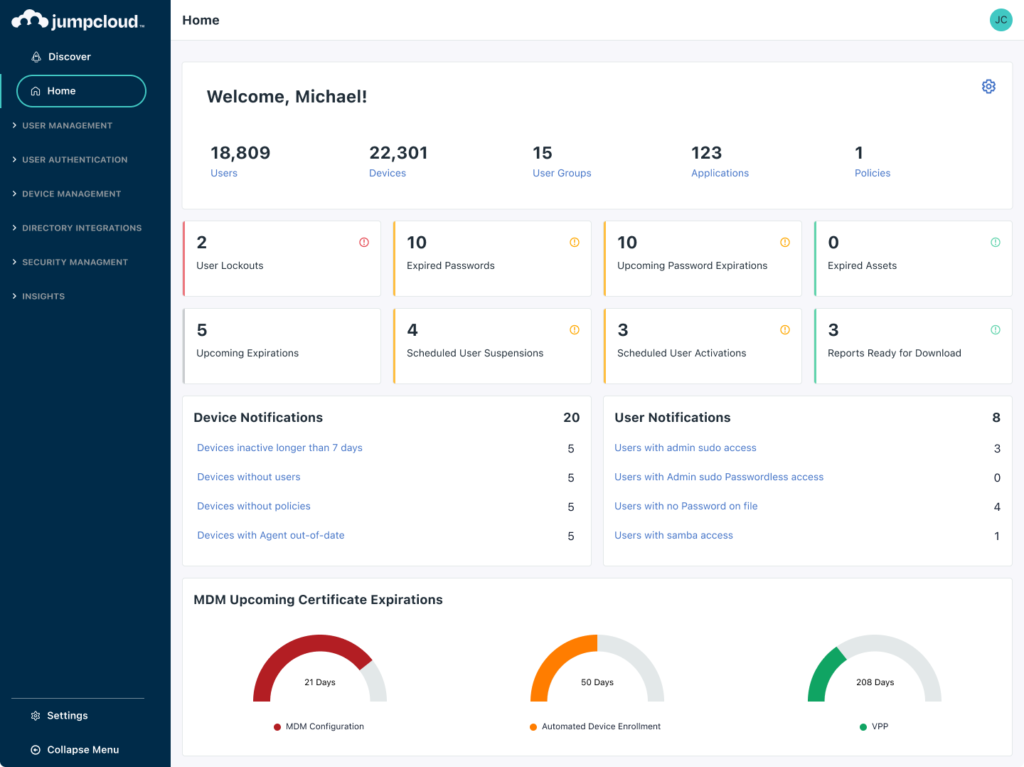
JumpCloud positions itself as a cloud-native platform combining identity, access, and device management. Its value proposition is interesting for companies looking to consolidate multiple layers of their IT stack into a single tool, particularly in distributed environments.
Ideal for: cloud-first organizations wanting to unify directory, access, and basic device management.
Key advantages
- Unifies identity, access, and device management in one platform
- Supports multiple operating systems, including Linux
- Can help simplify part of the IT stack
Key disadvantages
- Price can scale quickly as the number of users grows
- The device management layer does not always have the same depth as more focused MDM tools
- Reporting can fall short for teams with more advanced audit or visibility requirements
3. Hexnode
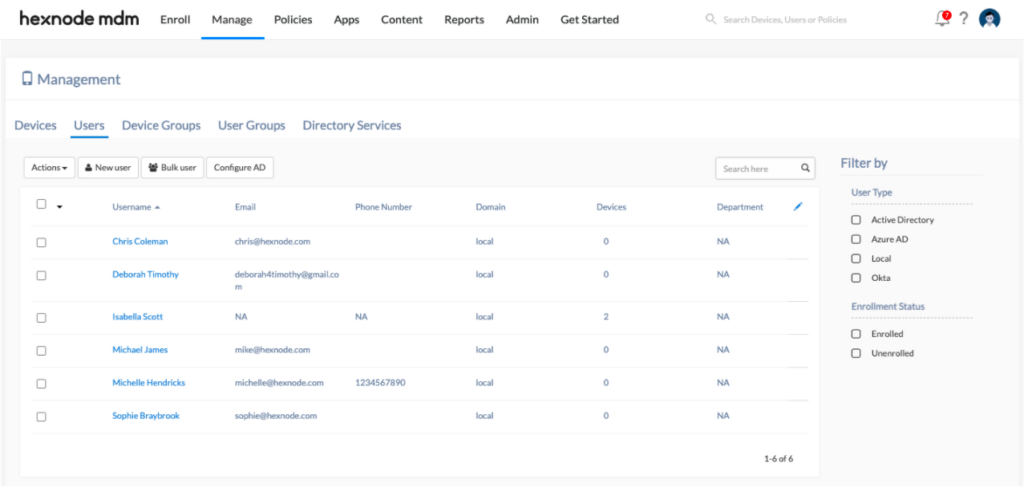
Hexnode is a UEM solution with broad support for different operating systems and device types. It stands out for its versatility and for offering a solid enough functional foundation for organizations that need to manage diverse environments without moving to heavier enterprise platforms.
Ideal for: companies with a varied fleet looking for a flexible and relatively accessible tool.
Key advantages
- Wide operating system and device support
- Good fit for mobility and kiosk scenarios
- Often competitively priced compared to other UEM solutions
Key disadvantages
- Some advanced features are only available on higher-tier plans
- The desktop experience is not always as polished as the mobile-side coverage
- May fall short if you need deeper automation tied to internal operational processes
4. NinjaOne
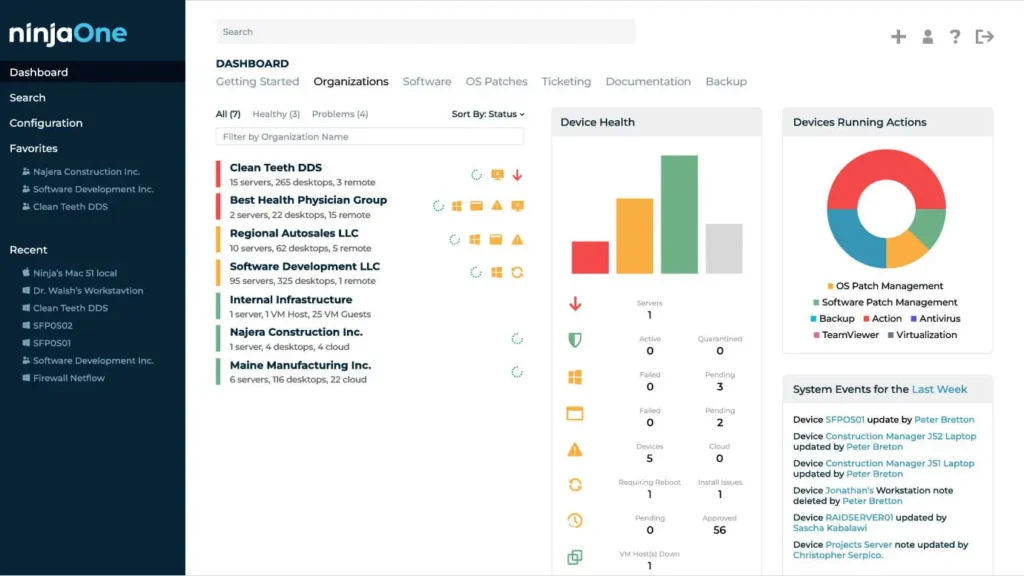
NinjaOne is a cloud-native platform focused on IT operations and endpoint management. While it can cover part of device management, its real strength lies more in monitoring, patching, and technical automation than in pure MDM.
Ideal for: IT teams or MSPs that prioritize endpoint operations and technical maintenance.
Key advantages
- Very strong in patching, monitoring, and operational IT tasks
- Clean interface that is easy to adopt
- Good option for centralizing technical IT operations
Key disadvantages
- Not a direct Jamf alternative if your priority is Apple or mobile device management
- MDM is not the platform’s core strength
- Less depth in onboarding, offboarding, or employee lifecycle automation processes
5. ManageEngine
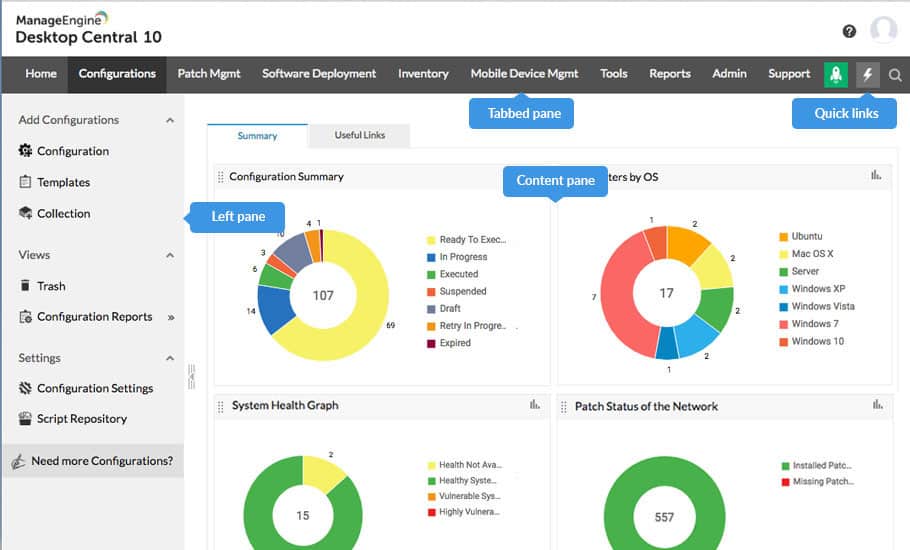
ManageEngine Endpoint Central is a comprehensive unified endpoint management suite covering patching, software deployment, remote control, inventory, and compliance capabilities. A solid option for environments with broad IT administration needs.
Ideal for: mid-size and large companies looking for a traditional, feature-rich IT administration tool.
Key advantages
- Wide functional coverage in endpoint management
- On-premise deployment option available, a plus for teams also evaluating Microsoft Intune alternatives in mixed environments.
- Useful reporting for compliance and audits
Key disadvantages
- Initial setup can be more complex than cloud-native alternatives
- The interface feels less agile than more modern tools
- Can be more than small teams need
6. Ivanti
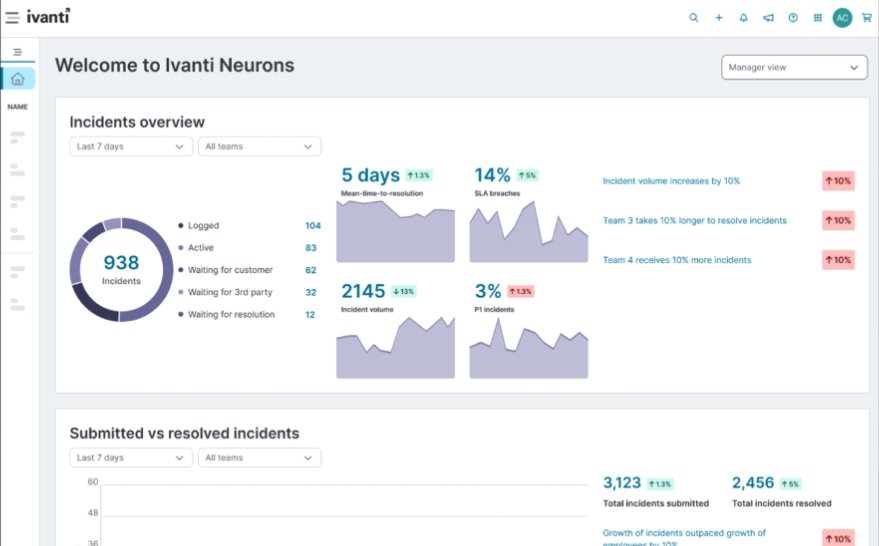
Ivanti is aimed primarily at enterprise organizations that need to combine endpoint management, security, and IT automation in one platform. It offers depth and breadth, but also a level of complexity that does not always fit mid-size companies or teams looking for a fast implementation.
Ideal for: large organizations with advanced requirements around security, control, and governance.
Key advantages
- Good functional coverage in enterprise environments
- Strong security and endpoint management capabilities
- Well-suited to organizations with mature IT processes
Key disadvantages
- A heavier solution to deploy and operate
- Cost typically sits in a higher bracket
- Often overkill for companies that simply need to manage their day-to-day fleet
7. Atera
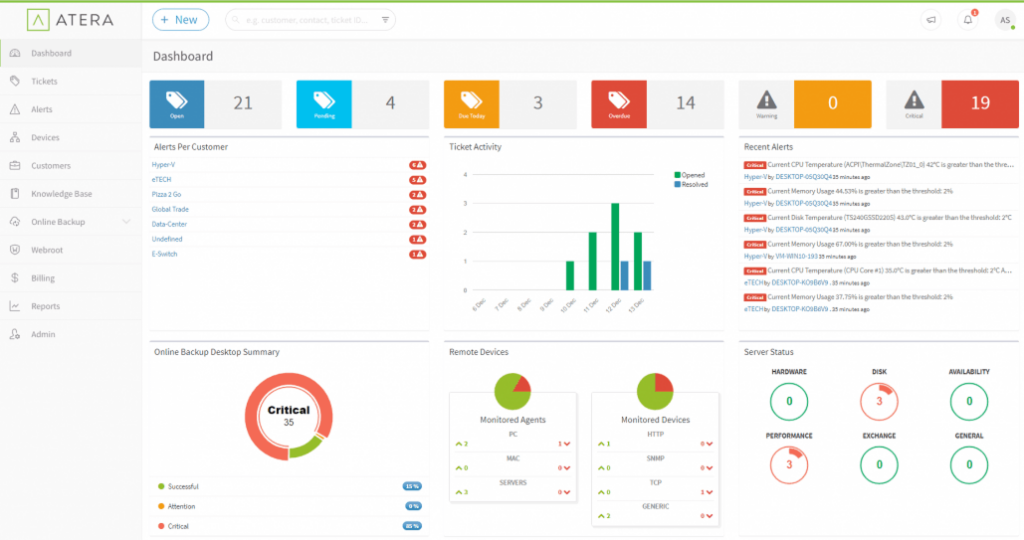
Atera combines RMM, ticketing, helpdesk, and remote access in a single platform. It is an interesting option for support-heavy IT teams, though it does not compete as directly with Jamf when the main focus is advanced device management.
Ideal for: internal IT support teams or MSPs wanting to combine operations and ticketing in one tool.
Key advantages
- Per-technician pricing model, not per device
- Combines support and IT operations in the same tool
- Relatively quick to get started
Key disadvantages
- Not one of the stronger options if the goal is to replace Jamf as an MDM
- The interface reflects its history: MDM and Desktop Management are separate modules that feel like two different products on the same screen, which complicates adoption and day-to-day operations.
- Better suited to IT support than to full device lifecycle management
Comparison Table: Jamf Alternatives at a Glance
| Tool | Ideal for | Key advantages | Key disadvantages |
|---|---|---|---|
| Factorial IT | SMBs and mid-market with mixed fleets | True multi-OS, zero-touch enrollment, automated compliance, native HR connection, AI Agents | Less Apple-specialized than Jamf in 100% Apple environments |
| JumpCloud | Identity, directory, and device management | Consolidates identity and access, Linux support, cloud-native | Price scales fast, limited reporting, less depth in device management |
| Hexnode | Broad UEM for varied fleets | Multi-OS support, good fit for mobility and kiosk, often competitively priced | Advanced features in higher tiers, uneven experience by OS |
| NinjaOne | IT ops and patch management | Very strong in patching, monitoring, and automation | Not a direct MDM replacement, limited focus on employee lifecycle |
| ManageEngine | Full UEM with on-premise option | Broad suite, compliance, solid traditional IT administration | Heavier interface, more complex setup |
| Ivanti | Enterprise with security and governance needs | Wide enterprise coverage, strong security options | Heavy deployment, high cost, often excessive for SMBs |
| Atera | IT support teams and MSPs | Per-technician pricing, ticketing + RMM, fast onboarding | Weaker as a direct Jamf replacement, more support-oriented |
💡 Still not sure? Tell us about your environment and we’ll put together a demo tailored to your needs. Request your demo →