Every high-performing engineering team is the product of a well-built recruiting system that keeps it stable through departures, workload spikes, or product pivots. Fortunately, AI has made key parts of recruiting — like sourcing, resume screening, and technical interviews — faster and cheaper, though full automation remains out of reach for now.
To help navigate this landscape, we put together a practical guide focused on the biggest tech recruitment challenges and ways to resolve them.
The Key Challenges of Tech Recruiting in 2026
The engineering market is evolving at a breakneck pace, making it incredibly difficult for companies to define exact roles and for recruiters to source matching talent. This is especially true in the rapidly changing field of AI engineering, where positions often require a rare intersection of multiple advanced areas of expertise.
Beyond role ambiguity, technical leaders must navigate a complex landscape of shifting evaluation standards and emerging toolsets to build successful teams.
- Finding AI tools that work for you
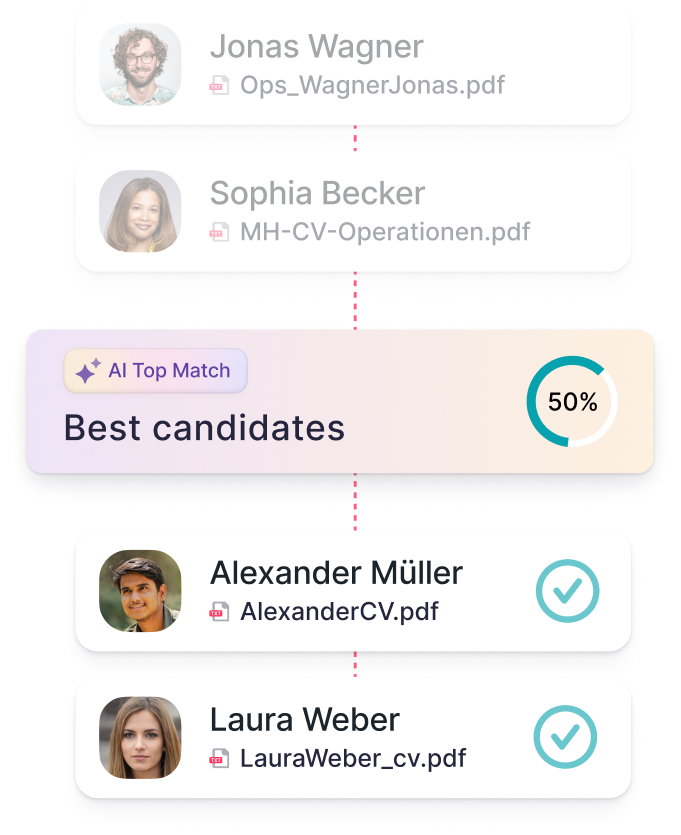
The recruiting market is flooded with new AI-powered platforms promising to completely automate the hiring funnel. Factorial AI is getting closer to automating the entire process, but until then, you can try to speed up some aspects of it. Besides Factorial, you can use HireVue for the interview stage, HireEZ for proactive sourcing of passive tech talent, or HackerRank for evaluating technical skills.
- Candidate sourcing
Passive candidates who possess highly specialized technical skills are rarely looking for work on job boards. You are more likely to spot them in developer communities such as GitHub, Stack Overflow, and Slack & Discord stack-focused communities (Reactiflux Discord, Elixir Slack, and others) or reach out to them via your inner referral program. Besides, new-wave platforms like HiringCafe are trending among Gen Zs, as are local offline events mainly focused on AI.
- Vetting candidates in the AI skill ambiguity era
With the rise of generative AI tools, traditional coding tests and resume bullet points are no longer reliable indicators of a candidate’s capability. Moreover, hard skills become less important — especially for startups — compared to a product-oriented mindset, task ownership, ability to learn fast, and cultural fit.
- Assessing skills for remote collaboration
Hiring globally expands your talent pool and lowers costs, but it requires developers who can communicate effectively across time zones and cultures. Technical excellence means very little if a remote hire lacks the self-management and asynchronous habits needed to hit deadlines. Consequently, evaluating these soft skills remains one of the hardest parts of the interview process.
How to Build a Tech Recruitment System that Works
A standard technical hiring funnel — which is the main but not the only part of your recruitment system — serves as the blueprint for transforming cold talent pools into dedicated team members.
The process begins with job postings or targeted HR outreach, capturing candidates’ attention before they submit a formal application. From there, candidates navigate through 2-5 interview stages, which often include practical tasks, peer collaboration sessions, and technical deep dives.
The funnel concludes with a formal offer, the official hire, and a critical trial period to ensure mutual alignment.
However, this standard procedure won’t work by itself— until you embed it into a proper tech recruiting system. Here are the key elements of it:
Channels
Building a stable system requires a diversified approach to getting your open roles in front of the right eyes.
Relying solely on standard job boards is rarely enough, prompting high-performing teams to leverage niche hiring marketplaces like Lemon.io for vetted senior talent. Additionally, partnering with specialized vendors, running targeted ads, and investing in employer HR marketing creates a reliable, multi-channel inbound flow.
This multi-layered distribution ensures your pipeline remains full even when specific channels dry up.
The processes
A healthy recruitment system outlines exactly how to hire candidates while maintaining a process that is clear, efficient, and respected by both sides. It establishes unified requirements and rules for the hiring team, ensuring every applicant has the same professional journey.
By treating the candidate experience as a product, you build immense trust and elevate your market reputation.
Example of a tech recruitment process:
- Stage 1: Sourcing & Screening (1–3 days)— CV review and AI screening for tech stack alignment.
- Stage 2: Initial HR Call (30 mins)— Brief video check for cultural fit, communication, and salary alignment.
- Stage 3: Technical Assessment (60 mins)— Practical pair-programming or real-world system architecture discussion.
- Stage 5: Final Alignment (30 mins)— Quick chat with the CTO to discuss the product roadmap and long-term vision.
- Stage 6: Offer & Trial Period (30–90 days)— Formal job offer followed by a paid onboarding and milestone-based probationary period.
Evaluation system
Every single stage of your hiring funnel must be governed by a structured evaluation system. This means judging candidates against specific, measurable parameters that are clearly defined and open to all members of the interview panel.
Examples of tech recruiting criteria across tasks and stages:
- Screening stage (CV & profile review)
Criteria: core tech stack alignment, domain match, career progression.
- Technical assessment stage (live coding & architecture)
Criteria: problem-solving, logic, code quality & maintainability, system design & architecture, pragmatic AI tool usage.
- Collaboration & team fit stage (Interviews)
Criteria: asynchronous communication, feedback receptivity, cross-functional translation.
There is no universal, one-size-fits-all solution to perfect tech recruiting, and building this entire infrastructure from scratch takes massive time and effort. The alternative to doing it now is hiring through platforms like Factorial or Lemon, which automate or outsource all hiring stages except your final culture-fit interview and decision.

The Major Bottleneck: Fluid Role Requirements
Optimizing your recruitment workflows will undeniably supercharge your hiring metrics. However, even the most efficient funnel will stall at the major bottleneck of tech recruiting: unclear role requirements.
Defining the right technical profile requires aligning hiring needs with business goals, product maturity, and team structure. In fast-moving environments — especially startups — this alignment often changes quickly, making collaboration between HR and engineering leadership essential throughout the hiring process.
While some companies build these systems internally, others rely on external hiring partners or vetted talent marketplaces to reduce sourcing and screening overhead. The right approach ultimately depends on the company’s hiring volume, internal resources, and the level of specialization required for the role.
The most effective technical recruitment strategies in 2026 are not necessarily the most automated ones— they are the ones built around clear expectations, structured evaluation, and a realistic understanding of what the business truly needs.