Supplemental pay is extra money employees receive in addition to their regular wages or salary. It can include bonuses, commissions, overtime pay, and other types of additional compensation. Employers may use supplemental pay to reward strong performance, recognize achievements, and attract and retain employees.
Because supplemental pay is subject to specific tax rules, employers need to handle it correctly. Understanding how supplemental pay works can help businesses calculate taxes accurately, avoid payroll mistakes, and stay compliant. This guide explains the basics of supplemental pay, common types, and how to manage it as part of your payroll process.
Table of Contents
- Key Facts: Supplemental Pay in the US
- What is supplemental pay?
- What qualifies as supplemental pay?
- Who should report supplemental wages?
- How are supplemental wages taxed?
- How do employers effectively manage supplemental pay?
Key Facts: Supplemental Pay in the US
- Supplemental pay is any monetary compensation paid to an employee on top of their regular base salary – including overtime, bonuses, commissions, severance, and equity awards – and is subject to distinct IRS withholding rules.
- According to the U.S. Bureau of Labor Statistics, supplemental pay costs in private industry averaged $1.84 per hour worked in June 2025, representing a meaningful share of total compensation budgets.
- The IRS sets a flat federal withholding rate of 22% on supplemental wages up to $1 million per year. Wages above that threshold are subject to a mandatory 37% rate, confirmed for 2026 by IRS Publication 15.
- SHRM’s 2025 Employee Benefits Survey, drawn from 3,969 HR professionals, found that benefits are consistently ranked among the top drivers of employee satisfaction and retention across industries.
What is supplemental pay?
Let’s start with the basics: what does supplemental pay mean?
Supplemental pay, also known as supplemental wages, is a form of monetary compensation that you can offer your employees in addition to their regular base salary. It can take several forms, including overtime, bonuses, accumulated sick leave, severance pay, retroactive pay increases, equity pay, pay for performance or any other additional compensation that you might offer an employee such as payouts for unused PTO/vacation. It does not include health insurance or any other form of non-monetary fringe benefit.
Although federal law requires you to pay overtime to all non-exempt employees who work over their contracted hours, all other forms of supplemental pay are optional. It is up to your business whether you offer any or all of these benefits. Nonetheless, offering some form of supplemental wages is common practice in most businesses. This is because it can be a great way to reward and incentivize employees and attract and retain top talent.
What qualifies as supplemental pay?
According to the IRS, supplemental wages include:
- Overtime pay: Supplementary wages earned by a non-exempt employee who works any hours over their 40-hour workweek. According to the FLSA (Fair Labor Standards Act), you must pay employees 1.5 times their regular rate of pay for every additional hour worked.
- Accumulated sick leave: The FMLA doesn’t obligate employers to offer paid sick leave (although certain states do enforce it). If you do offer it, employees can choose to receive a payout for any unused sick leave in the form of supplemental wages.
- Severance pay: If you include a severance pay clause in an employee’s contract, then you must pay them severance pay when they leave the company. You can do this as a single payment or through multiple checks over a period of time.
- Retroactive pay increases: This can apply if an employee receives a raise at the end of a pay period that isn’t reflected in their paycheck until the next pay period. The payment makes up the difference between the amount they received in the last pay period and how much they were owed.
- Bonuses: Monetary amounts offered to employees as an incentive or a reward for high performance. Can include signing, referral, and retention bonuses in the form of cash or stock options.
- Equity pay: Compensation in the form of company stock options. Often used by new and growing companies that can’t be as competitive with their base pay or other taxable fringe benefits.
Two common supplemental pay types the IRS also recognizes are commissions – performance-based percentages of sales or revenue paid to employees in sales roles – and profit-sharing distributions, which allocate a portion of company profits to eligible employees. Both are subject to the same federal withholding rules as other supplemental wages, as confirmed in IRS Publication 15 (2026).
You can include additional types of supplemental wages in your compensation scheme. Understanding what the IRS accepts as supplemental pay is critical, because the classification determines which withholding method applies and how much federal income tax you must remit.
For an overview of pay for performance models, check out our video on the subject:
Who should report supplemental wages?
As an employer, you are responsible for tracking and reporting supplemental pay. It’s therefore important that you maintain a record of how much supplemental pay you offer each employee.
This includes keeping a record of:
- The amount of supplemental wages an employee receives within the tax year.
- Whether you combine an employee’s supplemental wages with their regular wages or process them separately.
Although supplemental pay only forms a small part of an employee’s paycheck, it’s important to include processes in your payroll system to manage them effectively. That way, you will pay each employee the correct amount at the end of each pay period. This is fundamental for building an engaged and loyal workforce. An effective supplemental pay process also helps you comply with federal and state tax obligations, as we will see in more detail below.
How are supplemental wages taxed?
Supplemental pay is classed as taxable income. As a result, you are responsible for tracking and accurately reporting supplemental pay, as well as withholding the right amount of federal income tax from an employee’s supplemental wages. Moreover, supplemental pay is subject to FICA (Federal Insurance Contributions Act) payroll taxes so you are also responsible for withholding Social Security and Medicare contributions, as well as federal unemployment tax.
Because this form of compensation is not classed as an employee’s regular wage, the way you calculate federal income tax can be different. Withholding rules depend on how much money an employee receives in supplemental wages in a year, and how you process payments.
Essentially, in terms of federal income tax, you can process supplemental pay in one of two ways:
- Withhold a flat percentage on supplemental wages (percentage method)
- Combine supplemental and regular wages (aggregate method)
For example, if you pay a bonus to an employee in a separate bonus check, you must withhold federal income tax at a flat rate of 22%. However, if you include the same bonus in an employee’s regular paycheck and don’t specify that it is bonus pay, then you must calculate tax withholding based on the allowance marked by each employee on their W-4 form.
One important condition applies to the percentage method. You may only use the flat 22% rate if you withheld federal income tax from the employee’s regular wages in the current or immediately preceding calendar year. If no income tax was withheld from regular wages, you must use the aggregate method instead, as specified in IRS Publication 15 (2026).
State supplemental tax rates add another layer of complexity. Rates vary significantly by jurisdiction – for example, California applies 10.23% on bonuses and stock options, New York applies 11.7%, and Michigan applies a flat 4.25%. Several states, including Texas and Florida, impose no state income tax at all. Employers should verify their state’s current supplemental withholding rules annually, as multiple states updated their rates effective January 1, 2026.
If you pay an employee more than $1 million in supplemental wages in a calendar year, a mandatory rate applies to the excess amount. All supplemental wages above that threshold must be withheld at 37%. This rate cannot be avoided by switching to the aggregate method, per IRS Publication 15 (2026).
Vacation pay and paid time off paid out during regular payroll cycles do not qualify as supplemental income and are subject to the same withholding as regular wages. However, a lump-sum payout of unused vacation or PTO at termination – paid separately from regular wages – is treated as supplemental pay and subject to the applicable withholding method.
To put supplemental pay in context: according to the U.S. Bureau of Labor Statistics, supplemental pay costs in private industry averaged $1.84 per hour worked in June 2025, accounting for a distinct line item within the broader benefits budget alongside paid leave ($3.44/hr) and insurance ($3.44/hr).

How do employers effectively manage supplemental pay?
Managing supplemental pay effectively requires clear policies, accurate payroll processes, and consistent communication. Employers should make sure employees understand how supplemental pay works and that payments are calculated and handled correctly. The following steps can help businesses create a fair and organized approach to managing supplemental pay.
Create a clear, written compensation policy
The best way to establish clear guidelines and procedures for managing supplemental pay is to create a clear, written compensation policy.
Your policy should include clear guidelines for salaries, and a detailed breakdown of each supplemental benefit that you offer. Make sure you explain how supplemental benefits are paid, how taxes are withheld, and whether these benefits are included in regular paychecks or paid separately.
Once you’ve created your compensation policy, make sure you share it with your entire workforce. This includes existing employees and new recruits. That way, your employees will understand exactly how your compensation scheme works and there will be no surprises or misunderstandings. Being transparent in this way helps to build employee trust, vital for building a healthy and productive company culture.
SHRM’s 2025 Employee Benefits Survey, based on responses from 3,969 HR professionals across organizations of all sizes, found that benefits are consistently ranked among the top drivers of employee satisfaction and retention. A clearly documented compensation policy that explains supplemental pay eligibility, payment timing, and tax treatment directly supports that retention goal by reducing confusion and building trust.
Understand your federal and state tax obligations
It’s also vital that you understand all your supplemental pay tax and reporting obligations. IRS Publication 15 (2026) – the Employer’s Tax Guide – includes detailed guidelines for supplemental wages, covering taxable benefits, withholding rates, the $1 million threshold, and tax report submission requirements. For state-level obligations, consult your state’s department of revenue, as supplemental withholding rates were updated in multiple states effective January 1, 2026.
If you’re still not clear on your tax obligations, then it’s a good idea to speak to a tax professional. They can help you understand all tax-reporting and submission obligations established by federal and state governments, including your payroll tax compliance requirements. That way, you can ensure compliance and avoid potential fines and penalties for late or inaccurate tax liabilities.
Use payroll software
A reliable payroll system is essential for managing supplemental pay accurately.
The best way to manage all this is by using payroll software. With the right solution, you can automate all payroll calculations and deductions. You can also easily incorporate additional payroll systems such as on-demand pay with many solutions. Plus, a good system will provide you with detailed reports that you can submit to the IRS as and when required. You can also use these reports to access detailed insights about your company’s payroll and spending.
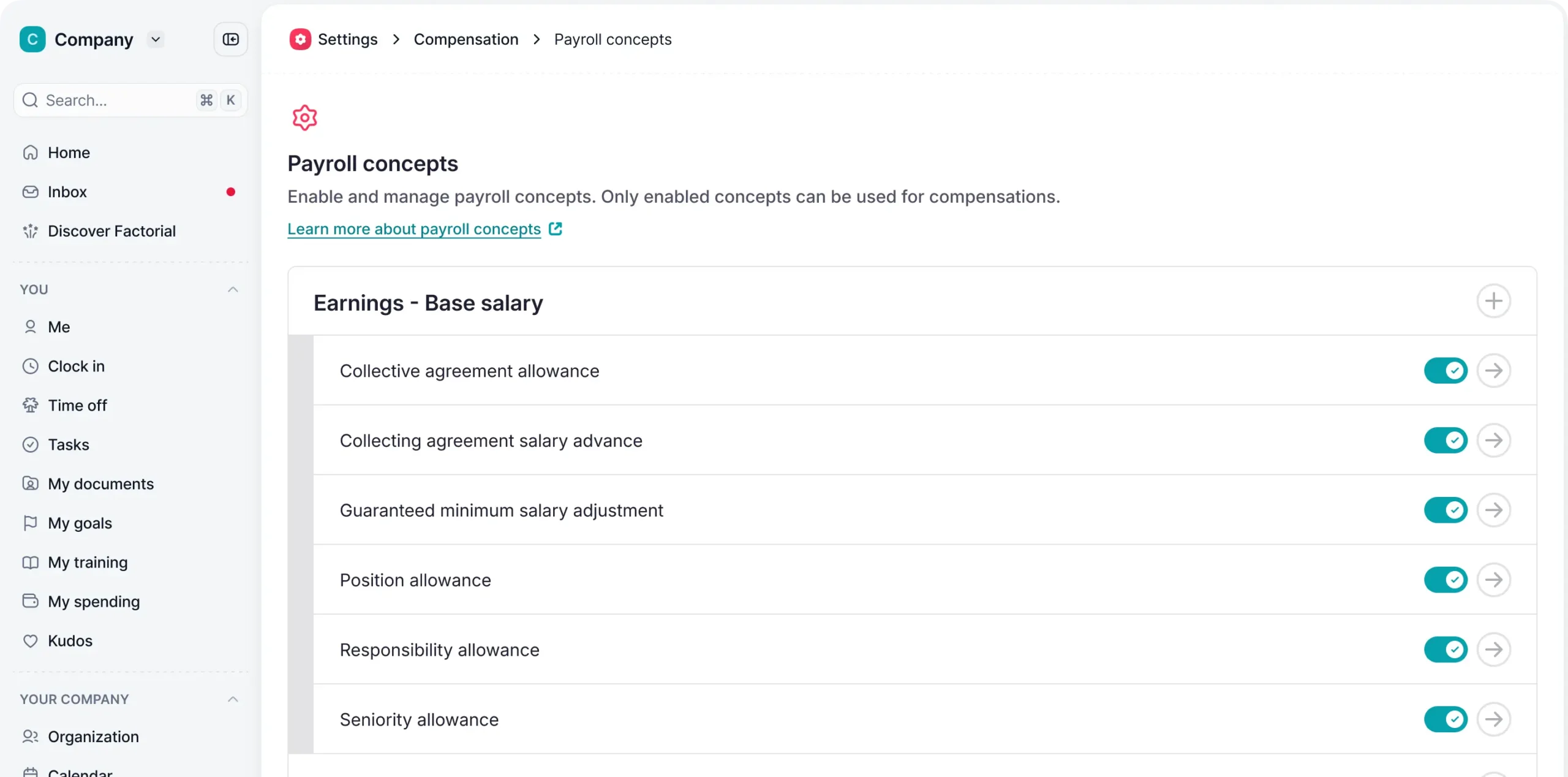
Factorial’s payroll platform, for example, includes automated tools for calculating supplemental pay variables and supplements. This lets you configure bonus, commission, and overtime rules once and apply them consistently across every pay period. These features reduce the manual errors that most commonly trigger IRS penalties.
For example, at Factorial, we understand that payroll can be difficult to set up, especially if you offer supplemental pay. That’s why we want to provide you with a solution that centralizes all of your tasks on one, simple platform.
Features of Factorial’s payroll software include:
- Simplified benefits administration tools
- Customized payroll reports
- Easy integration with employee time-tracking data
- Automated tools for calculating payroll taxes, PTO, and sick days
- Variables and supplements
- Employee and supplement observations
- New hires and termination notifications
- Contract update notifications
- Payroll folders
- Custom notifications and automation features
- Payslip templates
What’s more, Factorial’s payroll software is a solid SaaS solution with a strong emphasis on payroll security. With Factorial, all database information is encrypted, helping you keep your sensitive data secure. The application uses a Single Sign-On system and vulnerability diagnostics are performed regularly.
All these features will help your supplemental pay systems run smoothly and securely so that you can stay compliant and build a happy and productive workforce.

FAQ
What is the meaning of supplemental pay?
Supplemental pay is any monetary compensation provided to employees in addition to their regular base salary. Common examples include overtime pay, bonuses, severance, and payouts for unused sick leave. It is often used to reward performance, incentivize employees, and attract top talent.
What is the difference between regular pay and supplemental pay?
Regular pay is an employee’s fixed base salary, while supplemental pay is additional compensation like bonuses or overtime. A key difference is how they are taxed, supplemental wages can be subject to a different federal income tax withholding rate than regular wages.
What qualifies as supplemental income?
Supplemental income includes various forms of monetary compensation outside of a base salary. According to the IRS, this includes overtime, bonuses, commissions, severance pay, retroactive pay increases, equity pay, and payouts for accumulated sick leave.
What is annual supplemental pay?
Annual supplemental pay is the total amount of supplemental wages, such as bonuses and overtime, that an employee receives within one tax year. This annual total is important for tax calculations, as supplemental income exceeding $1 million is taxed at a higher flat rate.