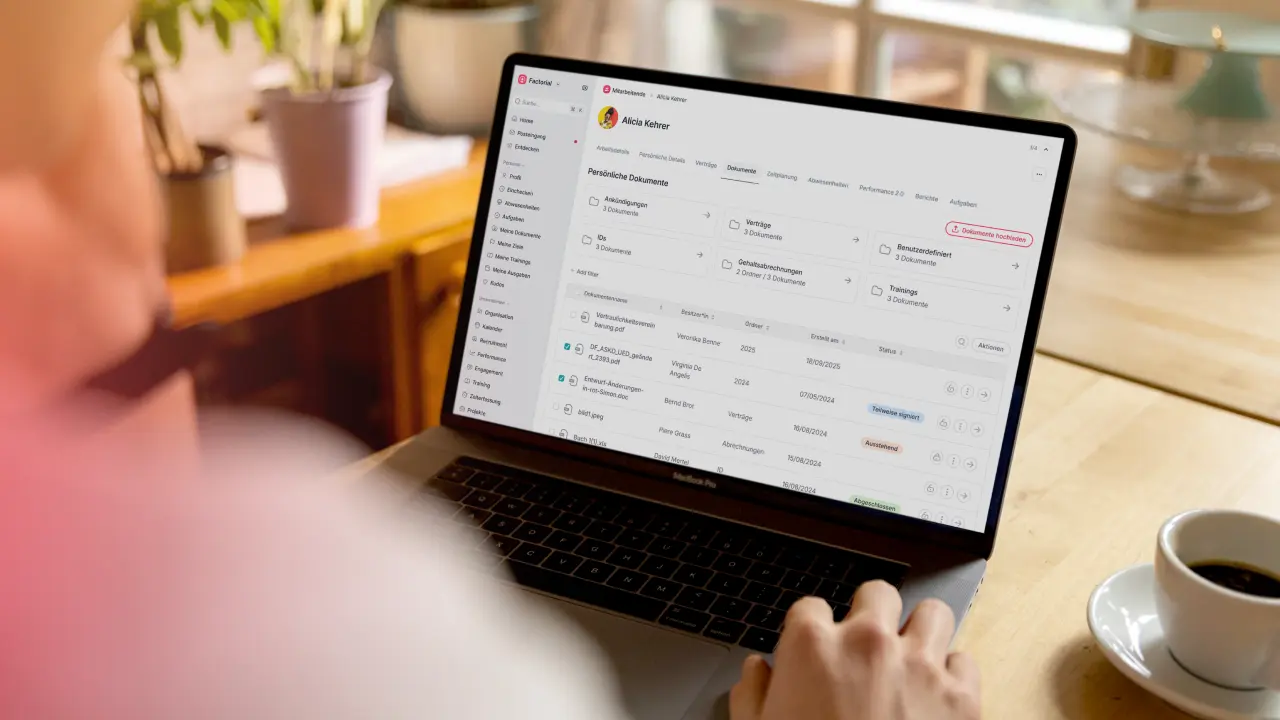
French companies are under pressure to modernize HR, stay compliant with strict labour laws, and deliver a great employee experience at the same time. The right HR software in France helps you automate administrative tasks, stay on top of local regulations, and give employees a smooth digital experience from day one.
In this guide, we’ll look at what HR software needs in order to be the best in France, compare top tools side by side, and walk through how to pick the best solution for your organization.
What is HR software in France?
HR software in France is a digital platform that centralizes core HR processes such as time and attendance, time off, payroll preparation, onboarding, performance management, and compliance with French labor law. Instead of using spreadsheets and paper forms, HR teams use software to automate repetitive tasks and keep employee data up to date in a secure system.
French HR software also needs to manage specific local requirements and demonstrate compliance with French employment laws like pay slip rules, social contributions, collective agreements, and GDPR-grade data protection. For international companies with employees in France, choosing a solution that understands this context is very important to avoiding errors and poor employee experiences.
Best HR software comparison chart
The table below gives a quick overview of 8 of the best HR software options in France in 2026.
| HR platform | Best for | Key highlight | Pricing (approx.) |
|---|---|---|---|
| Factorial | Small & mid-sized companies in Europe | All-in-one HR tool (time, payroll, talent, finance), GDPR-compliant | ~4–7 € per employee/month |
| Axonaut | French microbusinesses & SMBs | Simple all-in-one tool (CRM + basic HR like expenses, time tracking) | From ~35 € per month |
| Pennylane | Finance-focused SMBs | Strong accounting platform with some HR-related features | Custom pricing |
| Sellsy | Sales-driven SMBs | CRM with useful HR features (documents, e-signatures) | Subscription pricing (varies by users/modules) |
| Zoho People | Budget-conscious international teams | Flexible HR system with time tracking, performance, integrations | ~1–4 USD per user/month |
| Lucca | Mid-sized French companies | Modular HR system (time, absences, expenses, performance) | ~0.5–6 € per user/module/month |
| PayFit | Payroll-focused companies in Europe | Strong payroll solution with HR features | ~19 € per employee/month + base fee |
| Cegid / Talentsoft | Large companies | Enterprise HR and talent management system | Custom pricing |
*Prices are subject to change.
8 best HR software in France in 2026
1. Factorial
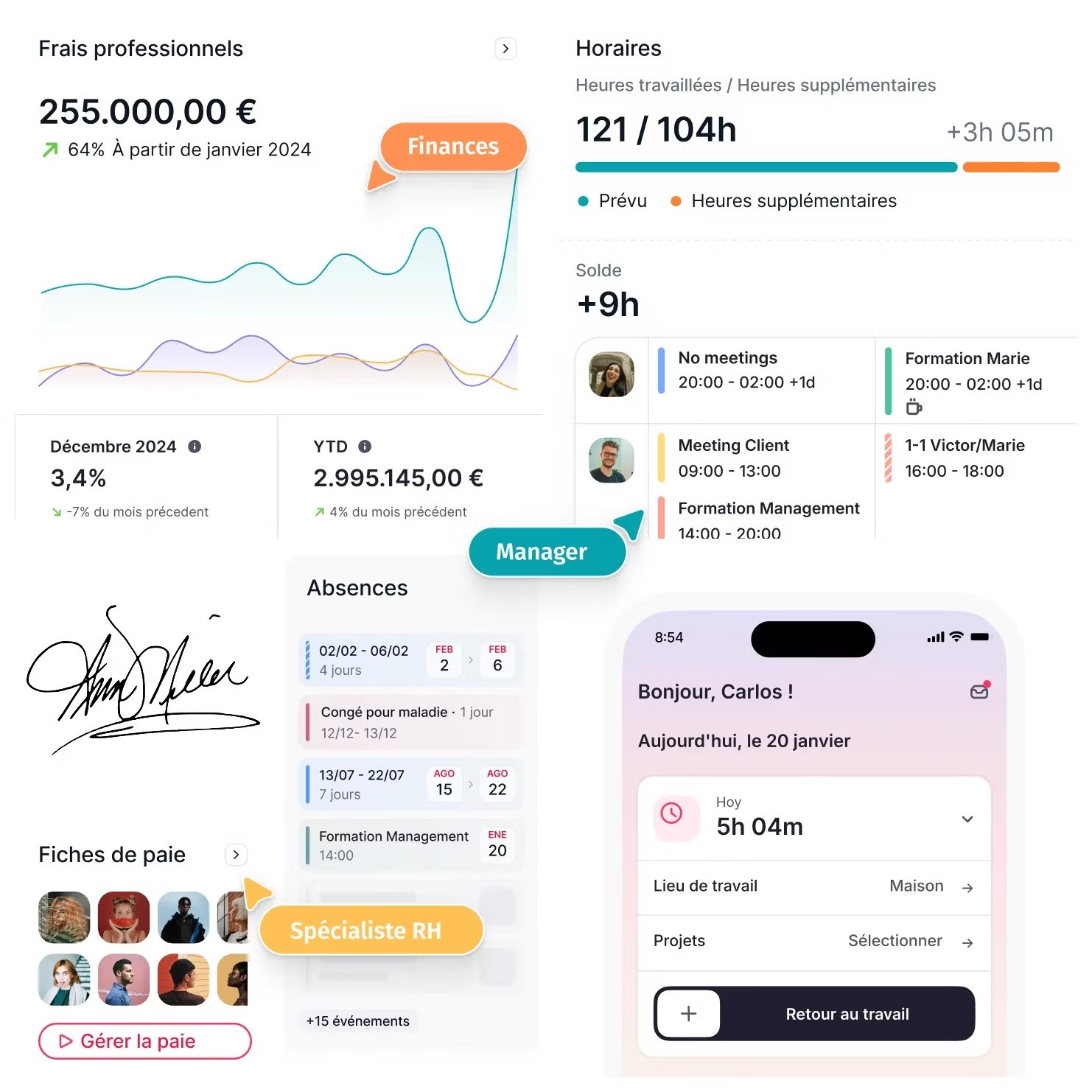
Factorial is an all-in-one HR software designed for European SMBs and mid-market companies, with strong adoption in France. It centralizes time tracking, shifts, time off, performance, recruiting, expenses, and payroll preparation, and adds finance and analytics modules so HR and finance teams work from the same data.
Pros
- All-in-one HR and people analytics platform, reducing the need for multiple tools.
- Built-in AI agent (“One”) to help draft reports, policies, and workflows while staying compliant with GDPR and the EU AI Act.
- Fully GDPR-compliant, with data hosted in the EU and strong security and encryption.
- Designed for European labor contexts and scalable up to around 2,000 employees.
Cons
- Rich feature set can require change management for teams moving from spreadsheets.
- Some advanced features (for example, analytics or finance) may sit in higher-tier plans.
- Pricing
Factorial offers several plans, with pricing often starting around $8 per employee per month depending on modules and contract, and a free trial so HR teams can test before committing. Request a free demo to ask all of your questions from the Factorial Team.

2. Axonaut
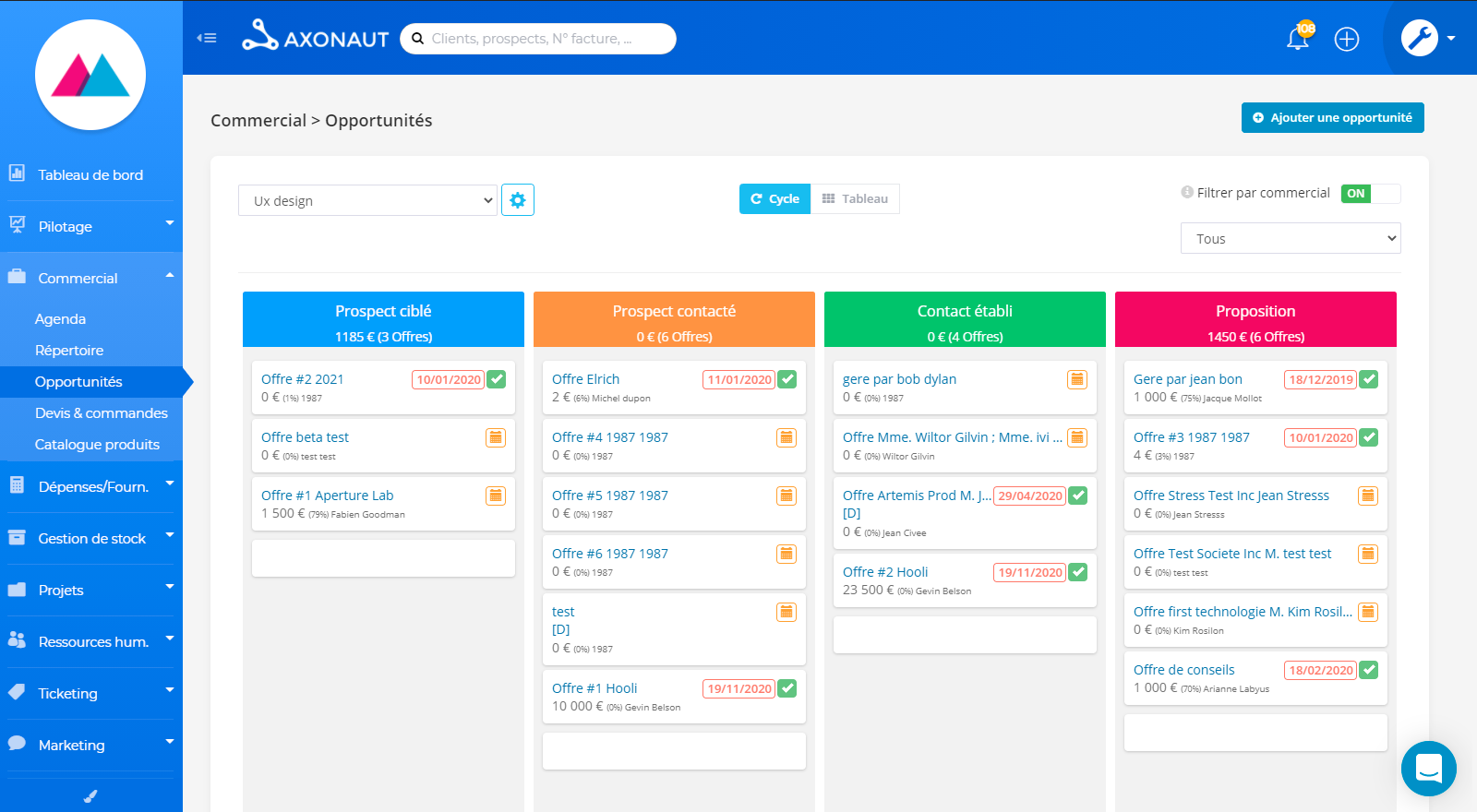
Axonaut is an “all-in-one” ERP and CRM that also includes HR-related features such as expenses, projects, and basic HR workflows. It targets entrepreneurs, microbusinesses, and SMBs that want one tool for sales, invoicing, cash flow, and simple HR.
Pros
- Comprehensive suite that covers CRM, invoicing, cash management, marketing, projects, and some HR needs in a single platform.
- Simple interface aimed at non-technical business owners.
- All features included in the main subscription rather than separate add-ons.
Cons
- HR is not the core focus; advanced HR processes like performance reviews or structured onboarding may require another tool.
- Long-term commitments are needed for the lowest price levels.
Pricing
Pricing starts at about 34.99 € per month for a 3-year commitment, with higher monthly amounts for shorter terms and more users.
3. Pennylane
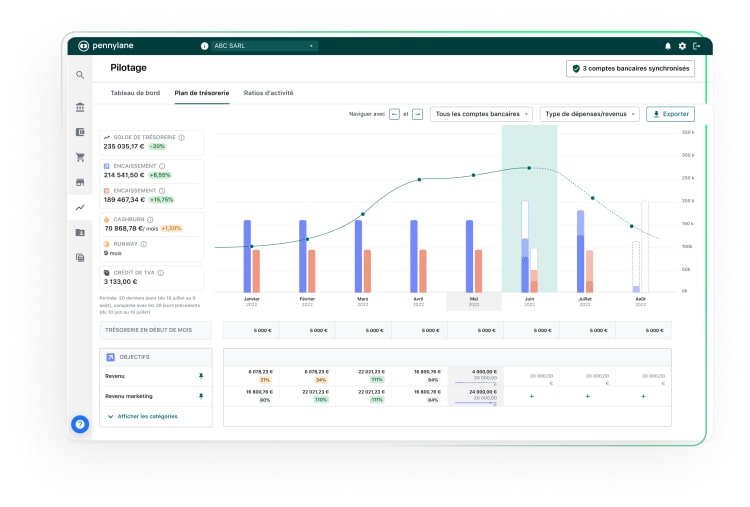
Pennylane is a French cloud platform primarily focused on accounting and financial management, but it supports workflows that intersect with HR, such as expense management and invoice processing. It is often used in combination with HR tools when finance is the main driver of digital transformation.
Pros
- Strong automation of accounting entries and collaboration with accountants and finance teams.
- Helps companies prepare for e-invoicing and financial reporting.
- Cloud-based with a focus on simplifying data exchange across teams.
Cons
- Not a dedicated HR suite; you may need a separate HRIS for core HR tasks.
- Implementation typically goes through partners or integrators, which can add time and cost.
Pricing
Pennylane pricing is usually available on request, often via implementation partners that bundle software and services.
4. Sellsy
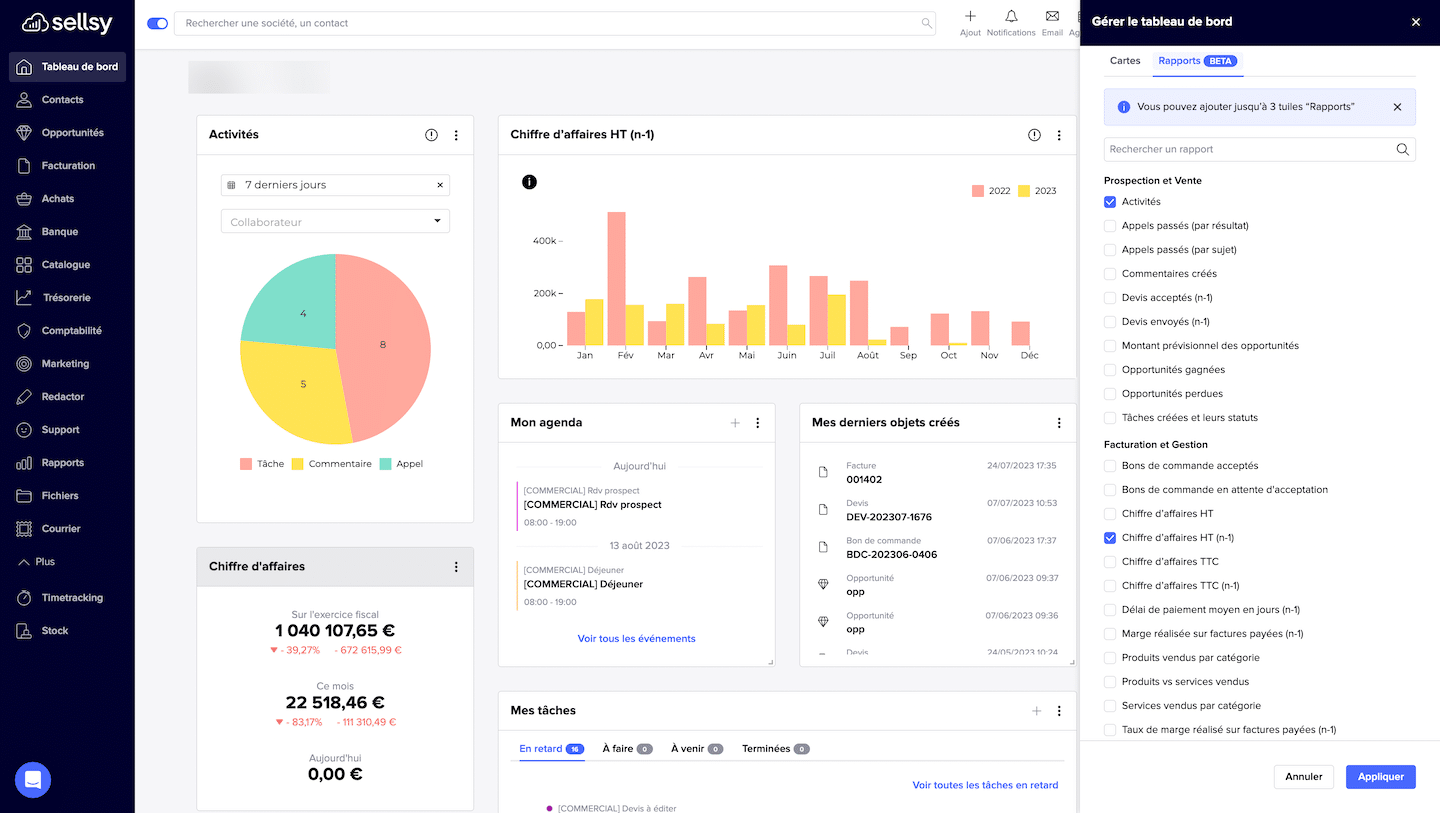
Sellsy is a French CRM and commercial management platform that also covers some HR-relevant processes, such as document management and e-signature for employment contracts and agreements. It is popular with French SMBs that want a local alternative to US-based CRM tools and value GDPR compliance.
Pros
- Strong CRM with 360° client view and integrated e-signature features, which can support HR documents and workflows.
- French solution with servers in France and a clear focus on GDPR compliance.
- Local support for French SMBs.
Cons
- Primarily a CRM and sales tool, so HR capabilities are limited compared with dedicated HR software.
- Pricing can become relatively high as you add more users and modules.
- Some interface elements feel less up-to-date than newer SaaS tools.
Pricing
Sellsy uses a tiered subscription model; total cost depends on the number of users and selected modules, and can increase quickly as teams scale.
5. Zoho People
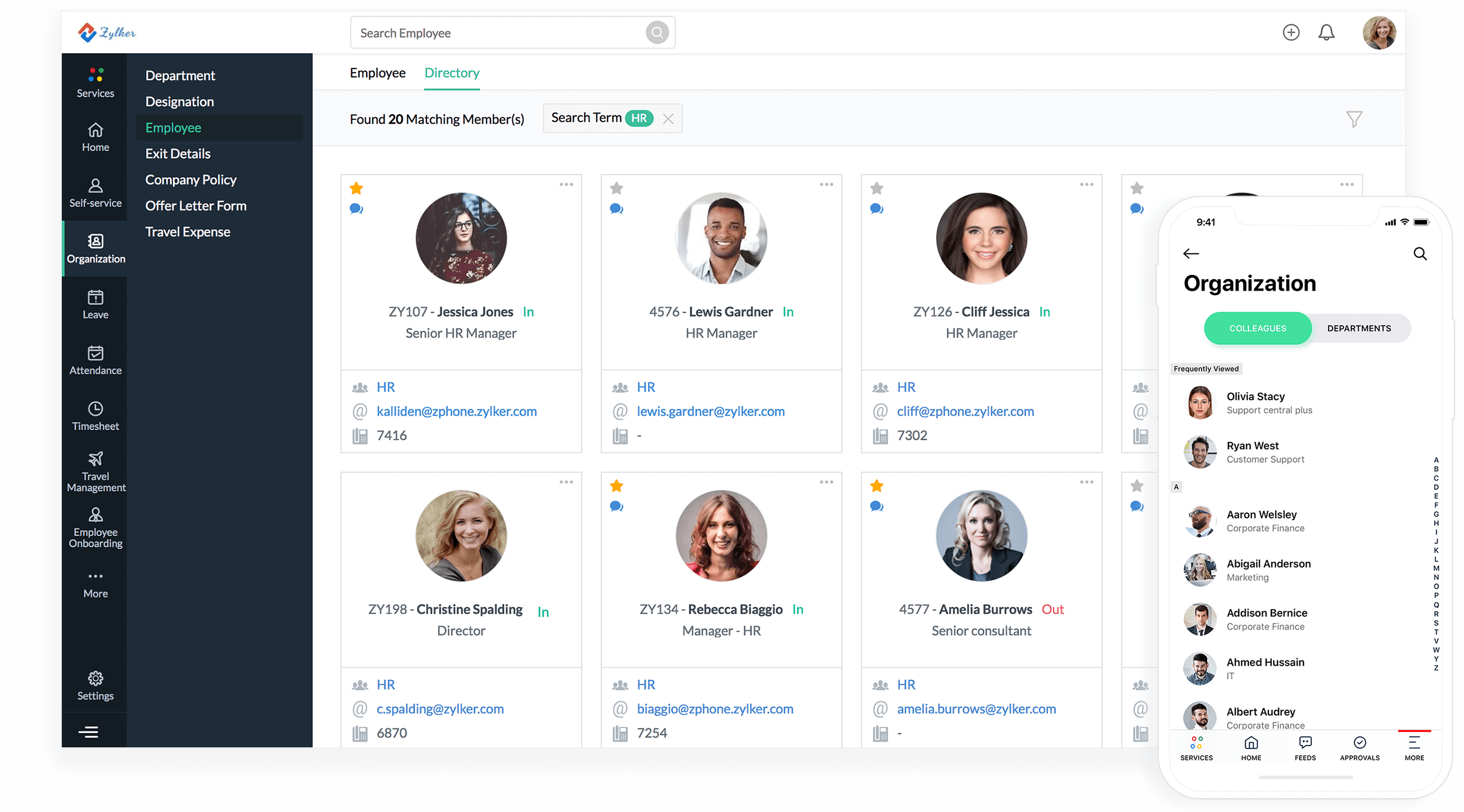
Zoho People is Zoho’s HR platform, which offers core HR features such as employee database, time and attendance, time off management, and performance tools. It is suitable for cost-conscious organizations that want a global solution and already use other Zoho products.
Pros
- Flexible plans designed for businesses of all sizes, with very low entry-level pricing.
- Modules for time tracking, time off, workflows, and performance make it a capable HRIS.
- Integrates with the broader Zoho ecosystem (CRM, projects, and more).
Cons
- Generic global tool; French payroll and regulatory specifics usually require additional configuration or extra tools.
- Support and interface localization may feel less tailored than French-first solutions.
Pricing
Plans typically start around 1.25 USD per user per month (billed annually) for essential HR, and go up to about 4.50 USD per user per month for enterprise-grade features.
6. Lucca
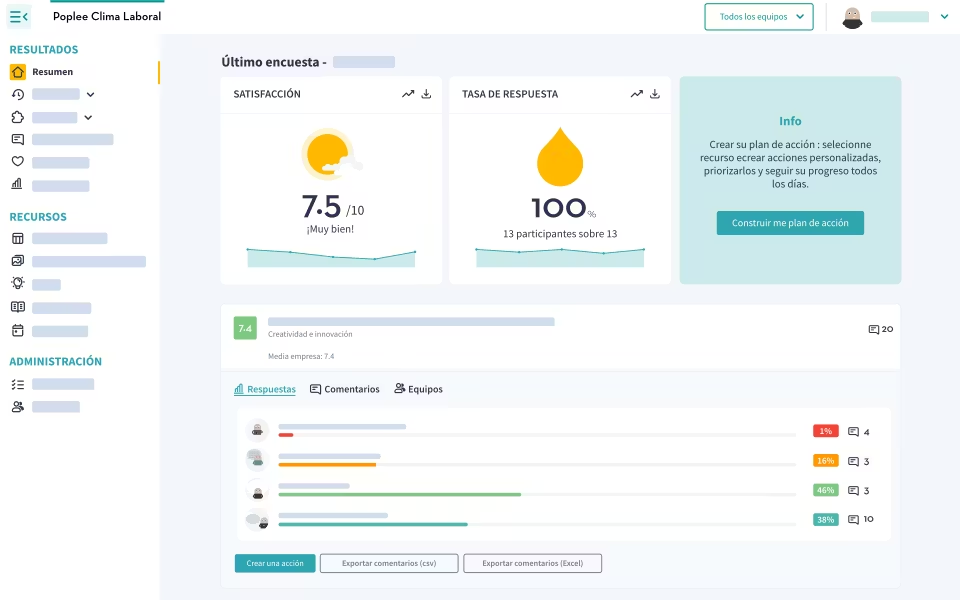 Lucca is an HRIS built as a modular suite, with more than a dozen interconnected HR modules that companies can pick and choose from. It covers time tracking, time off, expenses, performance, and other HR processes, with a strong presence in French mid-market organizations.
Pros
- Modular approach lets you assemble a tailored HRIS from individual apps.
- Focus on user experience and automation of daily HR tasks.
- Pricing scales with modules and company size, which can be efficient if you need only a few functions.
Cons
- Managing many separate modules can add complexity, especially for smaller teams.
- Full coverage of all HR processes may require multiple modules, which increases total cost.
Pricing
For SMBs around 50 employees, prices typically range from about 0.50 € to 6.25 € per user per module per month, with different scales for larger organizations.
7. PayFit
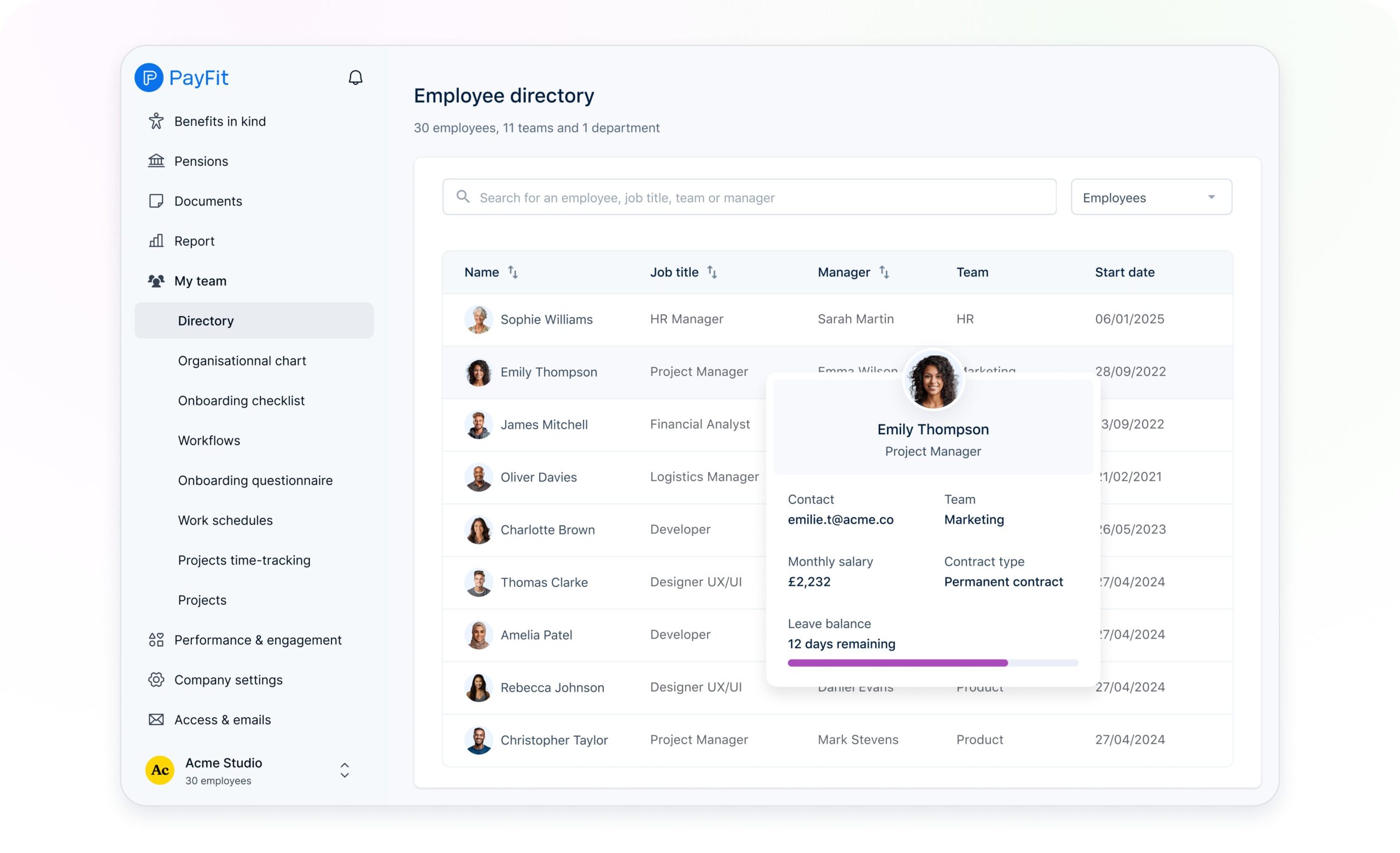
PayFit is a payroll-first HR platform that focuses on automating payroll and HR operations for European SMBs, with strong support for French payroll specifics. It helps companies generate pay slips, manage declarations, and keep up with regulatory changes across markets.
Pros
- Deep specialization in payroll, including complex French rules and updates.
- Automates pay slips, declarations, and statutory reports, reducing errors and manual work.
- Strong focus on GDPR, with privacy-by-design and ISO 27001–certified security measures.
Cons
- More limited outside payroll and core HR; you may still need a broader HRIS for engagement, performance, or recruiting.
- Pricing can feel high for very small businesses with tight budgets.
Pricing
Indicative pricing for PayFit in 2026 starts at around 19 € per employee per month plus a fixed monthly subscription of roughly 49 €, with exact prices depending on configuration.
8. Cegid Talentsoft HR
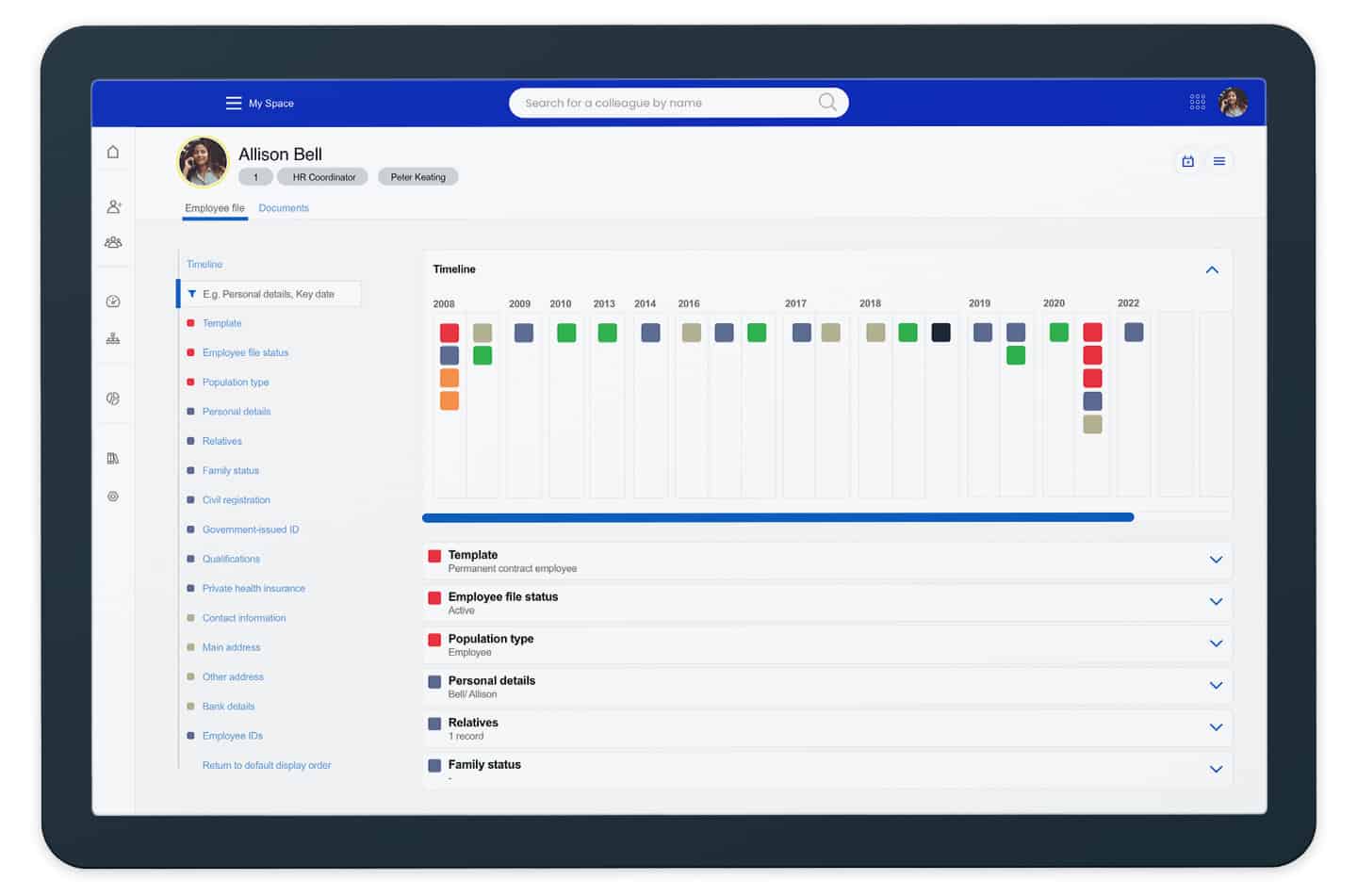
Cegid, a French specialist in business management solutions, expanded its HR footprint by acquiring Talentsoft, a leading European cloud talent management provider. Today, the combined Cegid HR/Talentsoft offering targets larger SMBs, mid-market, and enterprise organizations that need advanced HCM and talent capabilities.
Pros
- Enterprise-grade talent management and HR suite built for European regulations and multi-country environments.
- Strong experience with large customers in France and across more than 130 countries.
- Backed by a major European software group with long-term investment in HR and payroll.
Cons
- More complex implementation compared with SMB-focused tools, often involving longer projects and change management.
- Too much for small companies that only need basic HR automation.
Pricing
Cegid HR and Talentsoft solutions are priced on a custom basis, with contracts tailored to the size, geographic scope, and modules required by each organization.
How to choose the best HR software in France
When you evaluate HR software for France, your first step should be to clarify your priorities: payroll accuracy, time tracking, compliance, analytics, or a better employee experience. Then you can compare vendors against a short list of requirements instead of trying to cover everything at once.
Key factors to consider include:
- Easy compliance with local regulation: Look for tools that support French labor law, payroll requirements, and GDPR, ideally with EU-hosted data.
- Features: Decide whether you prefer an all-in-one HRIS like Factorial, or PayFit plus a separate HR tool, depending on your internal skills and integration needs.
- How it scales: Check whether the software can grow from a small team to hundreds or thousands of employees without painful migrations.
- Ease of use and adoption: Easy-to-use, intuitive interfaces help employees and managers adopt the tool quickly, which is essential for ROI.
- Security and GDPR: Ask about certifications, encryption, and GDPR compliance, especially if you process sensitive HR and payroll data.
- Total cost: Look beyond the monthly per-user price and factor in implementation, training, and time saved through automation.
For many French companies, an all-in-one platform like Factorial strikes a good balance between feature depth, compliance, and usability, especially when they want to unify HR and finance data.
French HR software benefits
Investing in HR software built for the French and European context delivers several benefits for HR, finance, and leadership teams.
Main advantages of HR software in France include:
- Compliance and lower risk: Tools that stay current with GDPR, French payroll rules, and reporting requirements help reduce errors and legal risk.
- Time saved and productivity: Automating time tracking, time-off approvals, payroll preparation, and expense management can save dozens of hours per month, freeing HR to focus on strategy.
- Better employee experience: Self-service portals, digital onboarding, and transparent leave and time-off processes improve employee satisfaction.
- Data-driven decisions: With centralized, clean HR data and analytics dashboards, leaders can track headcount, turnover, and costs and make more informed decisions on hiring and development.
- Scalable operations: A HRIS lets you add new entities, countries, and teams without rebuilding your HR processes from scratch.
These benefits are especially important in France, where regulations change frequently and HR teams must balance compliance with employee expectations for workplaces today.
Invest in Factorial for the best HR software
If you want a single platform that covers core HR, payroll preparation, expenses, and analytics while staying fully compliant with European regulations, Factorial is a strong choice. The platform centralizes HR data, automates repetitive work, and offers people and finance analytics designed for growing European companies, including those based in France.
Factorial is 100% GDPR-compliant, with HR data encrypted and hosted in the EU, and policies aligned with GDPR, UK GDPR, and other key privacy frameworks. Its AI Business Agent, One, is built with EU AI Act principles in mind and helps HR and finance teams draft policies, reports, surveys, and workflows while keeping control over sensitive data through role-based access and clear audit trails.
Because Factorial was designed for European SMBs and mid-market organizations, it scales from small teams to companies with up to around 2,000 employees and adapts to many industries and working models. With transparent pricing, a free trial, and modular plans, you can start with the essentials and expand as your HR and finance processes mature.
*Disclaimer: The information presented on this page is based on publicly available sources. The comparisons between Factorial and other providers are intended solely for the illustration of the respective software features, pricing and functionalities. All information regarding features, prices, and integrations may be subject to change without prior notice. Factorial assumes no liability for the accuracy, completeness, or timeliness of the information presented. We recommend contacting the respective providers directly to obtain the most accurate and up-to-date information. All legal regulations regarding Spanish fair advertising and competition law are fully observed by us; if you have any concerns, please reach out to us. The comparisons presented do not constitute a final evaluation or recommendation for any provider, but serve solely as an informational source.