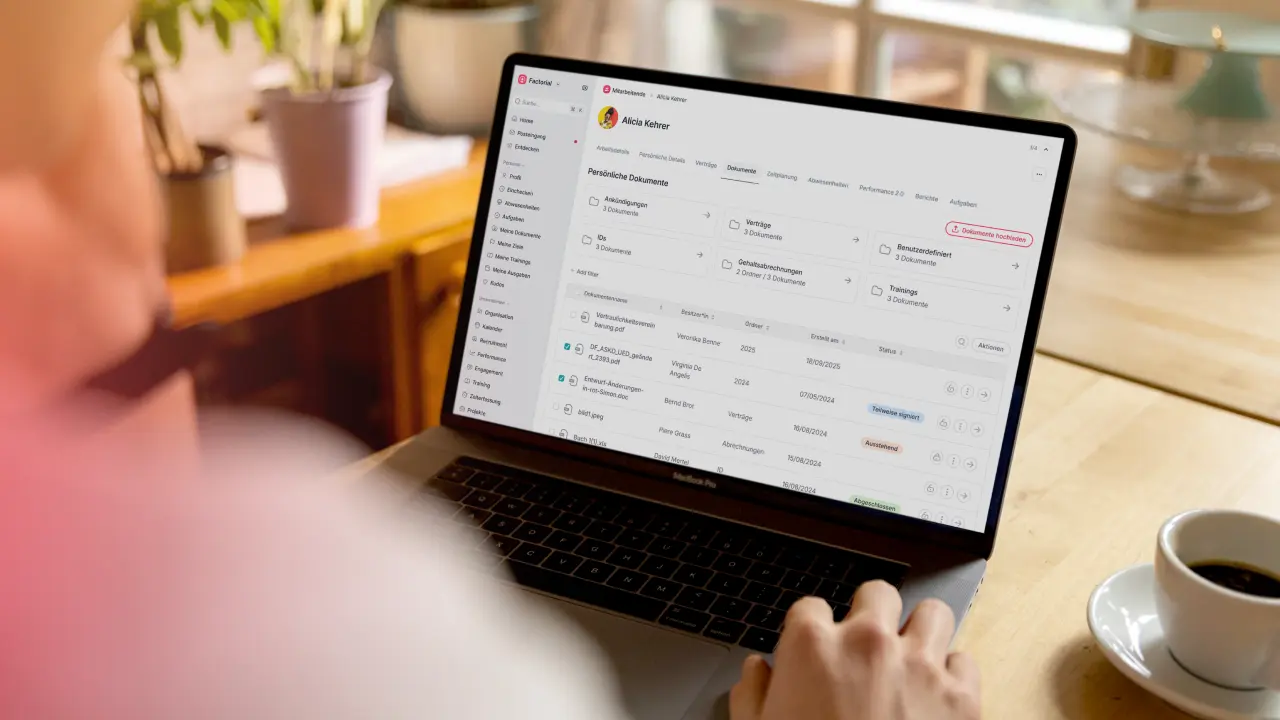
Using Lattice today? After Lattice announced it will shut down its HRIS and payroll products, many HR teams are unsure what to do next.
This guide explains what to focus on, which HRIS platforms to consider, and how to move forward so you can choose the right system for your team.
HRIS and payroll sunset: What it means for your team
In November 2025, Lattice announced it will discontinue its HRIS and payroll products by July 2026. Lattice will continue offering performance management, but it will no longer support core HR or payroll.
For many teams, this announcement came as a surprise. Now, those same teams need a plan to move to a new system. The main takeaway is clear. If you use Lattice HRIS, you need a new HRIS and payroll solution before July 2026.
This timeline can feel tight. Finding a new vendor, scheduling demos, signing contracts, moving data, and completing HRIS training all take time. These steps add up quickly.
If you rely on Lattice for more than performance reviews, you need your next system to cover more than that. This can include employee records, payroll, time off, compliance, and reporting. It should also work well with your performance tools, whether you stay with Lattice for performance or switch to an all-in-one platform.
This guide is here to help Lattice users plan their move with confidence and avoid last-minute stress.
Migrating HRIS from Lattice in 2026
Lattice’s decision to discontinue its HRIS means every affected company must plan a transition. Even if July 2026 feels far away, the work required to switch HR systems is significant. Understanding the risks and benefits early will help you make better decisions and avoid problems later.
Risks of migrating to a new HRIS
Migrating to a new HRIS comes with many challenges, especially if the process is rushed or poorly planned.
Risk of data loss
Your HRIS stores sensitive information such as employee details, payroll history, time-off balances, and documents. If data is not exported correctly or validated during migration, important records could be lost or incomplete.
Increased workload for HR teams
HR teams already manage payroll, hiring, employee questions, and compliance. Adding an HRIS migration on top of daily work can lead to long hours, stress, and mistakes. Without clear planning, work can become disorganized quickly.
Payroll and compliance errors
Switching payroll systems always carries risk. Incorrect tax settings, missing employee data, or timing issues can cause payroll errors. These mistakes can affect employee trust and may lead to compliance problems.
Confusion for employees
Employees rely on HR systems to request time off, view pay stubs, and update personal information. If communication and HRIS training are not handled well, employees may feel confused or frustrated during the transition.
Tool fragmentation
If you replace Lattice HRIS with multiple disconnected tools, you may end up with more systems to manage. This can create data gaps, reporting issues, and extra manual work for HR and finance teams.
Choosing a new HRIS is a long-term decision that affects payroll, compliance, and the daily experience of your employees. Taking time to evaluate your options helps you avoid rushed choices that can lead to data issues, extra costs, or poor adoption. The right system should fit your current needs and support your company as it grows. Careful planning now can save your HR team time, stress, and rework later.
Benefits of migrating to a new HRIS
While there are risks, moving away from Lattice HRIS also creates valuable opportunities.
Choosing a better fit for your team
This is your chance to select an HRIS that truly matches your company’s size, structure, and goals. Many teams discover they need more flexibility, better reporting, or stronger payroll support than they had before.
Improved organization and efficiency
A modern HRIS can reduce manual tasks and bring HR, payroll, and finance data into one place. This improves accuracy and saves time across teams.
Better integrations with other tools
When choosing a new system, you can ensure it integrates well with your accounting, recruiting, and performance tools. This helps create smoother workflows and more reliable data.
Scalability for future growth
The best HRIS for mid-sized companies supports growth. A strong platform allows you to add employees, locations, and new processes without switching systems again in a few years.
Stronger employee experience
A clear, easy-to-use system improves how employees interact with HR. Self-service access, mobile features, and simple workflows reduce questions and support requests.
By planning early, you can reduce the risks and take full advantage of these benefits.
How to choose the right HRIS
If you are moving away from Lattice HRIS, choosing the right replacement is one of the most important decisions you will make. The goal is not just to replace what you are losing, but to find a system that works better for your team today and in the future.
Below are the key features and factors Lattice users should focus on when evaluating a new HRIS.
Customization and flexibility
Every company runs HR a little differently. Your new HRIS should allow you to customize fields, workflows, and approvals without heavy technical work. This flexibility helps your system adapt as your company grows or changes.
Scalability for growing teams
Many Lattice users are mid-sized companies planning to grow. The best HRIS for mid-sized companies can support more employees, more locations, and more complex payroll without slowing down or becoming difficult to manage.
Data security and compliance
Your HRIS holds sensitive employee data. Look for strong security standards, role-based access, and compliance support. This is especially important if you operate in more than one country or region.
Mobile access for employees
Employees expect to access HR tools from their phones. Mobile access for time off requests, payslips, and personal information improves adoption and reduces questions for HR teams.
Reporting and visibility
HR leaders need clear insights into headcount, turnover, time off, and payroll costs. A strong HRIS should offer easy-to-use reports and dashboards without relying on manual spreadsheets.
Payroll and finance connection
HR and finance work closely together. A system that connects HR and payroll with finance data reduces errors and improves accuracy. This connection becomes even more important as your company scales.
Why Factorial stands out for Lattice users
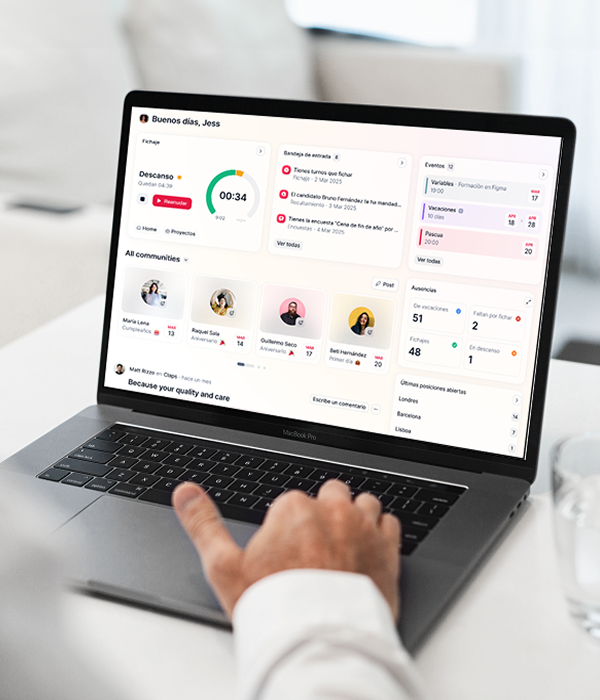
For many teams leaving Lattice HRIS, Factorial stands out as a strong alternative. Factorial is an all-in-one HR platform designed for growing and mid-sized companies.
Unlike Lattice, which is now focused on performance management, Factorial keeps HRIS at the center of its product. It brings HR, payroll, time tracking, and finance-related workflows into one system.
With Factorial, teams can:
- Manage employee records, time off, and payroll in one place
- Connect HR and finance processes for better accuracy
- Customize workflows without complex setup
- Support teams across multiple countries, languages, and currencies
For companies looking to reduce tool sprawl and simplify operations, Factorial offers a clear and scalable solution.
Factorial vs. Lattice
The table below shows a quick comparison between Factorial and Lattice, focusing on core HRIS features.
| Feature | Factorial | Lattice |
|---|---|---|
| Core HRIS features (employee records, org charts, employee data) | Yes; built as a core part of the product with document management and employee profiles. | Yes; Lattice offered HRIS as part of its platform, but it will be sunset by July 2026. |
| Payroll & time tracking | Yes; payroll prep and time tracking are included features. | Payroll was offered but is being discontinued by July 2026. |
| Performance management | Yes; performance reviews and goal tracking available. | Yes; performance management remains a core focus and will continue past 2026. |
| Recruiting & ATS | Yes; recruiting workflows and applicant tracking are part of the system. | No dedicated built-in ATS; integrates with external ATS tools. |
| Reporting & analytics | Yes; HR reporting and analytics included. | Yes; analytics and reporting around performance and people data. |
| Employee self-service | Yes; employees can view payslips, request time off, and update profiles. | Yes; employees can log in to see information and complete tasks. |
| Mobile access | Yes; available for employees and managers. | Yes; mobile access for core functions. |
| Integrations | Yes; connects with other business tools via API and built-in connectors. | Yes; Lattice supports integrations with HR and other systems like payroll tools. |
| Global HR support | Yes; multi-location, multi-currency support. | Limited outside core HR functions and performance tools. |
| Security & compliance | Yes; built-in secure access and compliance features. | Yes; standard security and compliance in people management. |
The reason many Lattice users are choosing to move their core HR processes to Factorial is because they are sunsetting their HRIS and payroll features, but this gives users the perfect opportunity to ask themselves what tools they really need from their software of choice.
Step by step guide on migrating from Lattice
Moving from Lattice HRIS to a new platform can feel like a big task. Breaking it into clear steps makes the process easier to manage and reduces risk. Below is a simple, practical guide on how to transition to a new HR software.
Step 1: Choose a solution and plan your implementation
Start by selecting the HRIS that best fits your needs. Focus on systems built for growing teams, not tools that treat HR as a side feature.
Create a clear plan that includes:
- Your target go-live date
- Key milestones and deadlines
- Internal owners from HR, finance, and IT
- Time for testing and HRIS training
Confirm whether your new vendor offers implementation support. A dedicated specialist can guide you through setup, data mapping, and best practices.
Step 2: Prepare and migrate your data
Before migrating, export all important data from Lattice. This should include employee records, payroll history, time-off balances, documents, and reports.
Clean your data before importing it into the new system. Remove duplicates, fix errors, and confirm that fields are consistent.
During migration:
- Map old fields to new ones carefully
- Confirm which historical data will be preserved
- Validate data after import to catch errors early
A strong HRIS partner will help review your data and confirm accuracy before you go live.
Step 3: Set up integrations
Your HRIS likely connects to other tools such as accounting, recruiting, or performance management software. Make sure these integrations are planned and tested before launch.
Confirm:
- How often data syncs
- Who owns troubleshooting
- What happens if an integration fails
- Reducing manual data entry should be a top goal.
Step 4: Train your team and drive adoption
HRIS training is critical for a smooth transition. Start with your HR and finance teams, then expand to managers and employees.
Provide:
- Short training sessions or guides
- Clear instructions for common tasks
- Support channels for questions
Communicate early and often. Let employees know what is changing, when it is changing, and how it will affect them.
Step 5: Test, launch, and monitor
Before fully switching systems, run tests. Many teams use a short parallel period where both systems run at the same time to confirm payroll accuracy.
After launch:
- Monitor payroll and reports closely
- Gather feedback from users
- Fix small issues quickly
This final step helps ensure long-term success and trust in the new system.
Why Factorial is the solution for your HR needs
If you are leaving Lattice HRIS, you are not just replacing a tool. You are choosing the system that will support your HR team, your managers, and your employees for years to come. This is where Factorial stands out.
Factorial is built for growing and mid-sized companies that want one clear system instead of many disconnected tools. While Lattice is moving away from HRIS, Factorial keeps HRIS as its core focus.
One system for HR, payroll, and finance
One of the biggest challenges HR teams face is managing too many tools. Employee data lives in one system. Payroll lives in another. Finance reports live somewhere else.
Factorial brings these pieces together.
With Factorial, HR and finance teams work from the same data. Employee records, payroll, time off, and expenses are connected in one place. This reduces manual work, improves accuracy, and saves time every pay cycle.
For Lattice users who had to rely on integrations or workarounds, this all-in-one setup is a major upgrade.
Built for the needs of mid-sized companies
The best HRIS for mid-sized companies balances power with ease of use. Factorial is designed to grow with you without becoming complex or hard to manage.
As your company adds new employees, teams, or locations, Factorial scales with you. You do not need to switch systems again once you grow past a certain size.
This makes Factorial a strong long-term choice for companies planning ahead after the Lattice HRIS sunset.
Flexible pricing that fits your growth
Switching HR systems can be expensive, especially when tools are priced for large enterprises. Factorial offers flexible pricing that adapts to your company size and needs.
You only pay for what you use. As your team grows, you can add modules without rebuilding your entire HR setup.
This flexibility makes planning easier for both HR and finance teams.
More than core HR features
Factorial goes beyond basic HRIS functions. In addition to core HR and payroll, Factorial offers modules that support daily operations across teams.
These include:
- Expense management for employee reimbursements
- Project and time tracking
- Document management and approvals
- Performance and talent tools
For Lattice users who would need to rely on several tools, Factorial helps bring everything into one system.
Global support with local flexibility
If your team works across countries, managing HR can be complex. Different currencies, languages, and rules create extra work.
Factorial supports multiple languages and currencies, making it easier to manage global teams. This is especially valuable for companies expanding into new regions.
Having one system for global HR reduces confusion and improves reporting.
Easy adoption for employees and managers
An HRIS only works if people actually use it. Factorial focuses on a clean and simple user experience.
Employees can:
- Request time off
- Access payslips
- Update personal details
- Submit expenses
Managers can:
- Approve requests
- View team data
- Track time and costs
This ease of use reduces questions for HR teams and improves adoption across the company.
Dedicated migration support for Lattice users
Migrating from Lattice HRIS does not have to be overwhelming. Factorial offers support designed to help teams make a smooth transition.
You get guidance on:
- Exporting and importing Lattice data
- Setting up workflows and approvals
- Configuring payroll and time off
- Completing HRIS training
This hands-on support helps reduce risk and speeds up implementation.
Get started with Factorial
Lattice’s decision to end its HRIS and payroll products means every current user will need a new system before July 2026. While that date may feel far away, switching HR systems takes time and planning.
Starting early gives you more control. You can compare options, move your data safely, and complete HRIS training without rushing. This helps reduce risk and avoids last-minute stress for your HR and payroll teams.
Moving to a new HRIS is also a chance to improve how your team works. With the right platform, you can simplify processes, connect HR and finance, and give employees a better experience.
Factorial’s HR software is a strong all-in-one alternative for Lattice users. It is built for mid-sized companies and supports HR, payroll, and daily operations in one system.
If you are planning how to transition to a new HR software, now is the right time to consider your options.
Book a demo with Factorial to see how you can make the switch with confidence.
Disclaimer:
The information presented on this page is based on publicly available sources. The comparisons between Factorial and other providers, are intended solely for the illustration of the respective software features, pricing and functionalities. All information regarding features, prices, and integrations may be subject to change without prior notice. Factorial assumes no liability for the accuracy, completeness, or timeliness of the information presented. We recommend contacting the respective providers directly to obtain the most accurate and up-to-date information. All legal regulations regarding Spanish fair advertising and competition law are fully observed by us; if you have any concerns, please reach out to us. The comparisons presented do not constitute a final evaluation or recommendation for any provider, but serve solely as an informational source.