There are several types of work shifts commonly used across industries in the United States and around the world. From traditional 9-to-5 schedules to night, rotating, split, and flexible shifts, the type of schedule an organization uses can have a significant impact on both daily operations and employee productivity. Because every business has different staffing needs, choosing the right work schedule requires careful planning and consideration.
Effective shift management helps managers ensure that the right employees are available at the right times while maintaining a balanced workload and supporting business goals. For HR professionals and business leaders, understanding the different types of work shifts and how they work is an important part of building efficient and sustainable employee schedules. In this article, we’ll explore the most common types of work shifts, along with examples and key considerations for managing them effectively.
Table of Contents
- Key Facts About Work Shifts
- Work Shift Types
- Alternative Work Shift Types
- Other Work Schedules
- Examples of Shifts by Industry
- Benefits of Different Shift Types
- How to Create the Best Shift Schedule for Employees
- Work Schedules for Employees (Template)
- Shift Scheduling Software for Shift Planning
- Work Shifts: Manager Checklist
Key Facts About Work Shifts
- Work shifts are scheduled blocks of time that assign employees to specific hours, days, or rotations.
- In 2025, the U.S. Bureau of Labor Statistics reported that employed people worked an average of 7.66 hours on days they worked.
- The Occupational Safety and Health Administration (OSHA) reports that nearly 15 million workers work full-time on evening, night, rotating, or irregular shifts, which can increase fatigue risk.
- For covered nonexempt employees, the U.S. Department of Labor requires overtime pay after 40 hours in a 168-hour workweek.
Discover how Factorial’s Shift Management Software can reduce admin burden and improve your scheduling process ✅

Work Shift Types
There are many work shift types besides the regular 9-to-5 schedule. These shift types are the result of different industry and operational needs, employee preferences, and laws and regulations related to shift scheduling and time off.
Here are some of the most common types of work shifts.
| Shift type | Typical hours | Best fit |
|---|---|---|
| Day shift | 7 AM–3 PM or 8 AM–4 PM | Standard business coverage |
| Evening shift | 3 PM–11 PM or 4 PM–12 AM | Customer demand after office hours |
| Night shift | 11 PM–7 AM or 12 AM–8 AM | 24/7 operations |
| Rotating shift | Varies by cycle | Fair distribution of less-preferred shifts |
Work by Shift
Shift work is a work schedule designed to provide service throughout the full 24 hours of the day. Depending on the company and the industry, some people may work 12-hour shifts, others may work 10-hour shifts, while others work 8 hours a day. At the federal level, the U.S. Department of Labor states that the FLSA does not limit the number of hours employees aged 16 or older may work in a workweek, but covered nonexempt employees must receive overtime pay for hours worked over 40 in that workweek. OSHA does not set a specific standard for extended or unusual shifts, but it considers a normal shift to be no more than 8 consecutive daytime hours, 5 days per week, with at least 8 hours of rest.
What is a Double Shift?
Many occupations demand 24/7 coverage, such as those in hospitals, airports, and police services. A work period starting from 8 AM to 4 PM constitutes a single shift, typically referred to as the day shift. From 4 PM to midnight, the second shift emerges, commonly known as the “swing shift.” The third shift, spanning midnight to 8 AM, is sometimes termed the red-eye shift or simply the midnight shift. A double shift entails working two consecutive shifts, like starting from 8 AM and continuing until midnight, often referred to as “two shifts back to back.”
For different organizations, the timing of each shift may vary. In the cases of police and hospitals, they frequently stagger the shift changeover across a multitude of personnel, preventing a simultaneous shift switch for everyone. This approach leads to shifts commencing at diverse times, such as 8 AM, 9 AM, 10 AM, and so forth, creating a continuous rotation around the clock.
Rotating Shifts
In some industries, employees work rotating shifts, where they alternate between different shifts on a regular schedule. For example, an employee might work the day shift for a certain number of days, then switch to the evening or night shift.
Day Shift (1st Shift)
The day shift typically runs from early morning to late afternoon or early evening, usually between the hours of 7:00 AM and 3:00 PM or 8:00 AM and 4:00 PM.
Evening Shift (2nd Shift)
The evening shift usually begins in the late afternoon and continues until around midnight. The hours for this shift might be around 3:00 PM to 11:00 PM or 4:00 PM to 12:00 AM.
Night Shift (3rd Shift or Graveyard Shift)
The night shift typically starts in the late evening or midnight and runs until the early morning hours. Common hours for the night shift are 11:00 PM to 7:00 AM or 12:00 AM to 8:00 AM.
Alternative Work Shift Types
Now let’s take a look at some other shift examples.
| Alternative shift | When it works best |
|---|---|
| Split shift | Demand peaks twice in one day |
| Weekend shift | Customer demand rises on Saturdays or Sundays |
| On-call shift | Coverage is unpredictable |
| Seasonal shift | Demand changes by season |
Split Shifts
A split shift involves dividing the workday into two distinct periods. An employee might work a few hours in the morning, have a break during the middle of the day, and then work a few more hours in the afternoon or evening.
Weekend Shifts
Some industries require employees to work on weekends, often with a schedule that aligns with typical business hours or other shift patterns.
On-Call Shifts
Employees on on-call shifts are required to be available to work if needed but are not guaranteed a set number of hours. They might need to be reachable and ready to come in at short notice.
Overtime Shifts
Overtime shifts occur when employees work beyond their regular hours, often to cover peak demand periods or unexpected events. Overtime can occur during any shift.
Flexible Shifts
Some workplaces offer flexible shifts, where employees have some control over their work hours. This might involve choosing from a range of available shifts that best fit their schedule.
Seasonal or Temporary Shifts
Certain industries, such as retail during the holiday season or agriculture during harvest periods, may have shifts that are only active during specific times of the year.
It’s important to note that the specific names and characteristics of shifts can vary by industry and employer. Additionally, the prevalence of different shift types can change based on factors such as the nature of the work, operational requirements, and employee preferences. If you want to read about even more types of schedules and shift types, read our articles on swing shift hours, 9/80 work schedules, or the 4-hour work week.
Other Work Schedules
There are additional categorizations of work arrangements beyond shift types. These categorizations relate to the number of hours worked per week or the overall employment status. Here are a few more work arrangements:
Part-Time Employee Schedules
Part-time employees work fewer hours than full-time employees. The exact number of hours that constitutes part-time work can vary, but it’s generally considered to be less than the standard 40 hours per week. Part-time employees might work specific shifts or have a variable schedule.
Full-Time Employee Schedules
Full-time employees typically work a standard number of hours per week, often around 40 hours. They may work consistent shifts and enjoy benefits such as healthcare, paid time off, and retirement plans.
Temporary or Seasonal Shift Schedules
Temporary employees are hired for a specific period or purpose. Seasonal employees work during peak business seasons, such as holidays. Both types of employees might work various shifts, including part-time or full-time hours.
Contractor or Freelancer Schedules
Contractors and freelancers are typically hired on a project or contract basis. They often have more control over their schedules and may work irregular hours, depending on the project’s requirements.
Flextime
Flextime allows employees to choose their start and end times within a certain range of hours determined by the employer. This provides some flexibility in creating a work schedule that suits an employee’s needs.
Compressed Workweek
In a compressed workweek, a full-time schedule is completed in fewer than the standard five days. For example, an employee might work four 10-hour days instead of five 8-hour days.
Job Sharing
Job sharing involves two or more employees sharing the responsibilities of a full-time position. Each employee might work part-time hours or alternate shifts to cover the role.
Remote Work or Telecommuting
Remote workers or telecommuters perform their job tasks from a location outside of the physical workplace. They might work on various shifts or have more flexible schedules.
Zero-Hours Contracts
In U.S. HR usage, similar arrangements are usually described as on-call, variable-hour, or as-needed schedules. The U.S. Department of Labor states that FLSA coverage depends on the employment relationship and hours worked, not the schedule label, and covered nonexempt employees must still receive overtime after 40 hours in a workweek.
Permanent Part-Time
Some roles are designed as ongoing part-time positions, where employees work fewer hours each week but still have a stable, permanent role.
Shift Lead or Supervisor Schedules
These roles involve overseeing a team during a particular shift. Shift leads or supervisors often have a mix of responsibilities beyond regular job tasks, including managing employee schedules and addressing issues that arise during their shift.
These work arrangements can have varying implications for benefits, job security, scheduling, and overall work-life balance. It’s essential for employees to understand the terms of their employment and how they relate to the specific work arrangement they are in. Read more in our article on hybrid work schedules.

Examples of Shifts by Industry
Certain industries implement specific shift schedules to meet their unique operational requirements. These tailored schedules ensure that essential functions are smoothly carried out around the clock, maintaining continuous service and production.
For remote-capable roles, scheduling may also include home-based work blocks. In 2025, the U.S. Bureau of Labor Statistics reported that 34.5% of employed people worked at home on days they worked, while 69.8% worked at a workplace.
Work Schedules for Construction
- Full-time: 40 hours spread over 5 days (Monday to Friday) within regular office hours.
In certain cases, like construction projects, tasks might need to be completed during nighttime hours or on weekends. This is particularly relevant during ongoing building operations when improvement or adaptation projects are underway.
Work Schedules for Medical Care Assistants
- Daily schedules vary based on workplace setting. It’s common to see one of these schedules or a variation of them implemented in one workplace:
- Private practices: commonly 8 AM to 5 PM
- Emergency departments and urgent care clinics: may include overnight shifts, weekends, and holidays where a rotating shift schedule is implemented
- Three 12-hour shifts throughout the week
Work Schedules for Law Firms
- In Big Law firms, lawyers typically work more than 40 hours a week. Their workweeks can sometimes reach up to 80 hours due to the size of their firm, legal practice area, or geographic location.
- Additionally, client availability expectations often lead lawyers to work beyond regular office hours as they need to be available for any urgent needs.
Benefits of Different Shift Types
The variety of shift types exists primarily to accommodate the diverse needs of businesses and industries, as well as to provide flexibility for both employers and employees. Different industries and sectors have unique operational requirements and customer demands, which can lead to the development of various shift schedules.
- Coverage: match staffing to opening hours and peak demand.
- Continuity: keep essential services running across days, nights, and weekends.
- Flexibility: support staff availability while maintaining operational control.
- Cost control: reduce understaffing, overstaffing, and avoidable overtime.
Here are some reasons why there are so many different shift types:
Around the Clock Shifts
Based on: Operational Needs
Some industries such as healthcare, emergency services, and manufacturing need to operate around the clock to ensure continuous service and production. Different shifts allow these industries to maintain operations 24/7. That coverage should be balanced against fatigue risk. The Occupational Safety and Health Administration (OSHA) reports that long hours and irregular shifts can increase injury and accident risk, and it identifies more than 8 hours as an extended shift threshold.
Restaurant Shifts
Based on: Customer Demand
Businesses that serve customers throughout the day and night, like restaurants, retail stores, and call centers, may require employees on various shifts to accommodate different customer schedules. Otherwise known as demand-based scheduling.
Restaurants that utilize demand-based scheduling can adjust their restaurant schedules to meet the ebb and flow of customer traffic, ensuring they have enough staff during peak dining hours without overstaffing during slow periods.
Manufacturing Industry Shifts
Based on: Maximizing productivity and efficiency
In manufacturing and production, continuous or extended operation can lead to higher productivity by utilizing machinery and facilities more effectively.
Flexibile Shifts
Based on: Other employee commitments, part-time work
Offering different shift options can attract a wider range of job applicants and accommodate employees with varying availability, such as students, parents, or individuals with other commitments.
Peak Demand Periods
Common in: hotel industry, hospitality
Some businesses experience peak demand during specific times of the year (e.g., holidays, shopping seasons, or tourist influxes). Temporary shifts can help meet these increased demands.

Shifts in Different Time Zones
Common with: Global Operations
In organizations with global reach, different shifts can facilitate communication and collaboration across different time zones.
Shorter Shifts
Main consideration: Health and Safety
In jobs where there are health and safety concerns, such as jobs involving hazardous materials or high-risk activities, shorter shifts or specific shift patterns might be implemented to minimize fatigue and ensure employee well-being. OSHA notes that accident and injury rates are 18% greater during evening shifts and 30% greater during night shifts compared with day shifts, so high-risk roles need tighter fatigue controls.
Employee Shift Preferences
Offering various shift options can help employers attract and retain a diverse workforce by accommodating individual preferences and personal obligations.
Healthcare Shifts
Main consideration: Regulatory Requirements
Some industries, like transportation, healthcare, and public safety, may have regulations that dictate specific shift lengths, rest periods, or time-off requirements.
Emergency Coverage
Emergency services, such as law enforcement, firefighting, and medical services, require 24/7 coverage to respond to unpredictable situations.
Shifts at Client Facilities
Main consideration: Maximizing facility use
Facilities such as gyms, recreation centers, and libraries might offer extended hours or varying shifts to provide services to a broader range of people.
Overall, the variety of shift types reflects the dynamic and diverse nature of work and the efforts made by employers to optimize operations, meet customer needs, and accommodate the lifestyles and preferences of their employees.
How to Create the Best Shift Schedule for Employees
Creating a good shift schedule for employees involves careful planning, consideration of various factors, and a focus on both operational needs and employee well-being. Here are steps and tips to help you create an effective and balanced shift schedule:
- Define required coverage by hour and role.
- Collect availability and time-off constraints.
- Assign staff by skill, workload, and legal limits.
- Publish schedules early and track changes.
- Review actual attendance against planned coverage.
Understand Operational Requirements
Determine the specific operational needs of your business, such as peak customer demand, production schedules, and service requirements.
Gather Employee Input
Seek input from employees about their shift preferences, availability, and any scheduling constraints they may have.
Balance Workload and Skill Levels
Distribute shifts fairly among employees to balance workloads and ensure that the right skill sets are available for each shift.
Consider Legal and Regulatory Requirements
Be aware of labor laws and regulations related to work hours, breaks, and rest periods. Ensure your schedule complies with these requirements. For U.S. employers, the U.S. Department of Labor states that the FLSA does not require meal or break periods, but short breaks of 5 to 20 minutes are generally compensable when offered.
Implement Scheduling Techniques
Use scheduling techniques like fixed shifts, rotating shifts, or split shifts based on your operational needs and employee preferences.
Use Scheduling Software
Consider using scheduling software to simplify the process and ensure accuracy. Many tools offer features such as employee availability tracking and automatic shift generation.
Prioritize Employee Well-Being
Aim to minimize consecutive long shifts, night shifts, and quick shift changes to support employee health and well-being.
Provide Adequate Rest Periods
Schedule regular breaks and rest periods to prevent employee fatigue and maintain productivity.
Offer Predictable Schedules
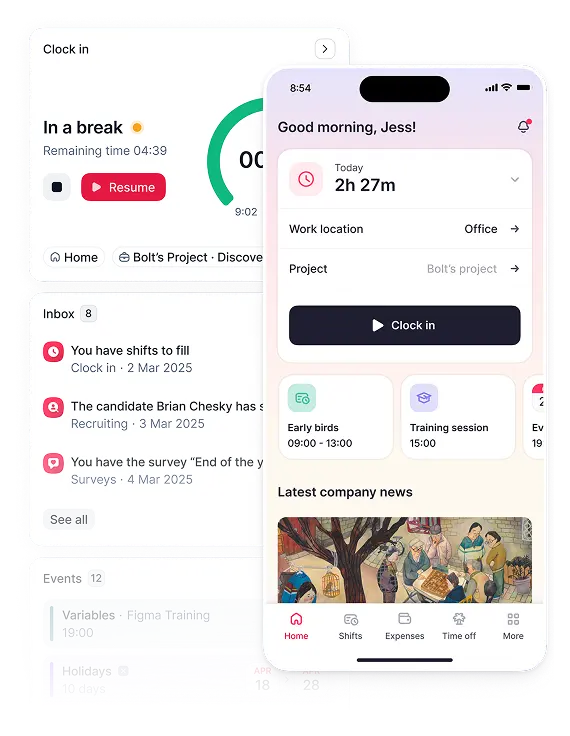
Provide employees with their schedules well in advance to help them plan their personal lives and reduce stress. For teams with rotating shifts, Factorial’s shift management software can help managers compare availability, time-off requests, and staffing needs before publishing the schedule.
Consider Peak Times and Off-Peak Times
Allocate more staff during peak business hours and fewer staff during off-peak times to efficiently manage resources.
Flexibility and Shift Schedule Requests
Allow for a degree of flexibility to accommodate employee requests for time off, swaps, or changes to their schedules.
Address Employee Preferences
Try to accommodate employee preferences when possible, as this can contribute to job satisfaction and morale.
Monitor and Adjust Shifts
Regularly review the effectiveness of the schedule and gather feedback from employees. Make adjustments as needed to improve efficiency and employee satisfaction.
Communication
Clearly communicate the schedule to employees, and maintain open lines of communication for any scheduling changes or updates.
Plan for Contingencies
Have contingency plans in place for unexpected absences or changes in staffing needs.
Continuous Improvement
Continuously assess the schedule’s impact on both the business and employees and make ongoing improvements.
Remember, creating a shift schedule that meets both business needs and employee well-being requires a balance between operational efficiency and flexibility. Regular communication, transparency, and a willingness to accommodate reasonable requests can contribute to a positive work environment and better employee morale.
Work Schedules for Employees (Template)
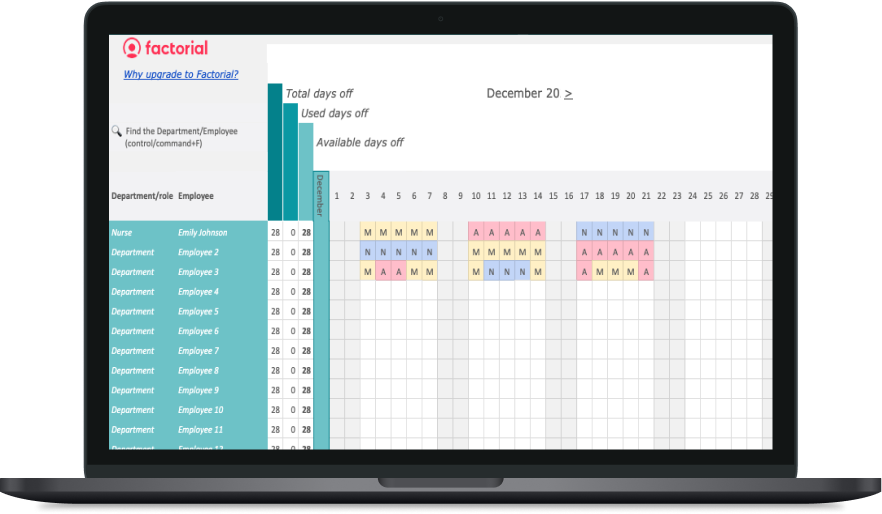
Creating employee work schedules isn’t easy. Keeping track of employee availability, PTO requests, compliance and operational needs all need to be taken into consideration. Thanks to apps for work schedules and work schedule software, you can save many hours of manual administrative work each week. But if you aren’t ready to start using a shift scheduling software like Factorial, then you can create your own work schedule using Excel. But don’t worry, we’ve already created one for you!
Click on the banner to download your shift schedule template.
Shift Scheduling Software for Shift Planning
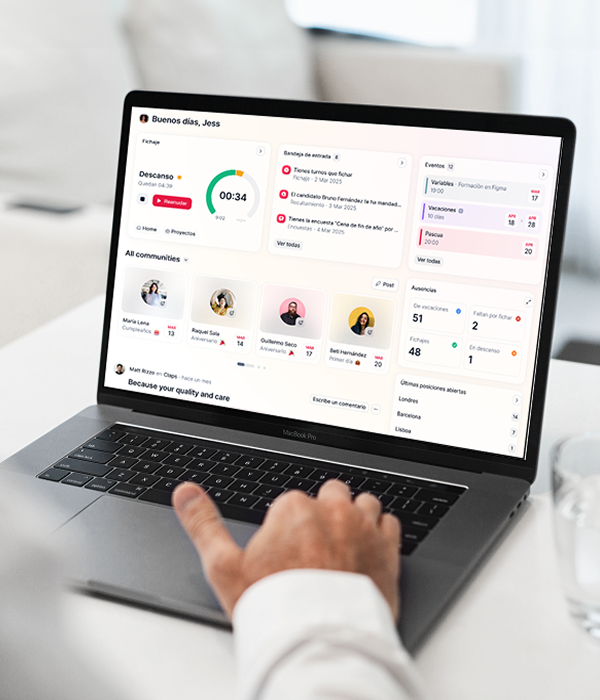
Shift scheduling software helps businesses efficiently plan and manage employee work schedules. It automates the process of creating, updating, and communicating work schedules, making it easier for managers and employees to coordinate shifts. One example of shift scheduling software is Factorial.
Factorial is a comprehensive business management software that provides various tools for managing human resources processes, including shift scheduling, PTO tracking, and performance management. It aims to simplify workforce management and enhance employee engagement with one single platform that centralizes all your company data.
How to Choose the Right Shift Scheduling Software
Choosing the right shift scheduling software for your organization requires careful consideration of your specific needs, budget, and the features offered by different software solutions.
To choose the right shift scheduling software, start by evaluating your organization’s scheduling needs and constraints. Look for software with essential features such as automated scheduling, mobile access, and customization options, ensuring it aligns with your budget. Check user-friendliness, integration capabilities, and data security measures. Read reviews, consider a trial period, and assess the provider’s reputation. Ultimately, select software that optimizes scheduling efficiency, supports employee well-being, and fits smoothly into your operational workflow.
For more information, read our article on the Top 9 Best Shift Scheduling Software Options.
How to Schedule Work Shifts
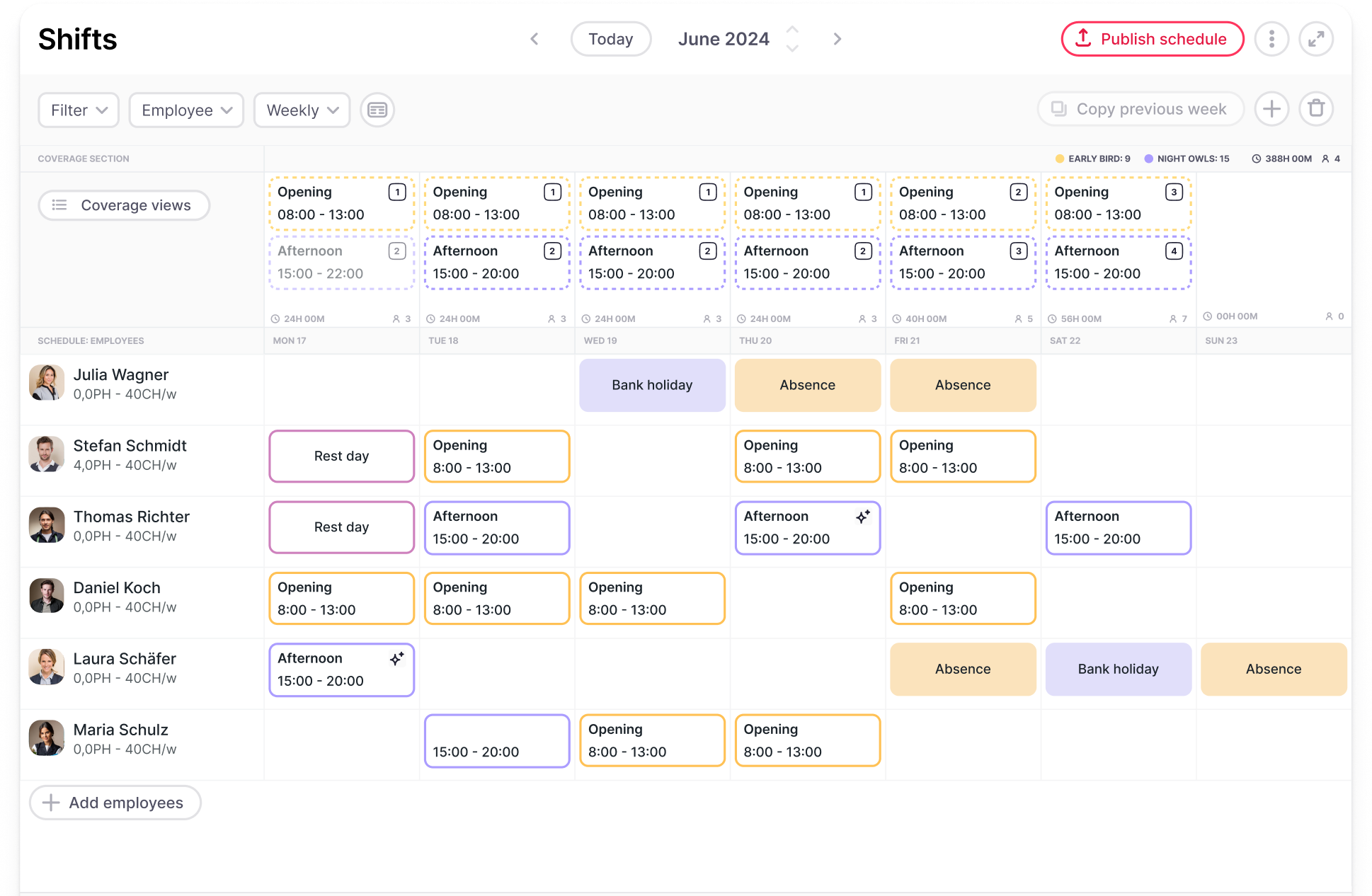
Shift management software serves as a powerful tool designed to simplify the process of tracking employee hours and creating effective work schedules. Just like various other HR tech solutions, this software brings automation to the often laborious aspects of shift management, helping businesses save time and enhance overall efficiency. Unlike the traditional methods that often involve manual calculations using tools like Excel or even relying on pen and paper, shift management software, such as Factorial’s, offers a modern approach that simplifies the entire process.
Work Shift Scheduling Software Benefits
Here’s how Factorial’s shift management software benefits businesses by simplifying scheduling and time-tracking:
Time Savings
Factorial’s shift management software automates the process of creating and adjusting work schedules. This saves managers valuable time that they would otherwise spend manually updating schedules and making changes.
Efficiency
The software’s intuitive interface allows managers to quickly make scheduling adjustments and additions within seconds. This efficiency translates to smoother operations and fewer errors.
Reduced Errors
With automated scheduling and integrated HR functions, Factorial minimizes the risk of errors in areas like absences, time-off requests, and payroll. This contributes to more accurate employee management and fewer mistakes.
Employee Empowerment
Factorial’s software benefits employees by providing clear visibility into their schedules and offering a convenient way to request time off or shift swaps. This empowerment leads to a more positive work environment and increased employee satisfaction.
More Features
Beyond scheduling, Factorial’s software smoothly integrates various HR functions, ensuring that different aspects of employee management are synchronized. This complete approach contributes to better organization and coordination. Factorial’s software is scalable and adaptable, making it suitable for businesses of varying sizes. As your business grows, the software can accommodate changing workforce needs.
By automating critical scheduling and time-tracking processes, businesses can redirect their focus towards more strategic initiatives and tasks that add value to the organization. The automated nature of the software reduces the likelihood of human errors, leading to accurate employee records, schedules, and payroll calculations.
Enhanced Communication
The software’s communication features facilitate smoother interactions between managers and employees, especially when it comes to scheduling changes or time-off requests.
Positive Employee Experience
Employees appreciate the transparency and convenience that Factorial’s software provides, leading to a positive employee experience and improved morale.
Compliance with Shift Regulations
The software’s integration with HR functions helps ensure compliance with labor laws and regulations regarding scheduling, time off, and other related matters.
In summary, using Factorial’s shift management software offers businesses a more efficient, accurate, and organized approach to employee scheduling and time-tracking. By simplifying these processes and enabling employees, Factorial contributes to improved overall operations and a better workplace environment.
Do you want to see more of Factorial?
Book a free demo with a Factorial expert and learn all about how using our software can benefit your business!
FAQ
What does it mean to work shifts?
Working shifts means following a schedule outside of the traditional 9-to-5 workday. This system allows a company to maintain operations for extended periods, often 24 hours a day, by having different groups of employees work at different times to ensure continuous coverage.
What are the three work shifts?
The three traditional work shifts are the 1st shift (day shift), the 2nd shift (evening or swing shift), and the 3rd shift (night or graveyard shift). Together, these shifts allow a business to operate around the clock by dividing the 24-hour day into distinct work periods.
What time is 1st, 2nd, and 3rd shift?
While exact times vary by company, the 1st shift is typically during the day (e.g., 8 AM – 4 PM), the 2nd shift is in the evening (e.g., 4 PM – 12 AM), and the 3rd shift is overnight (e.g., 12 AM – 8 AM).
What are the different types of work shifts?
Common work shifts include the standard day, evening, and night shifts. Other types are rotating shifts, split shifts that break the day into two parts, on-call shifts for as-needed work, flexible schedules, and temporary or seasonal shifts for peak business periods.
Can you give me some examples of shift schedules?
Shift schedules vary by industry. For example, a hospital may use three 12-hour rotating shifts to provide 24/7 care, while a restaurant might use split shifts to cover lunch and dinner rushes. A construction project might follow a standard 8-hour day shift but add night shifts if needed.