Manage every aspect of your team with one tool: Performance, recruitment, onboarding – even set goals
Performance review phrases are the building blocks of fair, effective employee evaluations. The purpose of a performance review is to assess work performance, provide feedback on strengths and areas for improvement, set goals for future development, and align employees and management around shared expectations. Communicating that feedback as objectively and clearly as possible is what separates a review that motivates from one that demoralizes.
Key Facts
- Performance review phrases are pre-written, behavior-based statements that describe an employee’s strengths, weaknesses, and goals in objective, actionable language.
- Only 2% of Fortune 500 CHROs strongly agree that their performance management system inspires employees to improve. This finding underscores why precise, behavior-based review language matters.
- Just 20% of employees say their performance review process is fair and transparent, and only 14% strongly agree that reviews inspire them to improve.
- Gallup research shows that 80% of employees who received meaningful feedback in the past week report being fully engaged. Feedback frequency is a direct driver of performance.
Table of Contents
- Performance Review Comments Example
- Phrases for Employee Strengths and Weaknesses
- Performance Review Career Goals Examples
- Overall Performance Review Phrases

PHRASES FOR PERFORMANCE EVALUATION
- Collaboration performance review comments
- Teamwork performance review comments
- Professionalism and Commitment phrases
- Attendance performance review comments
- Productivity and Quality of Work phrases
- Overall performance review phrases
- Adaptability performance review comments
- Communication Skills/Interpersonal skills phrases
- Innovation and Creativity performance review comments
- Accountability performance review comments
- Customer Focus and Customer Satisfaction phrases
- Decision-Making and Problem-Solving phrases
- Dependability and Reliability performance review comments
- Integrity performance review comments
- Flexibility performance review comments
- Leadership and Management performance review comments
- Initiative performance review comments
- Job knowledge performance review comments
- Planning and Organization performance review comments
- Time Management performance review comments
- Attitude performance review comments
- Performance review closing comments
- Do performance reviews with software ✅
What Is a Performance Review Comment Example?
There are many different types of employee performance reviews, using a variety of performance management tools such as a 9-box grid. Another type of review employs 360-degree feedback, which is a common feature of continuous performance management.
The way the phrases listed in this article could be used is demonstrated in the performance review comment example below:
During an annual employee performance review, a manager might provide a comment such as, “John consistently demonstrates exceptional problem-solving skills, effectively resolving complex challenges.” This comment serves as an example of John’s strength in problem-solving and can be used to highlight his positive contributions and areas of expertise within the team. Additionally, it can serve as a basis for discussing specific accomplishments and areas for further development during the performance review discussion.
Some managers condense feedback further using a five-word performance review, a quick summary technique where a manager captures an employee’s overall contribution in exactly five descriptive words (for example, “reliable, detail-oriented, collaborative, proactive, punctual”) before expanding into full performance review phrases during the discussion. These can be used as concise performance appraisal comments or to anchor more detailed employee feedback examples.

How Do You Phrase Employee Strengths and Weaknesses in a Performance Review?
Employee strengths and weaknesses can be gauged in a performance review through objective metrics, self-assessment, manager evaluation, 360-degree feedback, performance appraisal forms, behavioral interviews, and skill assessments. These methods provide a comprehensive understanding of an employee’s performance, helping to identify areas of excellence and areas needing improvement. Including employee feedback examples for both strengths and weaknesses ensures that the review balances positive and constructive input.
When phrasing employee strengths and weaknesses during a performance review, it’s important to be specific, objective, and constructive. Here are some tips:
- Be Specific: Use concrete examples and evidence to support your assessments rather than generalizations.
- Focus on Behaviors: Describe observable behaviors and actions rather than making assumptions about personality traits.
- Use Positive Language: Frame strengths positively to acknowledge achievements and motivate further development. For weaknesses, use constructive language that emphasizes opportunities for improvement.
- Provide Context: Consider the employee’s role, responsibilities, and the organization’s goals when evaluating strengths and weaknesses.
- Offer Support: For weaknesses, suggest strategies for improvement and offer resources or training opportunities to help the employee develop.
- Balance: Recognize that every employee has strengths and weaknesses, and aim to provide a balanced assessment that acknowledges both.
- Remove bias: Remove bias from reviews to objectively evaluate employees’ performance based on measurable criteria and avoid subjective judgments or preconceived notions.
This matters beyond fairness alone. Gallup research finds that managers account for at least 70% of the variance in employee engagement scores across business units. This means the objectivity of the phrases a manager chooses has an outsized effect on how employees experience the entire review process.
Including constructive feedback comments during the review can further support the employee’s growth. Take a look at the following examples of how employee strengths and weaknesses can be phrased during a performance review cycle.
Performance Review Strength
Example phrases for addressing employee strengths:
- “Sarah consistently demonstrates strong leadership skills by effectively guiding her team to achieve project milestones ahead of schedule.”
- “Tom’s exceptional communication skills build a positive team dynamic and enhance collaboration across departments.”
- “Lisa’s attention to detail ensures accuracy and precision in all her work, contributing to the high quality of deliverables.”
Performance Review Weakness
- “While John excels in technical skills, he could benefit from improving his time management to meet project deadlines more consistently.”
- “While Rachel demonstrates creativity in problem-solving, she occasionally struggles with accepting feedback and incorporating it into her work.”
- “David’s excellent interpersonal skills could be further enhanced by actively seeking out opportunities to mentor junior team members.”
Now that you know how to conduct performance reviews and phrase feedback in a way that is useful to employees and managers, read through the examples below to find the phrases you need for all situations.
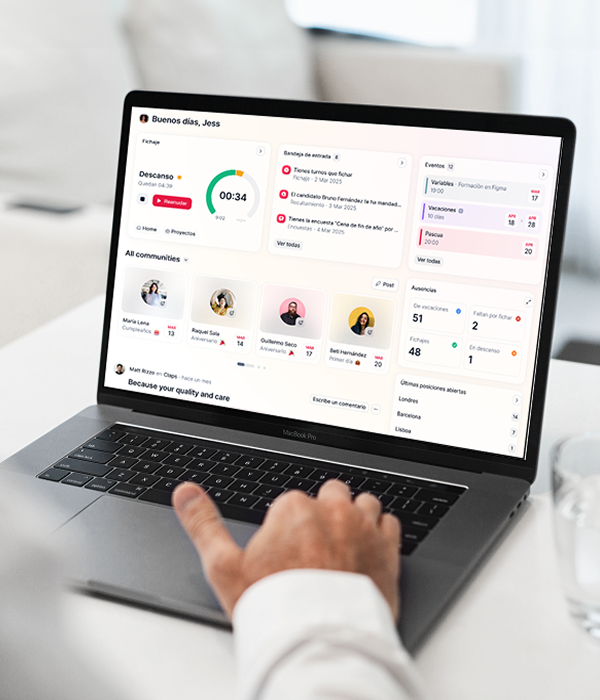
Many managers keep these performance review phrases organized inside Factorial’s performance management module, which supports 360-degree feedback, goal tracking, and calibration across the entire review cycle, so ratings and comments stay consistent across every reviewer on the team. The right manager feedback language supports accurate, unbiased performance evaluation.
How Do You Address Career Goals in a Performance Review?
Although performance reviews can be stressful for managers and employees alike, they provide an excellent opportunity to connect with employees and understand their career aspirations. By engaging in these discussions, managers can gain valuable insights into employees’ goals and preferences, helping to align organizational objectives with individual development paths. Be prepared when conducting an employee review. That way, you can provide constructive performance review comments that will help them align and work toward their career goals. This proactive approach builds a supportive and collaborative work environment, ultimately benefiting both employees and the organization as a whole.
The SHRM Managing Employee Performance toolkit notes that effective performance management systems link individual goal-setting directly to organizational strategy. This connection is what makes career-goal conversations during reviews actionable rather than aspirational.
Research has documented a clear shift away from once-a-year ratings toward ongoing, behavior-based conversations that connect day-to-day feedback with longer-term career goals. According to Gallup, employees who actively participated in goal-setting were twice as likely to strongly agree they knew what was expected of them. Framing career-goal feedback with specific performance review phrases for employees rather than vague encouragement gives both parties a clear reference point to revisit at the next check-in. Incorporating targeted employee evaluation phrases tied directly to career development ensures the review serves both motivational and strategic functions.
What Are the Best Performance Review Phrases for Collaboration?
Giving employees feedback on collaboration is crucial. It helps improve teamwork, resolves conflicts, and builds trust. Job performance reviews are an opportunity to give valuable feedback. They also guide continuous learning and ensure everyone is working toward the same goals in a joint effort.
Use these phrases to give employees constructive feedback examples on collaboration.
Meets or Exceeds Expectations
- Demonstrates assistance to coworkers with tasks, even if outside direct responsibility.
- Consistently aids coworkers facing task difficulties.
- Effectively promotes cooperation to ensure team productivity and meet deadlines.
- Displays willingness to offer assistance.
- Receives constructive criticism positively.
- Ensures assignments are followed through and followed up with.
- Volunteers to aid other teams in meeting their goals.
- Readily shares information and resources with colleagues.
- Strives to understand diverse perspectives and find common ground.
- Recognizes and credits others’ contributions.
- Facilitates constructive conflict resolution by encouraging open dialog and working toward shared solutions.
Does Not Meet Expectations
- Struggles to share information proactively, which can create bottlenecks for the team.
- Has difficulty accepting constructive feedback and incorporating it into collaborative work.
- Tends to work in isolation rather than coordinating with colleagues on shared deliverables.
- Misses opportunities to support teammates during high-demand periods.
- Needs to develop active listening skills to contribute more effectively in group settings.
What Are the Best Overall Performance Review Phrases?
Overall performance review phrases summarize an employee’s total contribution across the review period, combining quality and quantity of work into a single, balanced statement. Use these as a closing assessment after covering specific competencies:
- Consistently meets or exceeds output targets for both individual and team assignments.
- Maintains a steady, high volume of completed work without sacrificing accuracy.
- Delivers reliable overall performance that managers and employees alike can point to during calibration.
- Balances speed and thoroughness, rarely requiring rework on completed tasks.
These professional performance review phrases work equally well as performance review phrases for managers evaluating direct reports and as a self-assessment framework for employees preparing their own summary.
What Are Effective Self-Assessment Performance Review Phrases?
Self-assessment phrases give employees a structured way to reflect on their own contributions before the formal review. Using clear, behavior-based language in a self-evaluation helps managers calibrate ratings more accurately and reduces the risk of recency bias.
Positive self-assessment examples:
- “I consistently met or exceeded my quarterly targets and proactively flagged risks before they affected delivery timelines.”
- “I took ownership of the onboarding process for two new team members, reducing their ramp-up time by approximately two weeks.”
- “I sought out cross-functional collaboration opportunities that resulted in a more cohesive product launch.”
Areas for development – self-assessment examples:
- “I recognize that I could improve my time-management approach on multi-stakeholder projects and plan to use structured project-tracking tools going forward.”
- “I want to develop stronger data-analysis skills to support more evidence-based decision-making in my role.”
- “I am working on delivering feedback to peers more directly and constructively, and I have enrolled in a communication workshop to support this goal.”
What Are Performance Review Phrases for Employees Who Need Improvement?
Constructive phrases for underperforming employees must be specific, behavior-based, and legally defensible. Avoid language that attributes poor performance to personality traits. Instead, describe observable behaviors and their measurable impact.
- “Has not consistently met the output targets established at the start of the review period, resulting in delays on two key deliverables.”
- “Requires more frequent check-ins than the role typically demands, which affects the manager’s capacity to support the broader team.”
- “Has struggled to apply feedback from previous reviews, and a structured development plan has been put in place to address this gap.”
- “Attendance patterns have affected team scheduling and project continuity. A corrective action plan is in progress.”
- “Decision-making on client-facing issues has required escalation more often than expected for this level of seniority.”
When documenting performance concerns, the SHRM Managing Employee Performance toolkit recommends that managers maintain contemporaneous records of specific incidents, tie feedback to measurable role expectations, and follow a consistent process across all employees to reduce legal exposure.
What Are Performance Review Phrases for Remote and Hybrid Employees?
As distributed work has become standard, managers need phrases that address the specific behaviors that drive performance in remote and hybrid settings – visibility, asynchronous communication, and self-directed accountability.
Meets or Exceeds Expectations
- Maintains clear, timely communication across time zones and asynchronous channels.
- Consistently delivers work on schedule without requiring in-person oversight.
- Proactively updates the team on project status, reducing the need for follow-up check-ins.
- Demonstrates strong self-management and prioritization in a distributed work environment.
- Participates actively in virtual meetings and contributes meaningfully to remote collaboration tools.
Does Not Meet Expectations
- Response times on asynchronous channels are inconsistent, creating delays for dependent team members.
- Has difficulty maintaining visibility into work progress, which makes it harder for the team to plan effectively.
- Needs to develop stronger habits around documenting decisions and sharing updates in shared workspaces.
How Do You Avoid Bias in Performance Review Phrases?
Bias in performance reviews is a documented problem with measurable consequences. Research shows that women receive 22% more personality-based feedback than men, and that certain employee groups receive significantly more non-actionable feedback than others. Using standardized, behavior-based performance review phrases is one of the most effective ways to reduce this disparity.
Practical steps to keep review language bias-free:
- Anchor every phrase to an observable behavior, not a personality trait. Write “Delivered the Q2 report three days ahead of schedule” rather than “Is a hard worker.”
- Apply the same phrase bank consistently across all employees in the same role and level. Inconsistency in language is one of the clearest signals of evaluator bias.
- Avoid gendered descriptors. Terms such as “aggressive,” “abrasive,” or “emotional” appear disproportionately in reviews of certain employee groups and rarely describe a specific, actionable behavior.
- Calibrate ratings across reviewers before finalizing scores. Calibration sessions surface rating inflation, deflation, and halo effects before they affect compensation or promotion decisions.
- Document feedback throughout the year, not just at review time. Recency bias – the tendency to weight recent events over the full review period – is one of the most common distortions in annual evaluations.
According to the SHRM Managing Employee Performance toolkit, organizations that build structured, documented feedback processes see higher consistency in ratings and stronger legal defensibility when employment decisions are challenged.
How Often Should Performance Reviews Include Formal Written Phrases?
The frequency of formal written evaluations varies by organization, but the research is consistent: feedback frequency matters far more than format. Gallup data show that 80% of employees who received meaningful feedback in the past week report being fully engaged. Organizations that rely solely on annual reviews leave the majority of employees without timely input on their performance.
A practical framework for phrase-based feedback across the review cycle:
| Review Type | Frequency | Phrase Focus |
|---|---|---|
| Annual performance review | Once per year | Full competency assessment, career goals, overall rating |
| Mid-year check-in | Every 6 months | Progress against goals, course corrections |
| Quarterly goal review | Every 3 months | Goal-specific phrases, recognition or redirection |
| Ongoing 1:1 feedback | Weekly or biweekly | Short, behavior-specific phrases, real-time coaching |
Using structured phrases at each stage – rather than reserving formal language for the annual review – creates a documented record that makes the year-end evaluation more accurate, more defensible, and less stressful for both managers and employees.
FAQ
What are the 5 words performance review?
A 5-word performance review is a quick summary technique where a manager captures an employee’s overall contribution in five descriptive words. This concise feedback model helps maintain clear expectations and can be integrated into regular check-ins using an all-in-one business management software like Factorial.
What is a nice comment for good performance?
A nice comment for good performance is specific, focuses on behavior, and highlights the positive impact on the team or company. For example: “Your exceptional communication skills have greatly improved collaboration across departments and contributed directly to our project’s success.”
What are some effective phrases to use in a productivity performance review?
Effective phrases for a productivity review are objective and specific. Examples include: “Consistently meets or exceeds output targets,” “Maintains a high volume of work without sacrificing accuracy,” and “Balances speed and thoroughness, rarely requiring rework on completed tasks.”
What should I write in my overall comments performance review?
Your overall comments should summarize the employee’s total contribution, balancing strengths and areas for growth discussed during the review. Focus on key achievements and their impact. Using an all-in-one business management software like Factorial helps document these summaries for consistent tracking and future goal-setting.