HR compliance is one of the most stressful responsibilities for employers with laws changing and rules varying by state and city. For many HR teams, keeping up can feel overwhelming. Mistakes can be costly. Misclassified employees, incorrect wage calculations, or missing documentation can lead to fines, lawsuits, and failed audits. Even well-meaning employers can fall out of compliance simply because of manual processes split up across systems. To manage this risk, companies often look for HR compliance solutions. Some turn to consultants, while others use software that helps with compliance.
This article explains what HR compliance solutions are, why employers need them, and which modern HR platforms are the best alternatives in 2026.
What are HR compliance solutions?
HR compliance solutions are tools and services that help employers follow employment laws and workplace regulations. Their purpose is to reduce legal risk and ensure businesses meet federal, state, and local requirements.
These solutions support HR teams with tasks like tracking labor laws, managing employee records, enforcing policies, and preparing for audits. Some focus on expert guidance, while others rely on software to standardize processes and documentation.
Many employers use an HR compliance checklist to stay organized, but checklists alone are easy to miss or forget. HR compliance solutions aim to turn those checklist items into repeatable, trackable actions.
Types of HR compliance solutions
Most HR compliance solutions fall into one of the following categories.
Compliance consulting services
These providers offer access to HR or legal experts who advise employers on compliance issues and policy decisions.
Examples include Bambee, Mineral, and OutSolve.
Compliance-focused software
These tools track laws, provide policy templates, and alert employers to regulatory changes.
Examples include VirgilHR and ComplianceHR.
HR platforms with built-in compliance
HR platforms include compliance support as part of everyday HR workflows, such as hiring, time tracking, and recordkeeping.
Examples include Factorial, BambooHR, and Zenefits.
Specialized compliance tools
These tools handle one specific requirement, such as I-9 verification, COBRA administration, or ACA reporting.
Each type serves a purpose, but many employers find that using multiple tools or consultants increases complexity. This is why more businesses are choosing HR platforms that support compliance as part of daily operations.
Why do employers need HR compliance tools?
65% of HR leaders in the US report spending excessive time on HR compliance, yet most do not need dedicated compliance consultants. What they need is HR software that makes compliance automatic.
HR compliance is challenging because employers must follow federal laws while also keeping up with state and local requirements. These rules change often and are easy to miss when company and employee data is tracked manually.
Common problem areas include pay rules, leave laws, employee classification, and recordkeeping. A mistake in any of these areas can lead to fines, legal claims, or audit issues. The cost of non-compliance also means lost time, stress for HR teams, and damaged trust with employees.
HR compliance tools help by building processes for everyday HR tasks through HR automation. They reduce reliance on spreadsheets and reminders. Instead of reacting to problems after they happen, employers can prevent them through established processes.
For most businesses, the goal is to avoid common mistakes and staying audit-ready. HR platforms make this easier by automating many routine tasks that help ensure compliance.
7 critical HR compliance areas every US business must address
Every employer, regardless of size or industry, must manage the same core compliance areas. Many HR compliance checklists are built around these topics because they represent the highest legal risk.
Below are the seven most critical areas, along with what they involve and how HR compliance solutions help.
1. Wage and hour compliance
All US businesses must ensure employees are paid correctly and on time for all hours worked.
Key regulations:
- Fair Labor Standards Act (FLSA)
- State and local minimum wage laws
- Overtime rules
Common violations:
- Unpaid overtime
- Incorrect time tracking
- Paying below minimum wage
How HR compliance solutions help: Time tracking, automated payroll rules, and alerts help prevent underpayment and overtime errors.
2. Employee classification
All businesses must correctly classify workers as exempt or non-exempt employees, or as employees versus independent contractors.
Key regulations:
- FLSA
- IRS classification
- State labor laws
Common violations:
- Misclassifying contractors
- Treating non-exempt employees as exempt
How HR compliance solutions help: Clear role definitions and standardized job data reduce risk of misclassification.
3. Leave management
All US businesses must track and approve employee leave in line with legal requirements.
Key regulations:
- Family and Medical Leave Act (FMLA)
- State paid family and sick leave laws
Common violations:
- Denying eligible leave
- Incorrect leave balances
- Poor documentation
How HR compliance solutions help: Automated leave tracking ensures employees receive the leave they are entitled to and records are stored properly.
4. Equal employment opportunity compliance
US businesses must ensure fair treatment in hiring, promotion, and termination decisions.
Key regulations:
- Title VII of the Civil Rights Act
- Americans with Disabilities Act (ADA)
- Age Discrimination in Employment Act (ADEA)
Common violations:
- Inconsistent hiring practices
- Lack of documentation
- Failure to provide accommodations
How solutions help: Standardized hiring workflows and documentation create consistency and protect against claims.
5. Benefits compliance
Businesses must manage employee benefits in line with federal and state laws.
Key regulations:
- Affordable Care Act (ACA)
- COBRA
- ERISA
Common violations:
- Missed enrollment deadlines
- Incorrect eligibility tracking
- Failure to provide required notices
How solutions help: Centralized benefits data and automated reminders help ensure deadlines and rules are followed.
6. Workplace safety
US businesses must maintain a safe work environment and reporting incidents properly.
Key regulations:
Occupational Safety and Health Act (OSHA)
Common violations:
- Missing safety training records
- Unreported incidents
- Incomplete documentation
How solutions help: Digital records and training tracking support compliance and audit readiness.
7. Recordkeeping and documentation
All US businesses must store employee records for required time periods and protecting sensitive data.
Key regulations:
- FLSA recordkeeping rules
- IRS and state retention requirements
Common violations:
- Missing employee files
- Poor data security
- Inconsistent retention practices
How solutions help: Centralized document storage creates a clear audit trail and supports data protection.
Stay Up to Date with This HR Compliance Checklist
The 5 best HR compliance alternatives in 2026
Instead of paying for separate compliance consultants or standalone legal tools, many employers are choosing HR platforms that include tools to help with compliance. These systems help reduce legal risk through automation, storage of data in a secure, centralized location, and built‑in workflows while also handling core HR needs like payroll prep, time tracking, and hiring.
Here are the top five HR compliance alternatives in 2026:
1. Factorial
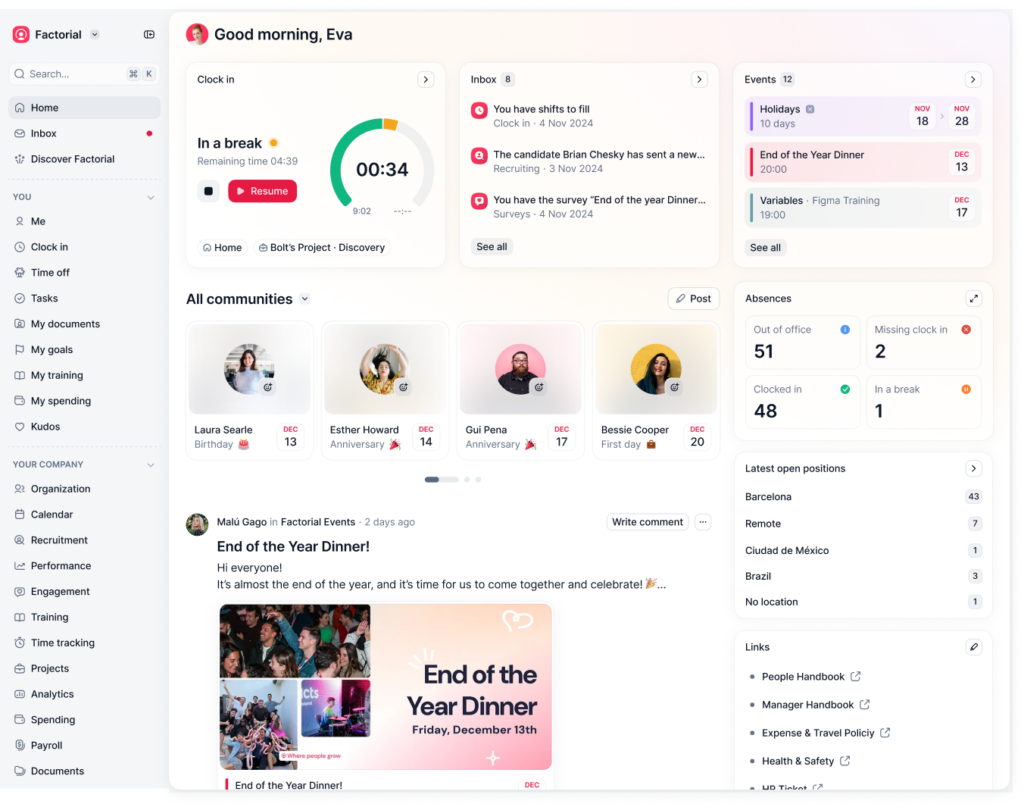
Overview: Factorial is an all‑in‑one business management platform built for small and mid‑sized businesses. It brings employee data, time tracking, document storage, policy workflows, and reporting into one central system. This reduces manual steps that often lead to compliance mistakes. Book a demo of Factorial to learn more!
How it supports compliance:
- Centralized employee records ensure that key documents (from contracts to tax forms) are easy to manage and find.
- Time and attendance tracking helps reduce wage and overtime mistakes.
- Reporting tools give HR teams audit‑ready visibility into data.
- Policy workflows and approvals help enforce consistent processes.
Integrations with other tools extend compliance support. For example, Factorial teams can connect with tools via Zapier to automate workflows and reduce manual errors.
How Factorial helped 2 global companies: Clikalia & Globalfy
Globalfy: A fintech services company supporting global teams struggled with scattered tools and lost time looking for employee records and documents. After moving to Factorial, everything became centralized. Employee profiles, calendars, and documentation were managed from one platform, helping the team work more efficiently and stay organized despite time zone differences. Read the whole story about how Factorial helps Globalfy manage their international organization here.
Clikalia: A fast‑growing property tech company needed a better way to handle documents, payroll data, and onboarding/offboarding. Using Factorial, they centralized information, gained control of electronic signatures, and automated key payroll processes. This helped their HR team stay organized and reduced risk tied to manual tasks. For the whole picture, read the article of how Factorial and Clikalia work together.
Pros:
- Strong all‑around HR functionality
- Built‑in features that reduce manual compliance risks
- Centralized documentation and reporting
- Real customer success stories showing real‑world benefit
Cons:
- Some specific advanced compliance workflows may require integrations or add‑ons (speak with an agent for advice)
Price:
Starts around $8 per employee per month
2. Rippling
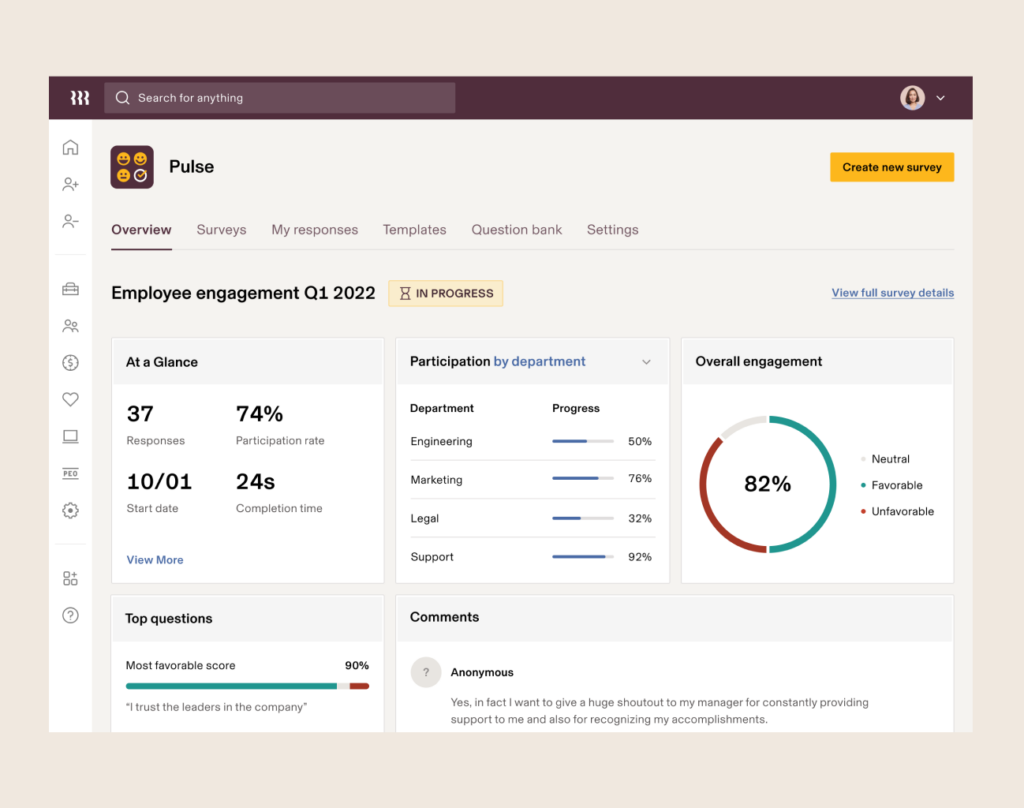
Overview: Rippling unites HR, payroll, IT, and finance systems into one platform. It focuses on automation and workflows that reduce manual mistakes across the employee lifecycle.
Pros:
- Strong payroll and tax automation
- Extensive integrations with other business systems
- Automated workflows for onboarding/offboarding and benefits
Cons:
- Setup can be complex for smaller teams
- Pricing can rise quickly with add‑ons
Price: Starts around $8 per employee per month, with additional costs for optional modules
3. HiBob
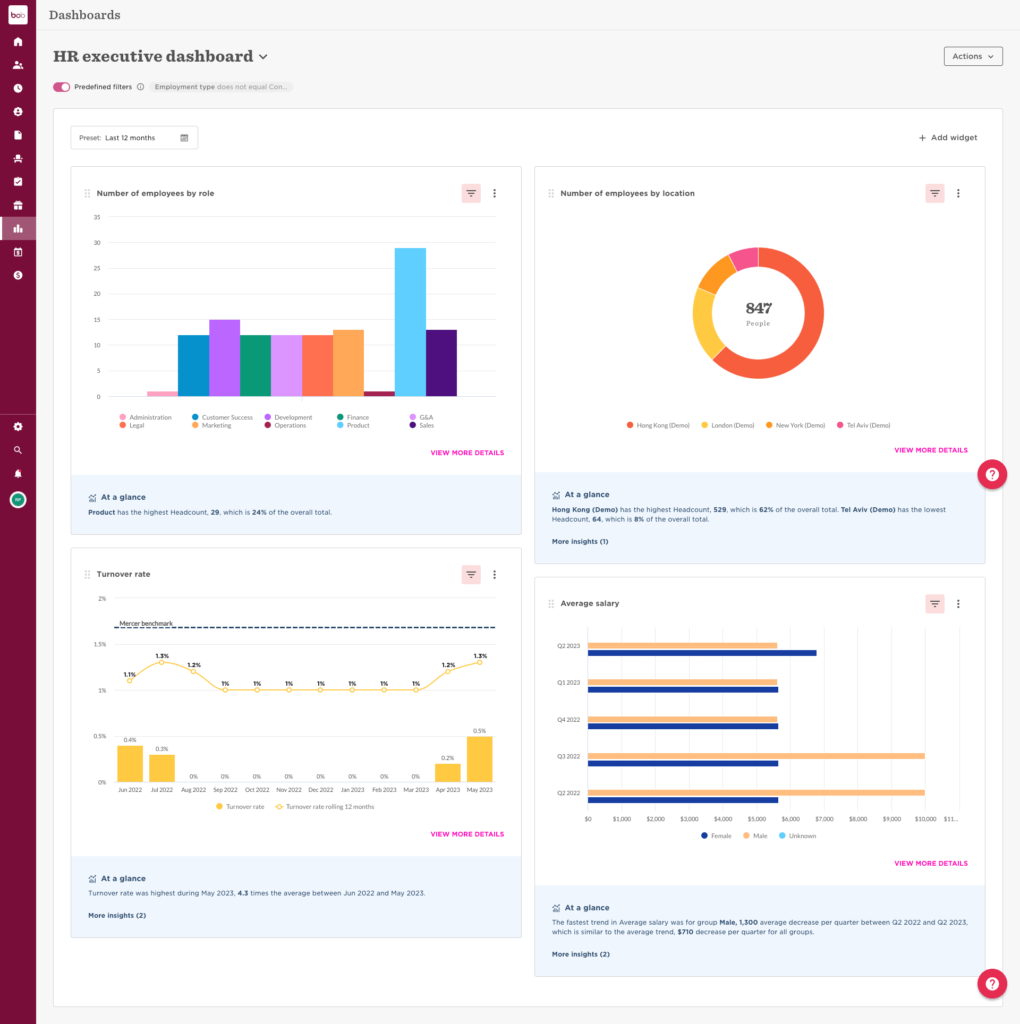
Overview: HiBob is an HR platform designed for mid‑sized and global businesses. It helps HR teams manage employee data, reporting, and structured processes that support compliance.
Pros:
- Good people insights and reporting
- Scales well internationally
- Custom workflows
Cons:
- Payroll available via integration
Price: Custom pricing
4. BambooHR
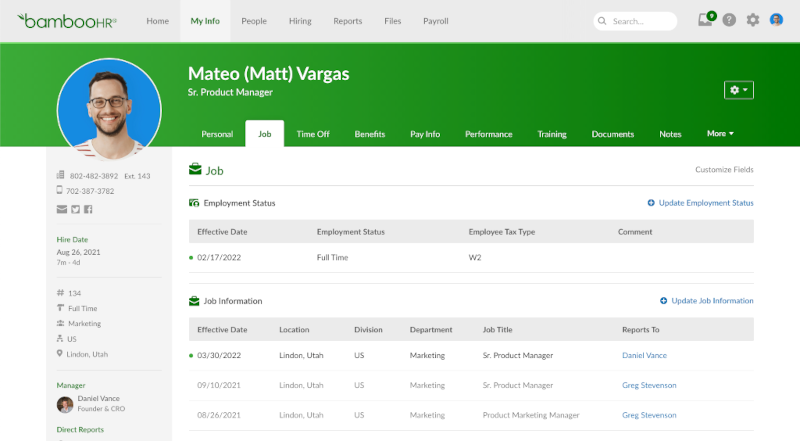
Overview: BambooHR is a popular platform for small and mid‑sized companies. It focuses on core HR functions like employee records, onboarding, and reporting.
Pros:
- Easy to learn and use
- Centralized employee data
- Strong applicant tracking and onboarding
Cons:
- Payroll and time tracking cost extra
- Less compliance automation than some competitors
Price: Custom pricing
5. ADP
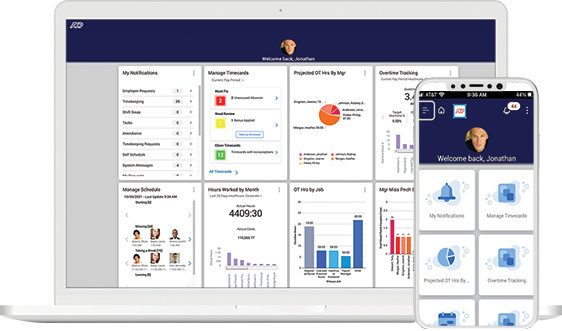
Overview: ADP is a long‑standing payroll and HR provider with strong compliance support built into its payroll, tax, and reporting services.
Pros:
- Well‑known payroll and tax compliance coverage
- Scales from small to large businesses
- Broad regulatory reporting
Cons:
- User experience can feel less polished
- Higher cost for full HR functions
Price: Custom pricing
Comparison chart
Choosing the right HR platform can be overwhelming. Each system offers different features, pricing, and compliance support. This chart summarizes the top five HR compliance alternatives for 2026 so you can see which platform best fits your business needs.
| Platform | Best For | Key Highlight | Price (per employee) |
|---|---|---|---|
| Factorial | Small & mid-sized businesses needing centralized HR & compliance | Centralized employee records, policy workflows, integrations | ~$8/month |
| Rippling | Businesses wanting automated HR + IT + payroll workflows | Automation across payroll, benefits, onboarding, offboarding | ~$8/month + add-ons |
| HiBob (Bob) | Mid-sized or global companies | Custom workflows, global reporting, people analytics | Custom pricing |
| BambooHR | SMBs needing easy HR management | Simple, centralized HR data and onboarding tools | Custom pricing |
| ADP | Companies needing reliable payroll + regulatory reporting | Payroll and tax compliance, large-scale scalability | Custom pricing |
All five platforms help reduce compliance risk, but they do it in different ways. Use this chart to find the solution that fits your company size, workflow, and compliance priorities.
How HR Platforms Enable Compliance
HR platforms do more than handle HR tasks. They help companies stay compliant without needing separate compliance software or consultants. These platforms build compliance into everyday HR work.
1. Automated Workflows Prevent Errors
Tasks like time tracking, approvals, and onboarding follow the correct steps automatically. This reduces mistakes and ensures processes meet labor laws and company policies.
2. Centralized Documentation Creates an Audit Trail
All employee documents such as contracts, tax forms, and leave requests are stored in one place. This makes audits easier and reduces the risk of missing files.
3. Policy Management Ensures Consistency
Companies can create, distribute, and track policies in the system. Employees can confirm they have read them. This keeps compliance consistent across the company.
4. Reporting Provides Compliance Visibility
Built-in reports show gaps in HR processes such as missing documents or pending approvals. HR teams can fix problems before they become bigger issues.
5. Time and Attendance Catches Wage Issues
Automated time tracking helps prevent wage and overtime errors. The system can flag hours that do not comply with labor laws.
6. Role-Based Permissions Protect Data
Access controls make sure only authorized HR staff or managers can see sensitive employee information. This helps meet privacy rules like HIPAA or GDPR.
Globalfy uses Factorial to manage HR data for employees in different countries. This makes audits easier and keeps compliance on track.
Clikalia uses Factorial for onboarding, payroll, and document management. This reduces errors and ensures HR processes follow legal requirements.
HR platforms make compliance simpler, reduce administrative work, and give HR teams more confidence that rules are being followed.
Invest in the Best HR Compliance Alternative in 2026
Factorial is a great HR platform and business management solution that helps companies handle compliance in one place. It centralizes employee data, time tracking, leave management, policy workflows, and reporting. This reduces errors, saves time, and keeps HR teams prepared for audits.
With Factorial, HR teams can automate key tasks, enforce consistent policies, and generate reports for compliance. The platform makes it easy to track employee records, manage approvals, and ensure processes follow labor laws.
Investing in Factorial allows your team to focus on employees rather than paperwork. Book a demo for a simple, no-strings-attached way to see how Factorial can make HR and compliance easier to manage.
HR Compliance Alternatives FAQ
1. Why is Factorial the best alternative to HR compliance consultants?
Factorial centralizes HR tasks like time tracking, leave management, document storage, and policy workflows. This automation reduces human errors and ensures processes follow labor laws, making it a simpler and more affordable alternative to hiring outside consultants.
2. Can small businesses afford alternatives to compliance solutions?
Yes. Factorial is designed for small and mid-sized businesses, with pricing starting around $8 per employee per month. By consolidating HR and compliance in one platform, companies save money compared with hiring multiple consultants or standalone software tools.
3. How can your business stay compliant with alternative solutions to HR compliance software?
Using a platform like Factorial, businesses can automate workflows, maintain centralized documentation, enforce policies consistently, and generate compliance reports. These built-in features help HR teams prevent mistakes and stay audit-ready without relying on separate compliance-only software.
“Disclaimer: The information presented on this page is based on publicly available sources. The comparisons between Factorial and other providers are intended solely for the illustration of the respective software features, pricing and functionalities. All information regarding features, prices, and integrations may be subject to change without prior notice. Factorial assumes no liability for the accuracy, completeness, or timeliness of the information presented. We recommend contacting the respective providers directly to obtain the most accurate and up-to-date information. All legal regulations regarding Spanish fair advertising and competition law are fully observed by us; if you have any concerns, please reach out to us. The comparisons presented do not constitute a final evaluation or recommendation for any provider, but serve solely as an informational source.”