Spain’s business landscape is evolving fast. Companies of every size have to rethink how they manage their people, from hiring and onboarding to payroll and performance reviews. The right HR software in Spain can really make a difference by saving time, reducing errors, and helping teams focus on what truly matters: their people.
But choosing the right tool is not easy. There is no single solution that works for every company. What fits a fast-growing startup in Madrid may not suit a mid-size business in Barcelona. That is why it is important to understand what each platform can offer your organization before you commit.
In this guide, we compare five of the most popular HR software platforms used in Spain in 2026. We break down their features, strengths, weaknesses, and pricing so you can make the best decision for your business. Whether you are a growing startup looking for your first HR tool to finally standardize your processes or an established company ready to upgrade to a more advanced solution, this guide will give you everything you need to make an informed decision.
Biggest HR Management Challenges in 2026 and How to Face Them
Managing people in Spain today comes with a unique set of challenges for HR teams. New tech is changing the way things work. Employee expectations are higher than ever. And the economic environment pushes HR teams to do more with less. Here are the biggest hurdles facing HR professionals in Spain right now, and how to tackle them.
1. Digital Transformation Without Losing the Human Focus
Automating repetitive tasks is essential for any modern HR department. But if the technology feels cold or disconnected, employees notice. A study by PwC found that while 60% of employees believe automation has improved their efficiency, 43% feel that HR decisions have become less personal.
The solution is choosing software that automates the busywork while still keeping the human side visible. Tools with built-in employee feedback, climate surveys, and personalized dashboards help HR teams stay connected to what employees actually need. The best platforms strike a balance: they handle the admin so your team can focus on building real relationships.
2. Organizational Culture in Hybrid Environments
Remote and hybrid work are now standard in Spain, especially in tech, services, and creative industries. But working from home can erode the sense of belonging. Research from Gallup shows that 74% of hybrid teams experience a drop in how connected they feel to their company culture.
HR software can bridge this gap by offering features like digital onboarding, engagement surveys, and internal communication tools. Keeping culture strong when teams are spread across locations requires intentional effort, and the right platform makes that easier. Companies that invest in these tools tend to see higher retention and stronger collaboration, even across distributed teams.
3. Analytics and Data-Driven Decision Making
Only about 36% of HR departments use data regularly to inform strategic decisions, according to Deloitte’s Human Capital Trends report. That means most teams are still relying on gut instinct rather than real numbers.
Without a centralized platform, employee data gets scattered across spreadsheets, emails, and different systems. This makes it nearly impossible to spot trends like rising turnover, skill gaps, or declining engagement. A good HR platform gives you dashboards and reports that turn raw data into clear, actionable insights. When HR teams can see what is happening in real time, they can act before small issues become big, expensive problems.
4. Talent Management as a Competitive Advantage
In a competitive labor market, keeping your best people is just as important as hiring new ones. LinkedIn’s Talent Solutions report found that 93% of employees would stay longer at a company that invests in their growth.
HR software that includes performance reviews, career path planning, and training management helps companies show their teams a clear future. Without these tools, employees may look elsewhere, and the cost of replacing them can be enormous. In Spain, where the labor market is increasingly competitive for skilled workers, having a structured talent strategy supported by the right software is no longer optional. It is a necessity.
Best HR Software in Spain: Comparison Chart
Here is a quick side-by-side look at the five leading HR software platforms used in Spain. This table covers what each platform does best, its standout feature, and how much it costs.
| Platform | Best For | Key Highlight | Price |
| Factorial | All-in-one HR, finance, and talent | Centralizes HR, payroll, IT, and finance in one platform | From $8/user/month |
| Personio | Automating core HR processes | Strong recruiting and onboarding workflows | Custom pricing (~$5–15/user/month) |
| Bizneo HR | Modular, scalable HR management | 30+ configurable tools for any company size | From $6/user/month |
| Kenjo | Employee well-being and culture | Pulse surveys and engagement analytics | From €5.40/employee/month |
| Sesame HR | Time tracking and usability | Multi-device clock-in with geolocation | From $4.25/user/month |
Note: Pricing is subject to change.
Now let us take a closer look at each platform, including what they do well, where they fall short, and what kind of company they are best suited for.
List of the Best HR Software in Spain
Here is a detailed list of the best software for HR teams to manage their people.
1. Factorial
Factorial is a Barcelona-born platform that has become one of the fastest-growing HR tech companies in Europe. It is designed as an all-in-one solution that goes beyond traditional HR management. In addition to core HR features, Factorial includes modules for finance, IT management, payroll, and talent development, all within a single interface.
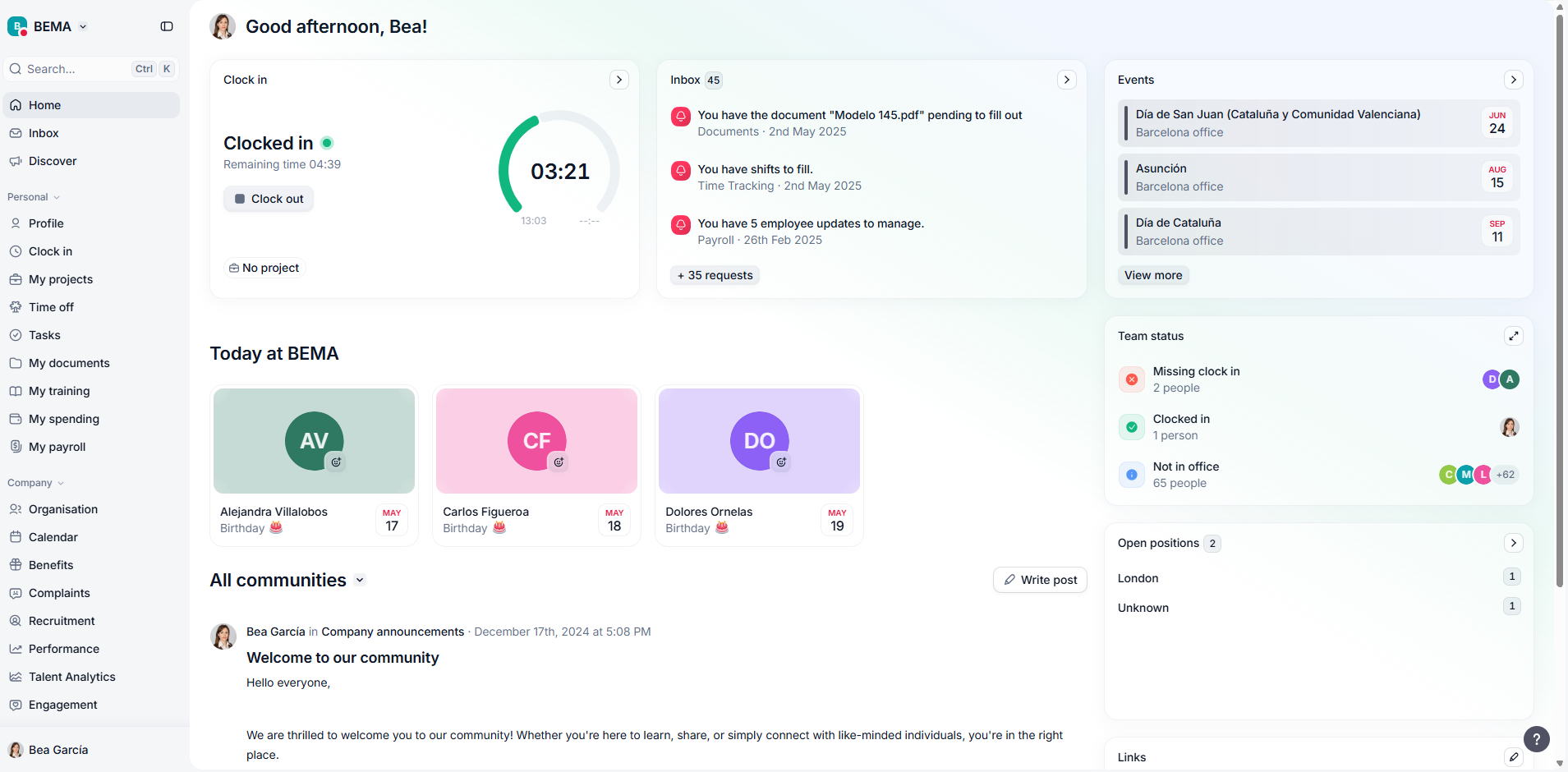
What sets Factorial apart is the depth of its talent management tools. You can run 360-degree performance reviews, build personalized career paths, set up training programs, and track employee goals and OKRs. The platform also includes AI-powered features through an AI Agent called One with tools for applicant tracking and document scanning. Its employee portal lets team members handle tasks like requesting time off, downloading payslips, and updating their information without needing to involve HR.
Factorial offers customizable dashboards with real-time KPIs on turnover, performance, and employee satisfaction. This gives HR leaders the data they need to make informed decisions quickly. The platform is ISO 27001-certified and SOC2 compliant, meaning your data is secure.
Pros:
- True all-in-one platform covering HR, payroll, finance, IT, and talent
- Advanced performance reviews with 360-degree feedback
- Career path planning and training management built in
- AI-powered tools for recruiting and document management
- Modular pricing so you only pay for what you need
Cons:
- Reporting features could offer more depth for complex analytics
- Dashboard customization may require some manual setup for advanced use cases
Price: Starting from $8/user/month. Modular pricing lets you add only the features you need. Free trial available.
2. Personio
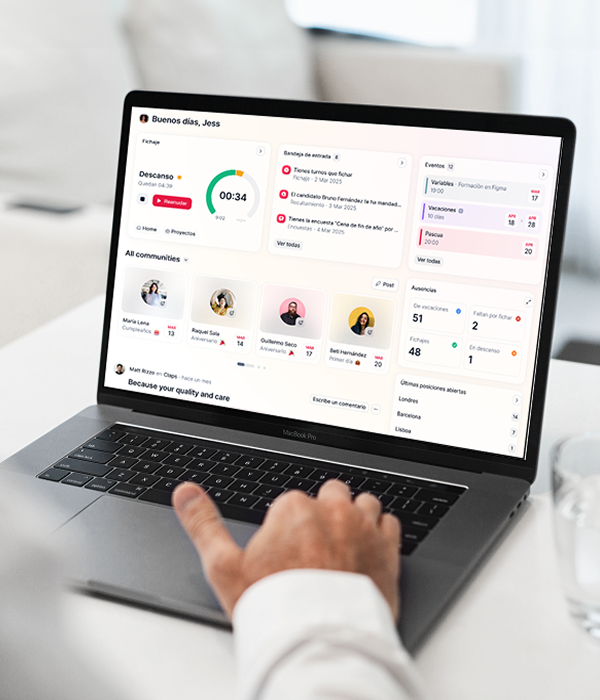
Personio is an HR platform built mainly for small and mid-size European businesses. It covers the full employee lifecycle, from recruitment and onboarding to payroll and time tracking. The platform has grown quickly, serving over 15,000 clients and reaching a valuation of $8.5 billion.
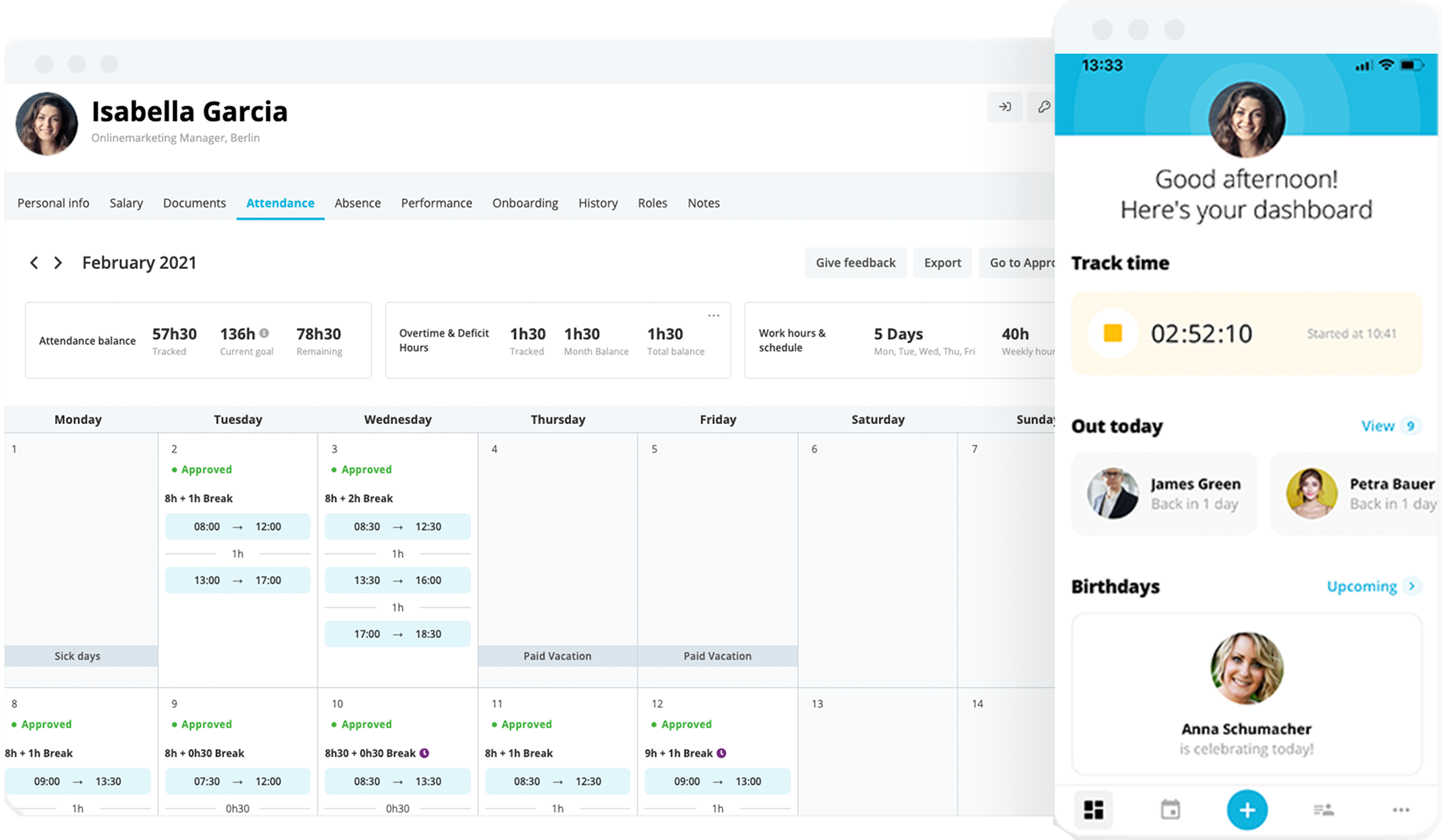
Personio’s strengths lie in its structured workflows and recruiting tools. The applicant tracking system is well-designed, and the onboarding features are solid. It also offers compliance tools tailored to GDPR, which is a plus for companies operating across European borders.
However, Personio’s payroll capabilities are strongest in Germany and can be limited in other countries, including Spain. Multi-country payroll setups often require additional integrations. The platform also lacks the depth in talent management and performance tracking that some competitors offer.
Pros:
- Strong recruiting and onboarding workflows
- GDPR compliance tools for European operations
- Intuitive interface with good overall usability
Cons:
- Payroll module is limited outside Germany
- Pricing is not transparent and requires contacting sales
- Performance management features are structured but can feel rigid
- Essential features sometimes require paid add-ons
Price: Custom pricing based on company size and selected features. Estimated between $5–15/user/month. Two main plans (Core and Core Pro) with optional add-ons. Free trial available.
3. Bizneo HR
Bizneo HR is a cloud platform that offers HR tools organized into configurable modules. It is used by companies of all sizes, from small businesses to large enterprises. The platform covers recruitment, time and attendance tracking, performance management, training, surveys, and payroll preparation.
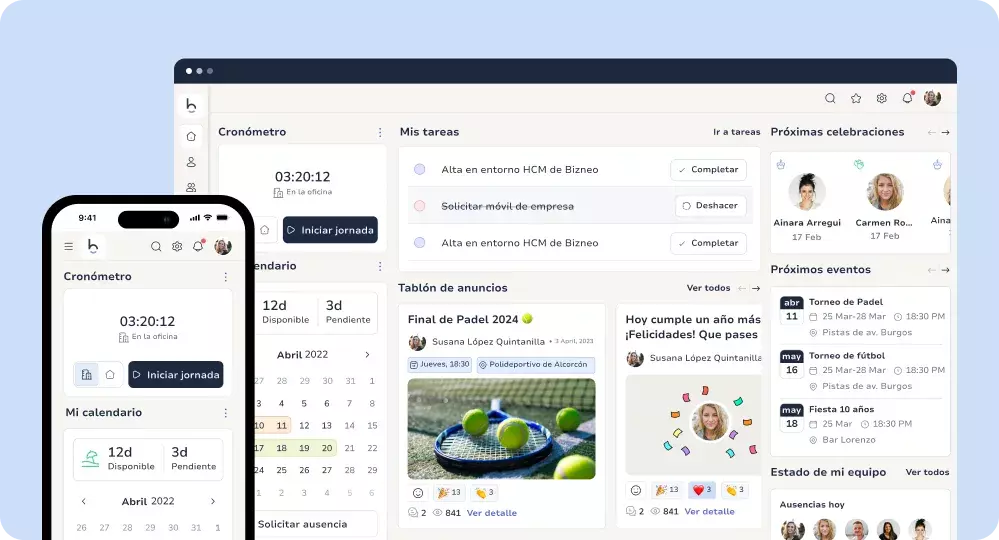
What makes Bizneo stand out is its flexibility. Companies can pick individual modules or adopt the full suite, building a setup that matches their exact needs. The recruitment module is especially strong, with multiposting to over 200 job boards, CV parsing, and a built-in candidate CRM.
Bizneo also shines in time management, offering geolocation tracking, facial recognition for clock-ins, and shift planning tools.
Pros:
- Highly modular design lets companies pick only what they need
- Powerful recruitment and applicant tracking features
- Strong time tracking with geolocation and biometric options
- Excellent customer support with fast response times
Cons:
- Initial setup and user registration can be manual and time-consuming
- May feel overwhelming for very small teams that just need basics
- No free trial currently available
Price: Talent management plans start from $6/employee/month. Custom quotes available for the Professional tier. Contact Bizneo for a tailored pricing plan.
4. Kenjo
Kenjo is an HR platform designed for small and mid-size businesses in service and production industries. It focuses heavily on employee well-being, engagement, and organizational culture, making it a good fit for companies that want to put their people’s experience front and center.
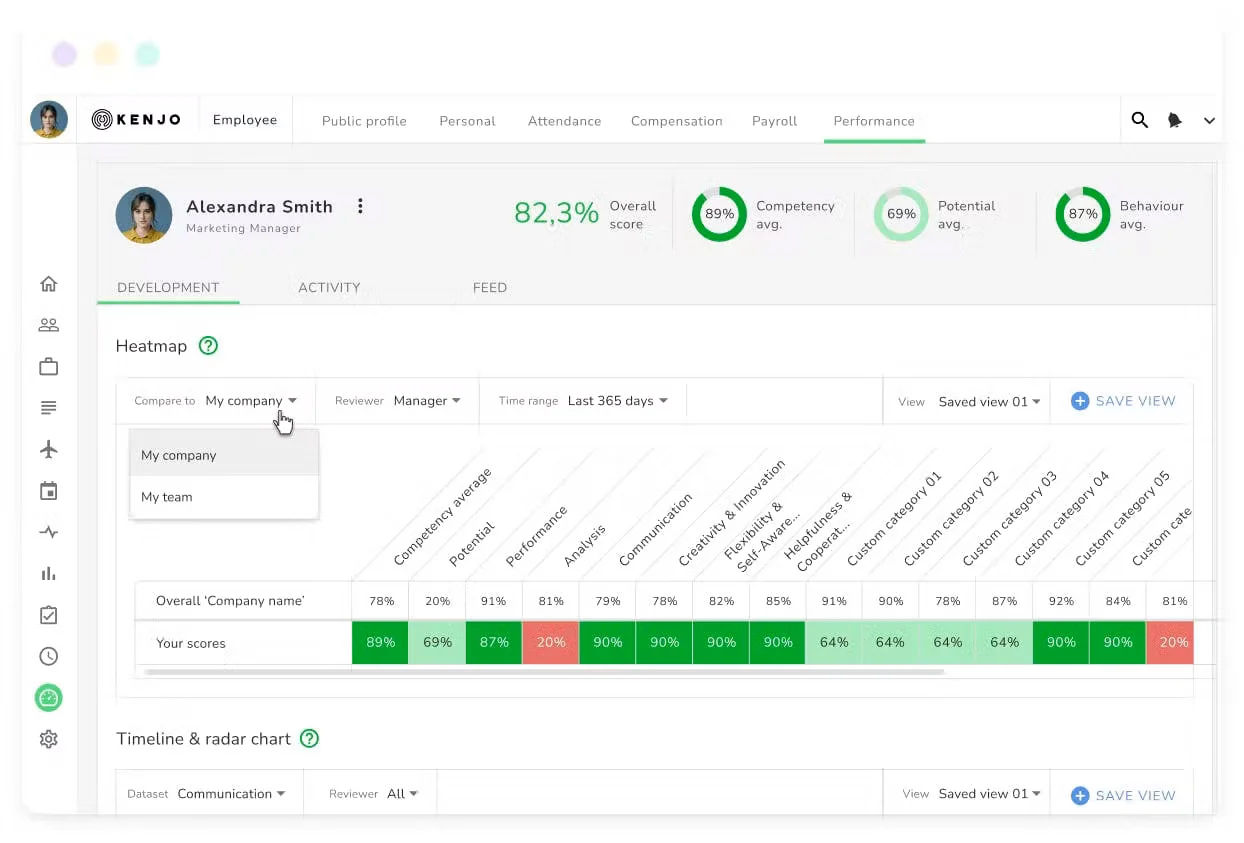
The platform includes features for time tracking, absence management, payroll preparation, performance reviews, and recruiting. What sets Kenjo apart are its pulse surveys and engagement analytics, which give HR teams a clear picture of how employees feel and where improvements are needed.
Kenjo also offers a mobile app that keeps deskless workers connected, which is a real advantage for industries like hospitality, retail, and logistics where employees are not always at a desk.
Pros:
- Strong focus on employee well-being and engagement surveys
- User-friendly interface with quick onboarding
- Mobile app for deskless and on-the-go workers
- Good value for money at the lower pricing tiers
Cons:
- Limited integrations with third-party software
- Performance can slow down with larger employee databases
- Reporting and customization options are somewhat limited
- Advanced payroll and multi-currency features are missing
Price: Three plans available. Starter from €5.40/employee/month, Growth from €10/employee/month, and Connect with custom pricing. Free trial available.
5. Sesame HR
Sesame HR is an HR platform that has built its reputation on simplicity and ease of use. Used by over 12,000 companies, it focuses on making day-to-day HR tasks as smooth as possible, especially time tracking, shift management, and absence control.
The platform offers multi-device clock-in with geolocation support, a real-time panel showing who is in the office, on a break, or working remotely, and automated notifications for HR managers. It also covers recruitment, onboarding, internal communication, document management, and payroll distribution.
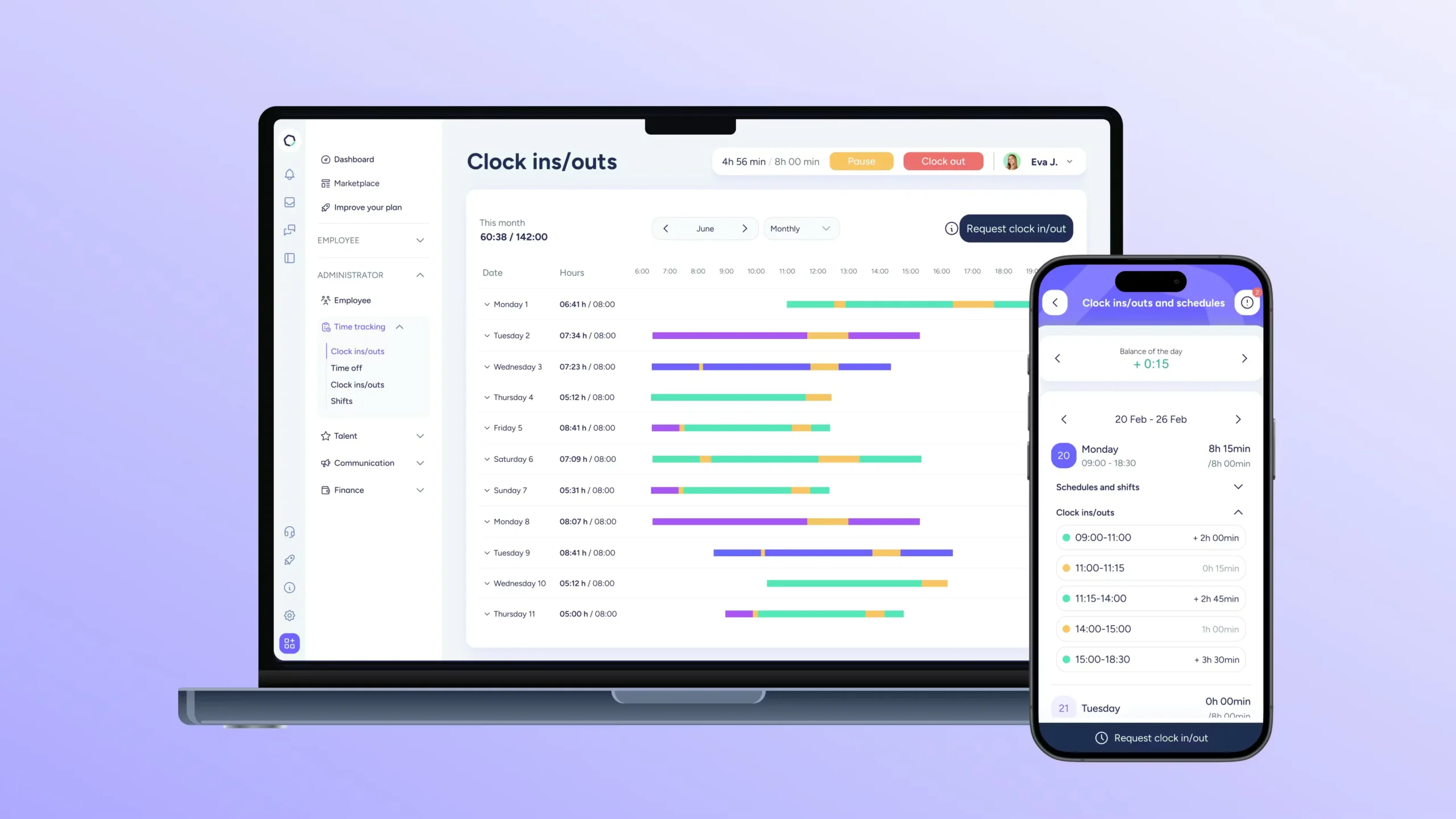
Sesame recently launched Sesame AI, an add-on that helps with drafting job postings, creating employee surveys, generating reports, and preparing interview questions. It is an interesting feature for teams looking to save even more time on routine tasks.
Pros:
- Very intuitive and easy-to-use interface
- Excellent time tracking with multi-device support and geolocation
- AI add-on for automating HR content creation
- Affordable pricing starting at $4.25/user/month
Cons:
- Some features like one-on-ones and performance tools are still basic
- Geolocation can be inconsistent at times
- Customer support experiences vary, some users report issues with cancellation
- Document management section could be more intuitive
Price: Three plans: Starter at $4.25/user/month, Professional at $5.75/user/month, and Enterprise with custom pricing. Sesame AI add-on costs $49/month. Free trial available.
How to Choose the Best HR Software in Spain
Picking the right HR software comes down to understanding your company’s specific needs. There is no magic formula, but here are a few things to consider before you decide.
- Think about your company size and growth plans. A startup with 20 employees has very different needs than a company with 500. Some platforms are built to scale with you, while others work best at a certain size. Make sure the tool you choose can grow as your team does.
- Consider which processes matter most. If time tracking is your biggest headache, a platform like Factorial might be a great fit. If you need strong recruiting tools, Bizneo or Personio could work well. If you want to track employee well-being, Kenjo has interesting features in that space.
- Look at the total cost, not just the starting price. Some platforms look affordable at first glance but require paid add-ons for features you actually need. Make sure you understand what is included in the base plan and what costs extra.
- Check for local compliance. Spain has specific labor laws around time tracking, data protection, and employee rights. Your HR software should help you stay compliant, not create more paperwork.
- Evaluate the level of integration. Does the platform connect well with your existing tools? Payroll providers, accounting software, and communication apps should all work together smoothly.
Factorial's All-in-One Approach Helps You Centralize Your Business
For companies that want to centralize everything in a single platform, Factorial’s all-in-one approach to business management software is especially useful for many businesses operating in Spain. Instead of juggling separate tools for HR, payroll, finance, IT, and talent, Factorial brings all of these together in one place. This not only saves time but also reduces errors that happen when data lives in disconnected systems. For companies in Spain looking to simplify their operations and make smarter, data-driven decisions, Factorial offers a strong foundation to build on. Its modular pricing model means you can start with the features you need most and add more as your company grows, without having to switch platforms.
Keep in mind that the landscape of HR software in Spain is maturing quickly. New features, integrations, and AI-powered capabilities are being added all the time. The platform you choose should not just solve today’s problems. It should also be flexible enough to adapt as your business evolves and as Spanish labor regulations continue to change.
No single tool solves every problem, but the right HR software can transform how your team works, giving your people better experiences and giving your business the efficiency it needs to compete. Take the time to explore your options, request demos, and choose the platform that truly fits your company’s goals.
Disclaimer: The information presented on this page is based on publicly available sources. The comparisons between Factorial and other providers are intended solely for the illustration of the respective software features, pricing and functionalities. All information regarding features, prices, and integrations may be subject to change without prior notice. Factorial assumes no liability for the accuracy, completeness, or timeliness of the information presented. We recommend contacting the respective providers directly to obtain the most accurate and up-to-date information. All legal regulations regarding Spanish fair advertising and competition law are fully observed by us; if you have any concerns, please reach out to us. The comparisons presented do not constitute a final evaluation or recommendation for any provider, but serve solely as an informational source.