Did you know that learning and development professionals say that around 49% of executives are concerned that their employees lack the right set of skills? Being confident in your team is crucial to executing and achieving your business goals. Luckily, for employers, technology has shifted corporate learning and development from a simple checklist to a more dynamic strategy for leaders.
Whether you’re looking to close a skills gap or boost employee retention, this comprehensive guide will cover everything you need to know about creating an effective learning and development strategy (L&D strategy). That way, you can start leveraging your L&D resources to build a workforce that moves your business forward. In today’s workplace, investing in L&D is one of the most reliable ways for businesses to increase their ROI and overall profitability.
📌 Want to dive deeper? Download our free Learning & Development ebook to get the complete playbook.
What is a Learning and Development Strategy?
Learning and development, also known as L&D, is a continuous process of encouraging the professional development of your employees. Additionally, there is a slight difference between learning and development. While most professionals use these terms interchangeably, employers should understand the distinction between the two.
- Learning addresses the skills your organization needs right now, such as mandatory compliance training, onboarding, and bridging urgent capability gaps so that daily operations can run.
- Development focuses on the skills your organization will need to compete tomorrow. It correlates deeply with career paths and fosters long-term talent growth.
A successful hr learning and development strategy must encompass both to ensure present and future success. And the best way to manage current and future needs is to utilize software that streamlines the process, like an LMS. An LMS will manage both the learning and development of your team, so managers can spend more time on business goals and less time on manual admin tasks that come along with organizing an L&D strategy.

Why is Learning and Development Important?
According to a 2025 LinkedIn report, 88% of organizations cite employee retention as a top concern. So, how are learning and development and employee retention connected? Why should employers care about learning and development?
When employees see a clear path forward, they are more likely to stay at their job and tend to have higher employee satisfaction. When leaders prioritize employee learning and development, this directly affects engagement, performance, and turnover. This means hard-to-replace skills stay in your team, HR teams spend less time recruiting for new candidates, and the skills your team learns are directly used to create meaningful impact at your company.
Additionally, this same LinkedIn report cites that employers who prioritize career development are 67% more confident in their ability to retain their top talent. Implementing L&D programs is not just to motivate your employees, but it is also a strategic way to promote continuous learning, enhance your company culture, and encourage employees to gain specialized knowledge. This gives your company a competitive advantage by giving your team a path for professional growth.
Benefits of an Effective L&D Strategy
As we noted, employee retention is a main benefit of implementing an L&D strategy. Additionally, creating opportunities for continuous learning and development brings the following benefits.
- Builds the internal pipeline for leadership roles
If you are continuously empowering employees with leadership development or other employee training, your team will be ready to step into senior roles. This means you have trusted candidates who require less time to onboard and adjust to the company culture, allowing them to make an impact from day one.
- Reduces the cost of recruitment
By investing in employee development, your turnover rate will decrease. Allowing your HR team to focus on more strategic efforts rather than recruiting talent for open positions. In turn, your company saves time and money by retaining talent.
- Strengthens your employer brand for top candidates
As talent development is part of your business strategy, your employer branding will benefit, and when roles are available, top talent will apply. Investing in your team results in positive outcomes for both retaining talent and attracting talent.
- Closes skills gaps before they become business risks
L&D programs are a great way to conduct a skill gap analysis and deep dive into which competencies are missing from your team. That way, your company can gain a competitive advantage by upskilling and reskilling for current and future challenges.
📌 Learn to retain your top performers with an effective learning and development strategy. Download your free L&D strategy ebook today!
How to Build an Effective Learning and Development Strategy (Step-by-Step Guide)
There is no “one size fits all” strategy when it comes to learning and development. What works well for one company may not be as effective for another. The strategy you implement will depend on the training requirements of your industry, the roles within your company, and the size of your business.
Here is how to create a learning and development strategy that actually works:
1. Align learning with business goals:
Before designing or assigning courses, identify high-level goals your organization is working toward. Start with three to five goals that can be directly correlated to a learning initiative.
For example: Your company is focusing on improving customer satisfaction. Can you make a correlation to a training and your targeted business outcome? If you can, this course is worth investing in. In this particular example, learning initiatives could be improving your team’s product knowledge to address your customers’ concerns more accurately. Or perhaps a course in conflict resolution could mitigate situations from escalating. By tying your L&D strategy to business KPIs, you can ensure you are making a meaningful and measurable impact.
2. Identify the gaps:
By conducting a training needs analysis, you can identify what competencies your team needs to hit business goals. Use performance reviews to help contextualize the gaps in your team. Once you’ve identified these gaps, you can benchmark your workforce against industry trends. That way, you can match the missing skills to business objectives and, from there, map out the impact each of these skills would have on the company.
3. Implement the 70 20 10 Learning and Development Model:
To scale your strategy, adopt the 70 20 10 model for learning and development. Research shows that meaningful professional development rarely happens in a classroom.
- 70% Experiential learning: The bulk of development happens on the job through stretch assignments and cross-functional projects.
- 20% Social learning: Growth occurs through peer coaching and formal mentorships.
- 10% Formal training: Structured coursework (like compliance modules) acts as the baseline that enables everything else.
This is the baseline and can serve as your foundation for the type of courses that are included in your L&D catalogue.
4. Focus on internal mobility:
Ensure you are giving your team opportunities to upskill (learn new skills for their current role) and reskill (train employees for new roles). By giving your current workforce opportunities, it allows your employees to gain different skills without leaving the organization. In turn, they can take these skills and be involved in multiple projects in different departments and move to leadership roles.
AI in Learning and Development
In today’s modern age, AI in the workplace must be addressed. You might be wondering, how is AI used in an L&D strategy? How can businesses integrate AI into their corporate learning programs? Employers should understand that AI has two functions when it comes to their L&D strategy.
- Train employees to gain new skills or reinforce AI expertise
- Use AI to create and automate the planning of L&D strategies
For the first use case, organizations must prioritize and adapt their training programs to include AI competencies. This allows teams to leverage technology to their full potential, which includes prompting, human-AI collaboration, and AI literacy. This is critical for employers, as research shows that only only 36% of workers have received training on how to work with AI agents. Businesses that want to stay ahead of their competitors are carving out time to train their team on how to partner with AI efficiently.
Whereas in the second use case, AI can automate manual tasks or training program basics. It can also synthesize data, identify gaps, and suggest relevant learning content to meet employees’ needs and build personalized learning paths. This frees up HR leaders’ time to focus on making a strategic impact and culture-building. An AI-powered learning and development strategy will save you time while also optimizing your results.
Learning and Development Examples
If this is your first time designing a learning and development strategy, then you may be wondering where you should start.
Let’s take a look at a few L&D examples from industry leaders to help inspire you.
Amazon
Amazon committed to investing $700 million in retraining 100,000 employees in 2019. The aim was to upskill team members by providing nontechnical workers with access to technical skills training. Amazon offered training programs to workers at all levels of the company. The e-commerce giant was able to address skill gaps with this initiative. It also increased employee motivation by encouraging workers to follow their professional dreams.
Etsy
Etsy also places a lot of value on employee learning and development. The company has founded “Etsy School” where employees can learn about a range of topics focused on both hard and soft skill development. Employees are also encouraged to share their own skills by teaching others and encouraging the career development of their colleagues. This, in turn, helps them further develop their own skills in organization, leadership, and perseverance. It also helps the company nurture a culture of shared skills and collaboration.
Optoro
Reverse logistics company Optoro is another great example of a successful L&D initiative. Optoro encourages exempt employees at all levels of the company to participate in conferences, organizations, and learning programs. Employees and managers work together to identify appropriate development opportunities that help keep staff at the top of their game.
Improve your Learning and Development Strategy
To effectively execute this strategy, adopt a Learning Management System (LMS) to streamline employee training. It allows you to formalize baseline trainings (like GDPR and compliance) so employees can learn at their own pace, while seamlessly connecting performance data to your existing HR ecosystem to fuel personalized development.
| Metric | What It Measures | Why It Matters |
|---|---|---|
| Retention rate | % of employees staying after L&D investment | Directly connects development spend to reduced turnover costs |
| Internal promotion rate | % of open roles filled internally | Validates whether upskilling and reskilling are creating ready talent |
| Time to productivity | Days for a new hire to reach full output | Measures onboarding effectiveness and LMS quality |
| Skills gap velocity | Rate at which identified gaps are closing | Shows whether training is translating into real capability growth |
| Performance improvement | Pre/post training performance review scores | Ties formal learning to on-the-job outcomes |
Execute your L&D Strategy with Factorial’s LMS
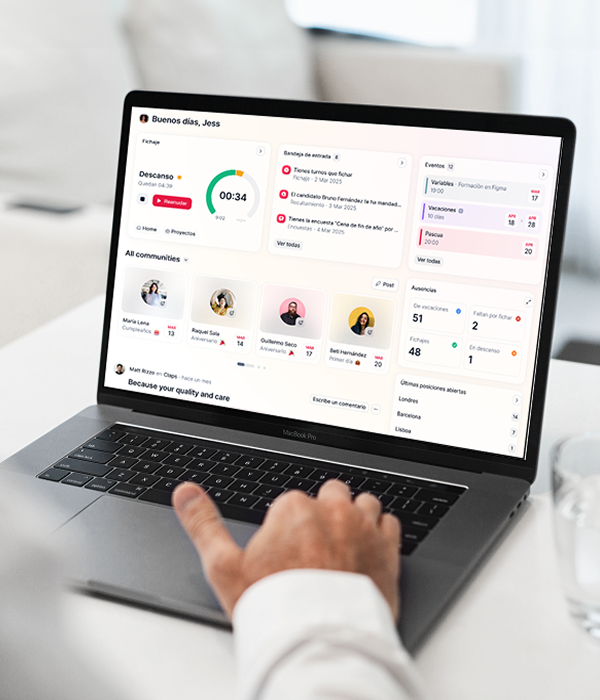
Having a strategy is only half the battle. Execution requires the right infrastructure. Luckily, Factorial has a Learning Management System designed to help HR teams successfully implement L&D programs without adding additional administrative work.
The platform allows you to formalize baseline trainings – like GDPR compliance and onboarding – so employees can learn at their own pace. Additionally, Factorial connects performance data, training analysis, onboarding tasks, and employee data all in one platform. That way, you have all the necessary information centralized in a unified space for managers and employees alike to reference. Get a free personalized tour of Factorial to see how it can benefit your team!
Learning and Development Strategy FAQs
How to improve learning and development in the workplace?
To improve your L&D program at your company, you should audit your current L&D inventory to repurpose relevant content, define clear competency examples to avoid vague expectations, and utilize LMS software to centralize and automate your process.
How to promote learning and development in an organization?
You can promote L&D at your organization by providing a clear structure for leaders to follow, giving your employees hands-on projects to learn, and ensuring learning opportunities are easily accessible. Additional suggestions are to offer online courses, provide personalized learning for each individual, and align their career development with their interests.
How will you ensure continuous learning and development?
Build a culture that treats development as an ongoing process rather than a one-time event. Enable self-directed learning by opening up your learning library so employees can access training exactly when they need it, and use performance data to personalize career paths.
How to measure roi in learning and development?
Move beyond simple course completion metrics. Define metrics that demonstrate business impact, such as productivity, profitability, and risk mitigation. Track retention rates, internal promotion rates, time to productivity for new hires, and the speed at which the skills gap is closing.