Skip to content

Learning & Development: The CHRO’s guide to learning in the age of AI

Not long ago, employee training meant ticking boxes. Safety protocols. Compliance modules. Onboarding checklists. Learning and Development existed at the edges of organizational strategy. It’s always been useful, but rarely urgent. That era is over.

According to LinkedIn's Workplace Learning Report 2025, 49% of learning and talent development professionals agree that executives are concerned employees don’t have the right set of skills to execute the strategy of the business.

The result is an increased pressure to continue growing. Teams are facing an unprecedented need to acquire new capabilities quickly, while organizations face an equally urgent challenge: how to identify, build, and scale the skills they will need to compete, not in five years, but right now.

The organizations that build a culture of continuous, scalable learning will lead the change. This guide was built to help your organization become one of them.
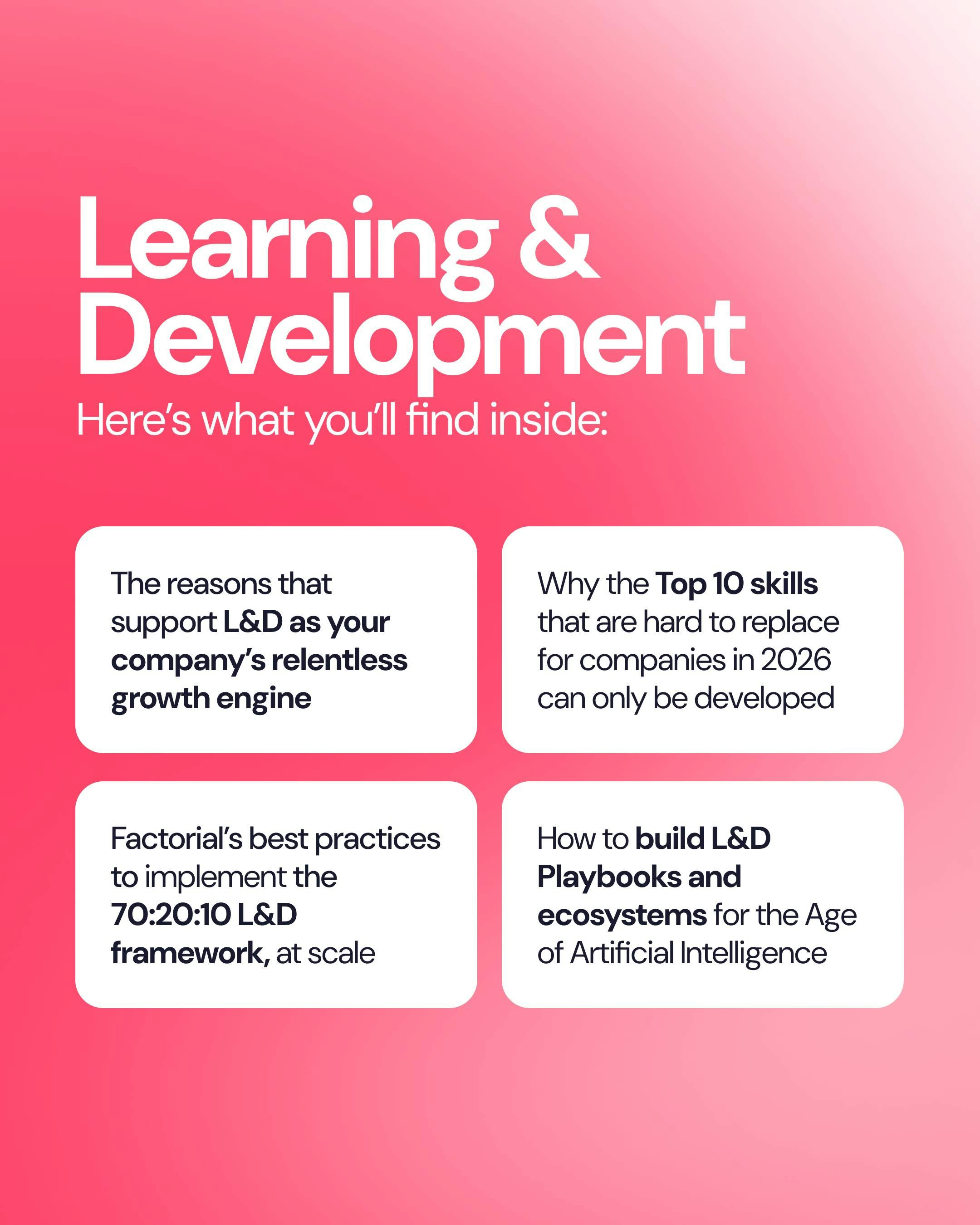
With the top 10 skills hard to replace for companies to building playbooks for the age of AI.

Some insightful data about the L&D process

49%

of L&D professionals admit executives are concerned of teams lacking the skills to execute business strategy.

36%

of workers say they have received training on how to work with AI agents.

88%

of organizations admit employee retention is a top concern.

What's the difference between learning and development?

There is a very real difference between learning and development: Learning addresses the skills your organization needs right now, while Development is about the skills your organization will need to compete tomorrow: the future-facing capabilities that determine whether you lead your market or fall behind it. You need both. And you need to do them well.

We are facing a dual challenge in today’s workplace: a widening skills gap and a deepening retention crisis. The good part? These two are more connected than most organizations realize: career progress is employees' number one motivation to learn, which means they’ll leave if they don't see a path forward. Providing learning opportunities has become their go-to strategy to address it. But not every strategy is a great strategy.
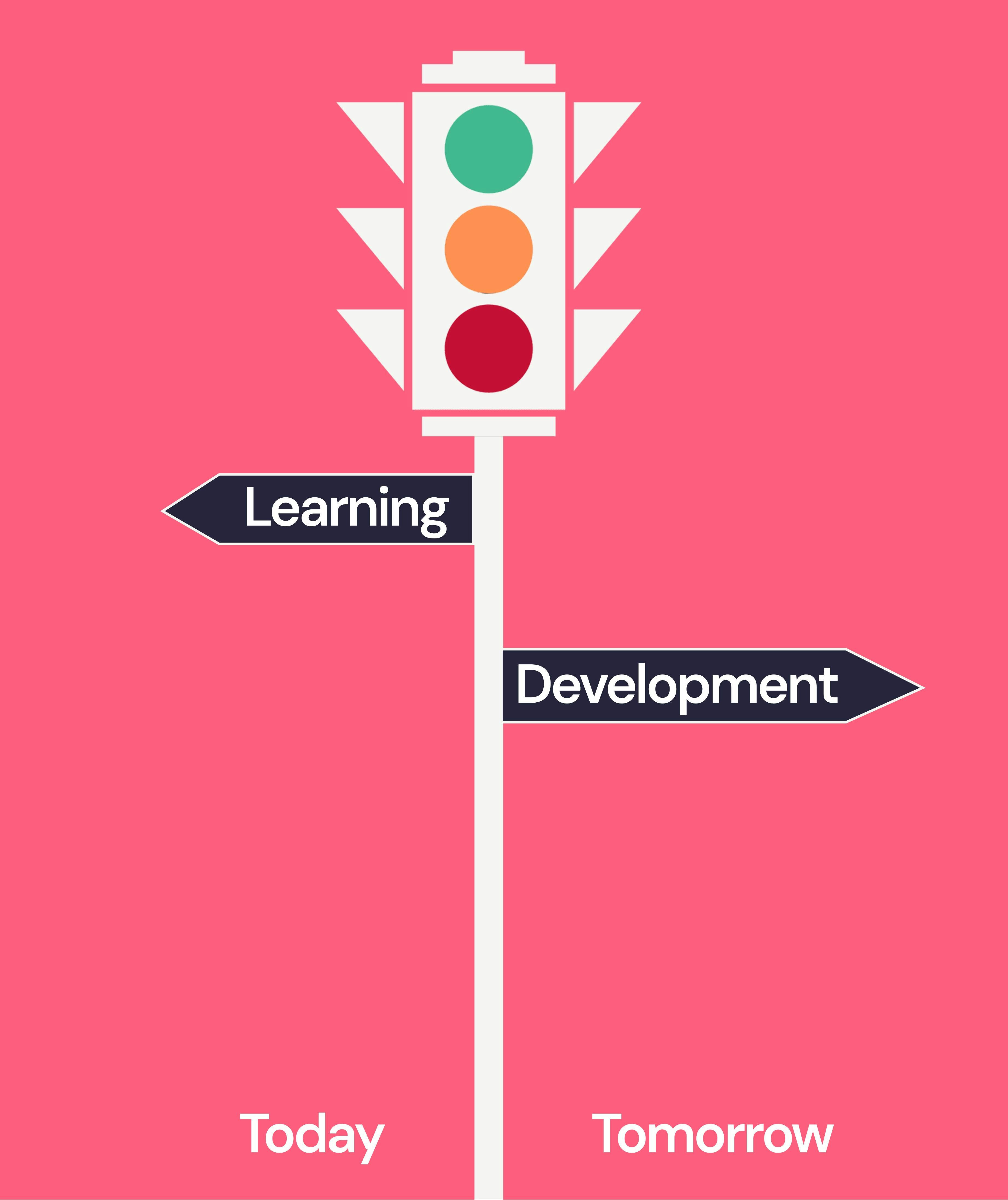
Learning focuses on the skills your teams need today to operate correctly. Development focuses on soft skills that your company will need to remain competitive tomorrow.

Building better L&D programs

The most common mistake organizations make when building an L&D program is starting in the wrong place. They open a course catalog, browse what's available, and begin assigning trainings. It feels productive, but it rarely is. An effective L&D program starts with a completely different question that awaits you inside the guide.

From reshaping the HR department's role to enabling managers as coaches, Carla Ripa, Head of Talent Development at Factorial, shares her expert tips, tools and recommendations to nail a winning L&D strategy that blends upskilling and reskilling to the mix.

Finally, we dive deeper on how to build L&D programs for the age of AI: from playbooks, to critical AI skills to develop, inside this guide you'll find the step-by-step recommendations and tools you'll need to make it work seamlessly.

Frequently Asked Questions about Learning and Development (L&D)

Some legitimate questions on enabling talent growth.

How to create a learning and development (L&D) strategy?

Creating an effective L&D strategy starts with asking the right question: not "What should our people learn?" but "Where is the business going?" Before selecting any courses or designing trainings, identify the three to five high-level goals your organization is working toward. Every learning initiative should map directly to these business milestones.

Next, conduct a skills gap analysis using existing data sources like performance reviews, job descriptions, and employee surveys to visualize the distance between current capabilities and required competencies. Finally, define competencies rather than isolated skills. A competency combines skills, knowledge, and abilities working together to enable someone to succeed in a role and contribute to broader organizational goals.

How to build a learning and development strategy?

Building a strong L&D strategy requires three core steps:

Align with business objectives. Be in the room where strategy is made. Identify your organization's top priorities and ensure every learning initiative supports them directly. Design the learning ecosystem. Use the 70:20:10 framework: 70% experiential learning, 20% social learning, and 10% formal training. Prioritize internal mobility. Enable upskilling and reskilling to move talent where it's needed most. Create internal talent marketplaces, personalize learning paths, and formalize job shadowing and mentorship programs to build workforce agility.

Why is learning and development important?

L&D has evolved from an operational necessity to a strategic lever for business success. According to LinkedIn's Workplace Learning Report 2025, 49% of learning and talent development professionals report that executives are concerned employees don't have the right skills to execute business strategy.

Organizations that get L&D right experience measurable benefits: retention improves because career progress is employees' number one motivation to learn; business agility increases as companies become 67% more confident in their ability to retain qualified talent; and AI readiness accelerates, with organizations that have robust development programs being 42% more likely to be frontrunners in Generative AI adoption.

Why is learning and development important for employees?

Career progress is the number one motivation for employees to learn. When people see a path forward within the organization, they stay. According to Pew Research Center, 63% of employees who quit their jobs cited a lack of opportunities for advancement as a reason for leaving.

L&D gives employees tangible growth opportunities, helping them build the capabilities they need to perform in shifting contexts, navigate change with confidence, and contribute to innovation. When organizations invest in employee development, they signal that they value their people as individuals, which drives engagement, loyalty, and performance.

Why learning and development is important in an organization?

Learning and development directly impacts an organization's ability to compete. Skills that were relevant three years ago are becoming obsolete, and 88% of organizations cite employee retention as a top concern. Providing learning opportunities has become the number one retention strategy.

Beyond retention, L&D builds the critical skills organizations can't afford to lose. According to LinkedIn's 2025 report, the top 10 skills most frequently lost to attrition include business strategy, strategic planning, sales management, and team leadership. These skills require critical thinking, institutional knowledge, and the ability to navigate uncertainty, and they can only be developed over time, not onboarded.

How to improve learning and development in the workplace?

Start by auditing your current L&D inventory. This saves time, budget, and employee cognitive load. Next, define what successful performance looks like at each proficiency level with specific, concrete examples. Vague competency definitions cause L&D initiatives to fail. Finally, adopt blended learning by combining self-paced online modules with instructor-led sessions for practice and application, and formalize social learning through structured mentorship programs.

How to promote learning and development in an organisation?

Promote L&D by embedding it into daily work rather than treating it as separate from operations. Empower managers to act as coaches who discuss where employees want to grow, not just assign tasks. Train them to have open conversations about career aspirations and provide regular feedback. Enable hand-raisers for redeployment by creating mechanisms that allow employees to advocate for roles where they see a better fit. Build psychological safety so employees feel comfortable experimenting, failing fast, and sharing what they've learned across teams.

Where companies go wrong with learning and development?

The most common mistake is starting in the wrong place. Organizations open a course catalog, browse what's available, and begin assigning trainings. It feels productive, but it rarely drives business outcomes.

Another frequent misstep is focusing on isolated skills rather than competencies. Skills tell you what a person needs to do, but competencies describe how they need to think, behave, and operate to perform at a high level.

Companies also fail when they leave social learning to chance instead of formalizing mentorship and peer development structures, or when they rely on gut feeling to identify skills gaps instead of using centralized performance data.

How to identify learning and development needs?

Conduct a skills gap analysis using existing data sources: performance reviews, safety reports, job descriptions, and employee survey data. This process visualizes the distance between current employee capabilities and the competencies required to achieve your business goals.

How will you ensure continuous learning and development?

Continuous learning requires building a culture that treats development as an ongoing process, not a one-time event. Enable self-directed learning by opening up your learning library so employees can access point-of-need training when they need it, like a five-minute video right before a client call.

Create internal talent marketplaces that allow employees to explore different projects or roles, keeping high performers engaged even when they've outgrown their current positions. Personalize development paths using performance data, skills assessments, and career conversations to align individual aspirations with organizational needs.

How to measure ROI in learning and development?

Move beyond engagement and completion metrics to measure business impact. Define metrics that demonstrate how L&D investments support your organization's highest objectives: productivity, profitability, and risk mitigation. Ask yourself: How will this initiative help the company make money, save money, or mitigate risk? Track retention rates, internal promotion rates, time to productivity for new hires, and skills gap closure over time. For AI-related learning, measure adoption rates and the speed at which teams integrate new tools into workflows.

How to use AI in learning and development?

AI serves as both a learning challenge and a development opportunity. Treat it as an immediate skills gap to close (baseline fluency) and a long-term strategic capability to build (advanced skills). Prioritize emerging skills like agent orchestration and prompt fluency, human-AI collaboration design, ethical AI literacy, and data storytelling. Create conditions for AI learning to thrive: build psychological safety so employees can experiment and fail fast, empower teams to redesign processes with AI in mind, ensure leadership models curiosity and digital confidence, and establish mechanisms to share AI discoveries across teams.

How can AI help learning and development?

AI helps L&D by automating repetitive, table-stakes training programs (compliance, onboarding basics, mandatory certifications), which gives teams bandwidth to focus on developing forward-thinking capabilities that determine long-term organizational success. AI accelerates skills gap identification by analyzing workforce data at scale, surfaces relevant learning content when employees need it most, and personalizes development paths based on individual performance and career aspirations. It also enables rapid iteration and experimentation, allowing organizations to test new learning approaches, gather feedback instantly, and adjust programs in real time. By handling foundational learning efficiently, AI creates space for L&D leaders to invest in the human elements that truly drive performance: coaching, mentorship, experiential learning, and culture-building.

L&D: The CHROs guide to learning in the age of AI