If your team still manages contracts in shared drives, email threads, or spreadsheets, you can save hours of time every week by switching to AI contract management software. Contracts get stuck in review, renewals are missed, and nobody is really sure which version is the “final” one.
In the US, the AI-powered contract management market is growing in popularity. The US market for AI-powered end-to-end contract management solutions was already worth around $1.18 billion in 2025 and is forecast to grow globally. Legal, finance, HR, and operations teams use AI and the benefits are clear. Contracts are easier and faster to draft, and the risk of incorrect information being duplicated is lower. An added benefit is that both managers and employees get clear visibility into what’s inside their contracts.
This guide explains what AI contract management software is, why it matters, which features you should look for, and which tools you should try in 2026.
What Is AI Contract Management Software?
AI contract management software is software that uses artificial intelligence to help you create, review, sign, store, and track contracts across their entire lifecycle. It combines traditional contract lifecycle management with AI technologies like machine learning, natural language processing, and generative AI.
Instead of just acting as a document repository, AI-powered platforms can:
- Read contracts and extract key terms, dates, and clauses automatically
- Flag risky language or deviations from your standard contracts
- Generate first drafts from templates or prompts
- Answer questions about your contract portfolio in plain language
- Monitor renewals and obligations, then send alerts before deadlines
In practice, AI contract management software is like having a digital legal assistant that never sleeps. It helps sales, HR, procurement, and legal teams move faster without losing control of processes.
Benefits of Using AI for Contract Management
Using AI for contract management has many benefits that deliver a real business impact, but here are a few of the biggest advantages to help you understand the impact.
Faster contract cycles
AI speeds up every step of the contracting process. AI can suggest templates, pre-fill fields, and auto-tag key data. This cuts the review time of contracts dramatically. AI can categorize contracts so storage is easier, which can also reduce delays when closing deals.
Less manual administrative work
Instead of copy-pasting contract terms into spreadsheets or manually route contracts for approval, teams can use AI to extract clauses, dates, and other info from contracts and push that data into dashboards and reports. Many platforms also automate contract approval workflows based on rules you set and send automatic reminders for contract renewals and obligations.
Risk management is improved
AI can compare third-party contracts against your standard terms, flag risky terms, and suggest alternative wording that is safer. Some platforms now include AI-powered risk scoring agents that proactively scan your portfolio and highlight agreements that deserve immediate attention. This helps in-house legal teams focus on what really matters instead of reviewing everything line by line.
Ensuring compliance is easier
AI contract tools help keep agreements aligned with internal policies and external regulations by checking clauses against your predefined standards, highlighting gaps, and automating audit trails. That reduces the risk of non-compliance and unpleasant surprises later.
Key Features of AI Contract Management Software
When you compare AI contract management tools, these are the features that you should look for that actually improve your processes.
Drafting contracts with AI
AI contract management platforms use generative AI to draft first versions of NDAs, MSAs, employment contracts, vendor agreements, and more based on your templates or by writing a simple prompt. This doesn’t replace legal review completely, but it cuts down on repetitive work like drafting, for example.
Extract clauses and categorize them
AI should be able to read your contracts and pull out key terms like renewal dates, termination rights, payment terms, governing law, and liability caps. The best AI tools classify clauses, compare them against approved language, and flag risky deviations automatically.
Ask questions and get answers from conversational AI
AI-powered contract management systems include “conversational interfaces” so you can ask questions in plain English like “Show me all contracts renewing in Q3” or “Which vendors have uncapped liability?” and get answers instantly. This is much faster than searching documents manually.
Workflows and automated approvals
AI contract management software should let you choose who has permission to approve which contracts, when, and under what conditions.
Manage renewals and obligations
The best tools track contract renewal dates, milestones, and obligations and send alerts in time before the deadline. Some even give you renewal dashboards that let you quickly see which contracts are coming up for renewal and where you may be overspending.
Top 10 AI Contract Management Software in 2026
Below are the top AI contract management tools for US businesses today, starting with the best choice for HR and people operations teams.
1. Factorial: Best for HR and People Contracts
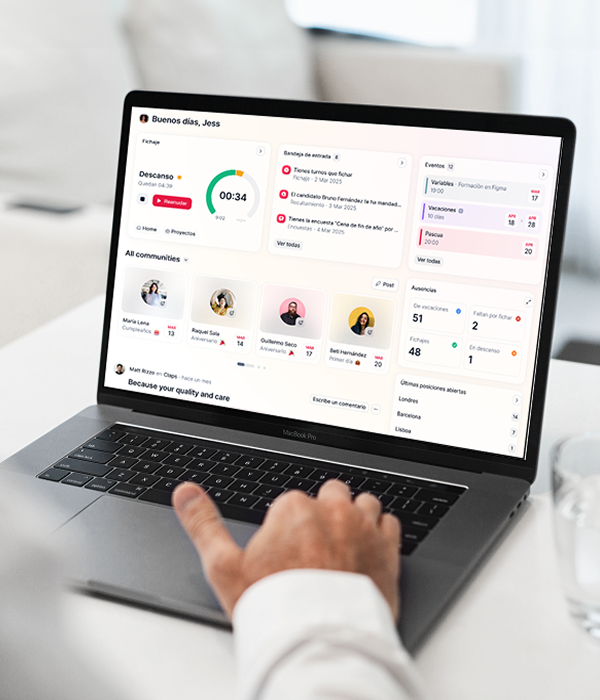
Factorial is an all-in-one HR and business management platform that includes an AI agent called One that connects your business data and lets you ask questions about anything, including contracts. Besides this, Factorial’s document management features and other tools make it a great option for SMBs looking for AI-powered contract management for employee and contractor agreements. Instead of juggling separate tools for HR, payroll, and contracts, Factorial brings everything into one place tailored for people operations teams.
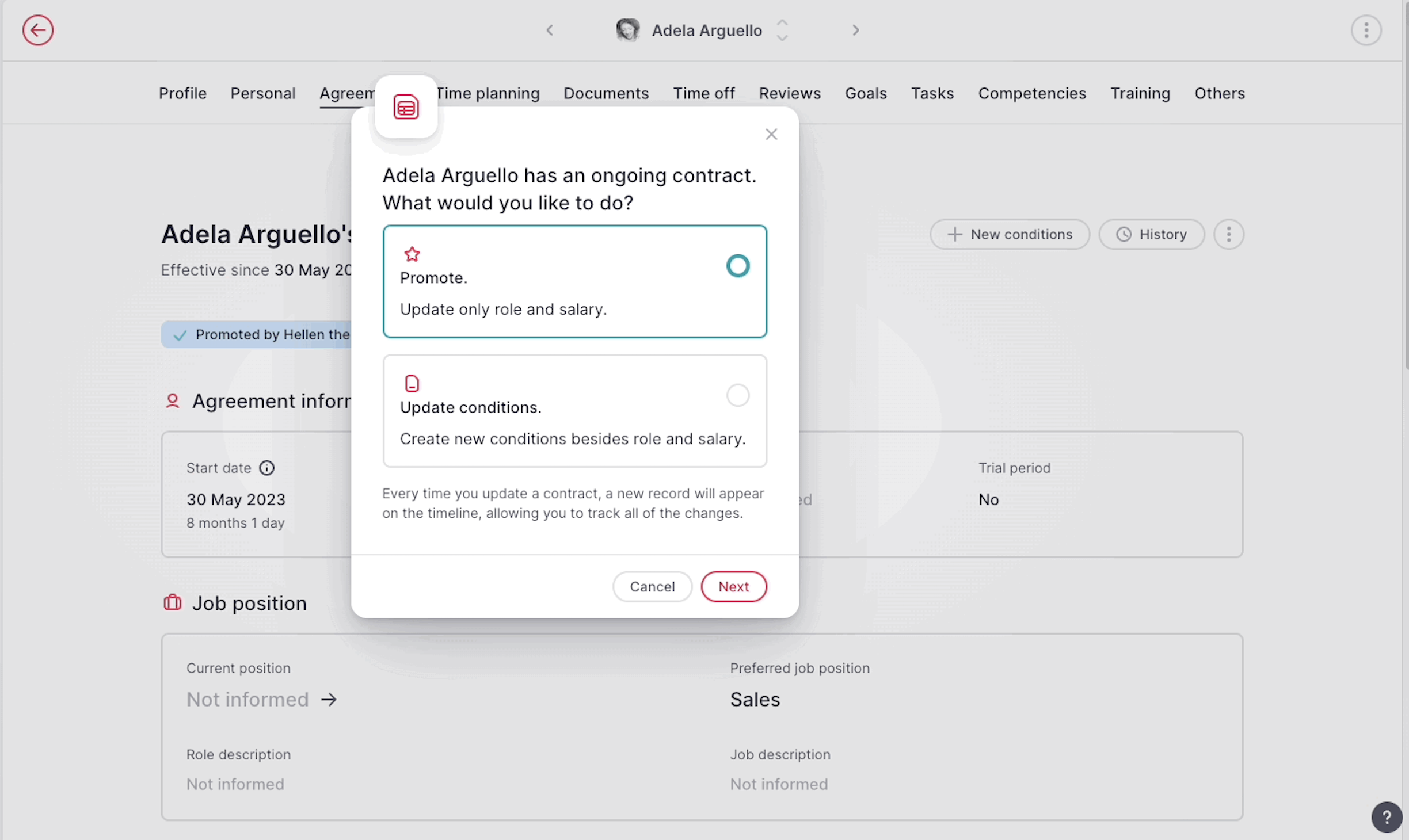
Key contract management features in Factorial include:
- Create contracts: Invite your new team members to fill in their data directly in Factorial and generate accurate contracts automatically, shortening what used to take days down to seconds.
- Manage compensation and terms automatically: Factorial pulls info from your HR and payroll data to calculate salary, benefits, and working hours, then inserts that into the contract.
- Contract condition workflows: Use workflows to update conditions like working hours, location, or reporting or to handle promotions that change role and salary, while keeping a history of changes.
- Source of truth for HR data: Contracts are the foundation for payroll, time off, overtime, and reporting, and Factorial keeps them all in sync so every change is reflected across the platform.
- Contract history: View all versions of contract conditions per employee, fix wrong information, and maintain a clear audit trail for compliance and internal reviews.
One (the AI agent) helps managers generate documents, answer questions about policies, and makes HR workflows simpler. For US companies that need to streamline hiring, onboarding, promotions, and terminations with clean, compliant contracts, Factorial offers a people-first approach.
Factorial is best for:
HR, people ops, and operations teams that want contract management connected to HR, payroll, and workforce data in one platform.
2. Ironclad
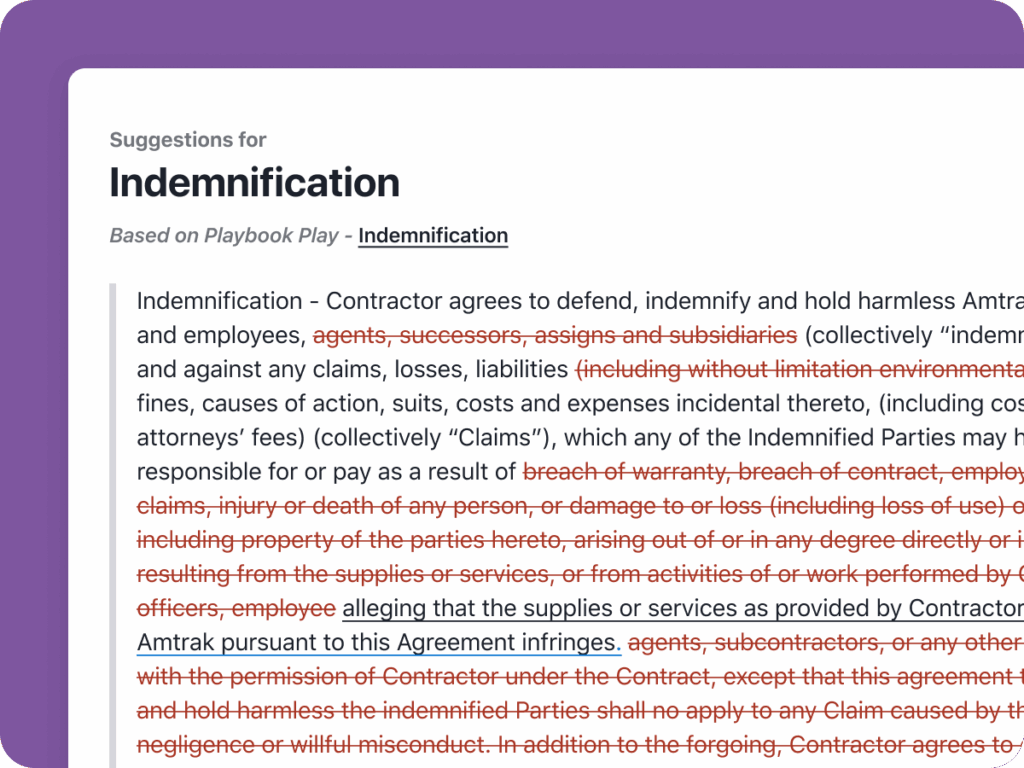
Ironclad is an AI-driven contract lifecycle management platform built for legal and operations teams at enterprises. Ironclad uses AI across almost every stage of the contract lifecycle.
Features that stand out:
- Generative AI drafts and helps create and negotiate contracts faster.
- Conversational AI helps find information in your contracts.
- Clause extraction and risk analysis to identify key terms and compare them to your standards.
- Renewal dashboards that highlight upcoming renewals and potential overspend.
- Integrations with other tools like Salesforce, Google Docs, and Netsuite
Best for:
Legal and operations teams at enterprise companies that want AI-powered CLM.
3. Agiloft
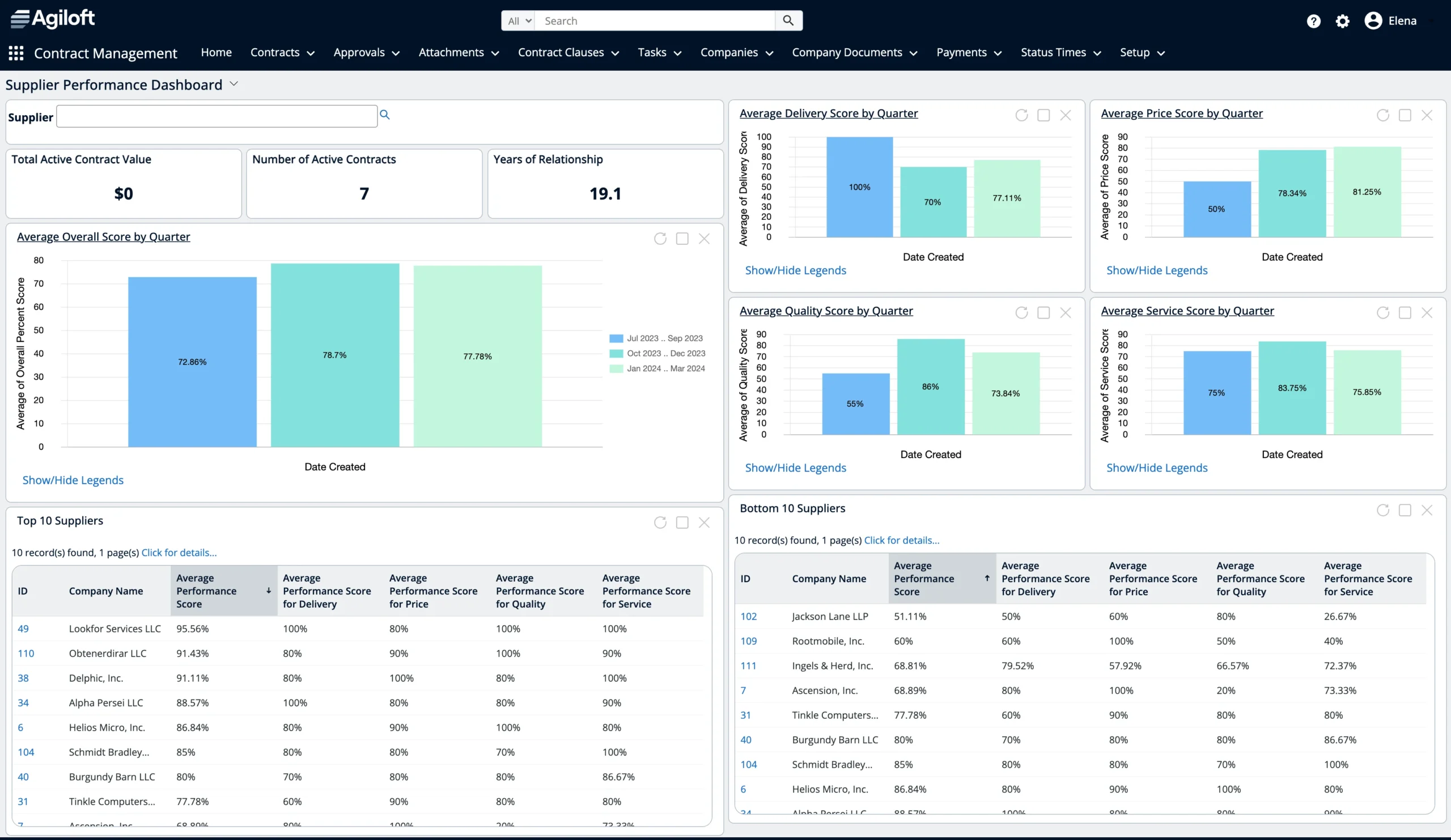
Agiloft is an established CLM provider that has added AI capabilities on top of a platform that is highly configurable without coding. It’s often chosen by organizations that need a lot of customization for complex workflows.
Key features:
- AI-powered contract importing and review to extract key terms and identify risks.
- Ask questions about contracts with conversational AI.
- Tailor AI workflows to your own processes.
- Obligation tracking and automated workflows for approvals, renewals, and compliance tasks.
Best for:
Organizations that need a flexible CLM that is configurable.
4. Docusign
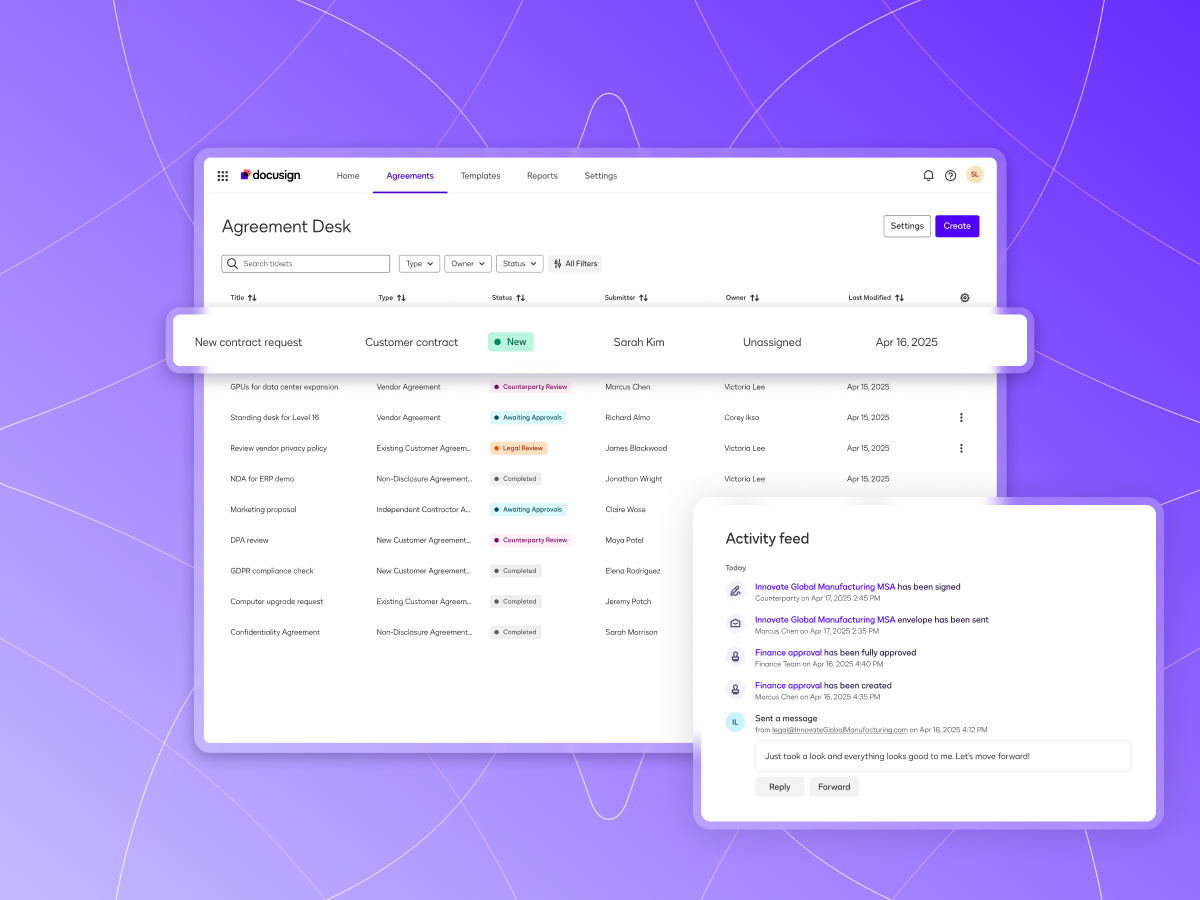
If your company already uses Docusign for electronic signatures, its newer agreement tools help you manage the entire contract lifecycle.
Key benefits:
- Faster review inside Word: You can check contracts in Microsoft Word with AI pointing out parts that break your rules or look risky.
- Cleaner data from signed contracts: Instead of just storing PDFs, Docusign’s AI can read them, pull out key details, and make them searchable.
- Better control over renewals: The system can keep track of important dates and send reminders before contracts renew.
Best for:
Companies that want to build on top of their existing Docusign setup and start managing more of the contract lifecycle in one place.
5. LinkSquares
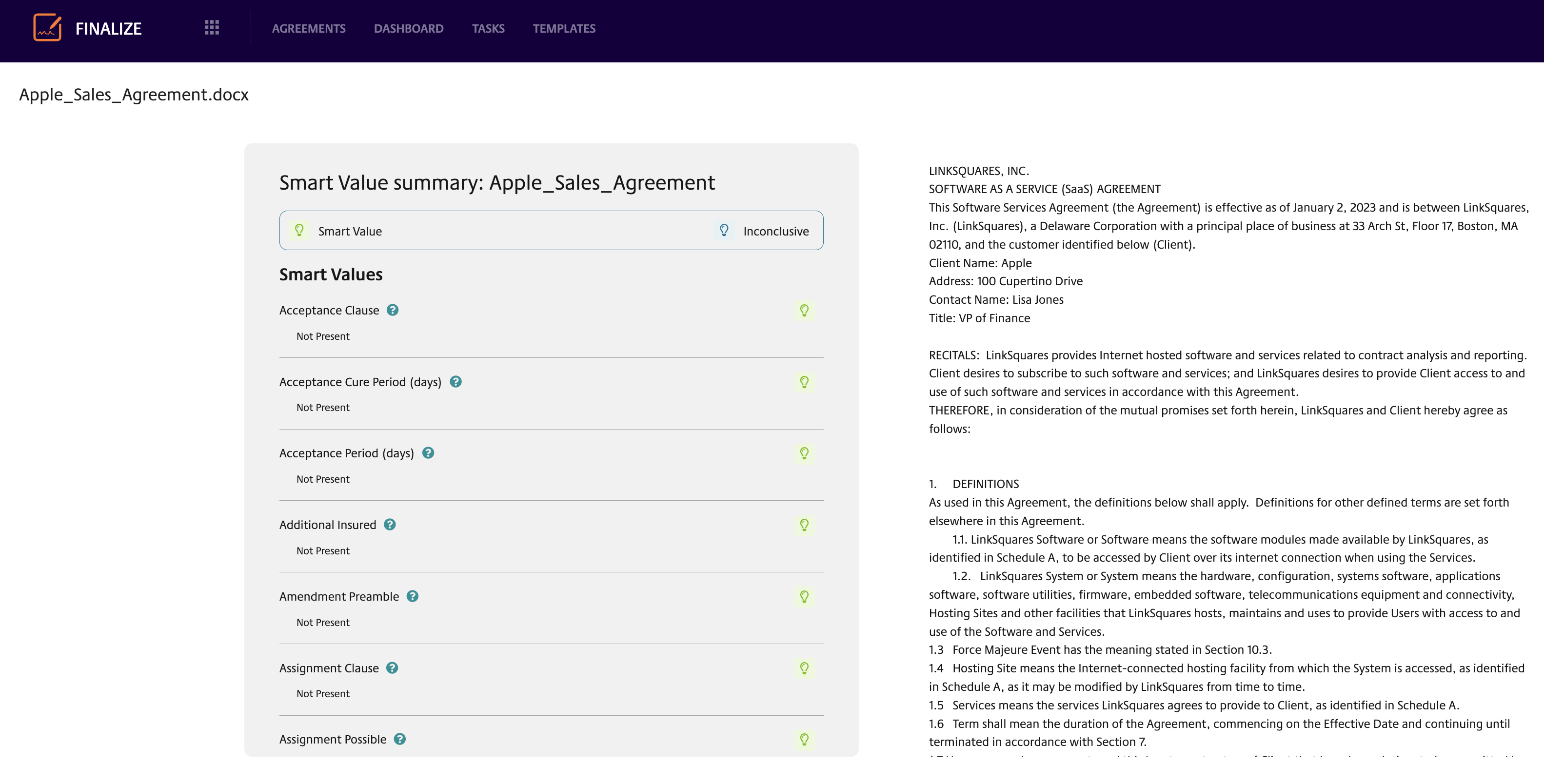
LinkSquares is designed for in-house legal teams that want to understand what’s in their contracts and manage risk better.
Key benefits:
- Instant summaries of long contracts: The system can create short, readable summaries, so busy people don’t have to read every page.
- Focus on risky contracts first: AI can label contracts as higher or lower risk based on what’s inside. Legal teams can then spend more time on the ones that really matter.
- Quick answers to common questions: You can ask things like “Which contracts have unlimited liability?” and get real answers from your own documents.
Best for:
Legal teams that need strong reporting and want to move away from contract chaos into a clear, searchable system.
6. SpotDraft
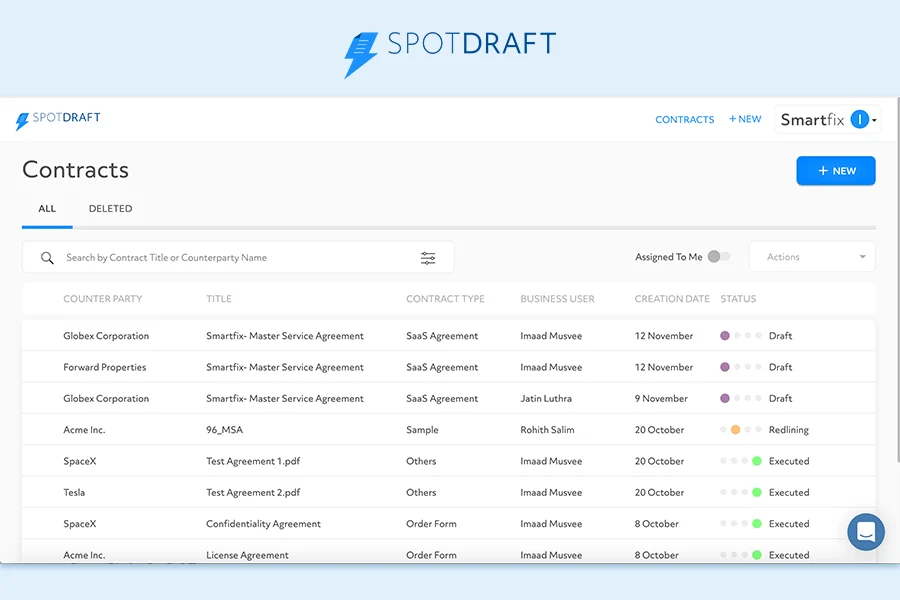
SpotDraft focuses on making life easier for in-house legal teams, especially where contracts touch many parts of the business.
Key benefits:
- Helps with reviews and redlines: SpotDraft can read incoming contracts, highlight risky parts, and suggest safer language.
- Keeps everyone on the same page: Sales, legal, and other teams all work in the same system, so there’s less miscommunication.
- Shows how contracts are performing: The system can help you see which contracts are active, how they’re used, and where there might be issues.
Best for:
Growing companies that want one main place for legal to manage all contract work.
7. CloudEagle
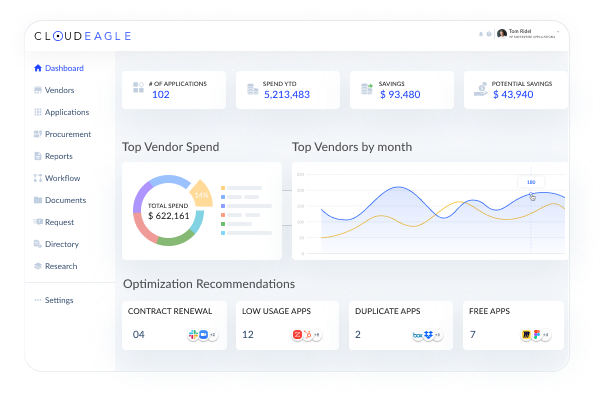
CloudEagle is aimed at companies that want to get control of vendor and software (SaaS) contracts.
Key benefits:
- See what you’re really spending: It pulls together vendor contracts and helps you see costs, terms, and renewal dates in one view.
- Avoid paying for tools you don’t use: You get alerts when software contracts are about to renew, giving you time to cancel or renegotiate.
- Support better vendor decisions: When you can see all your vendor agreements clearly, it’s easier to cut waste and improve deals.
Best for:
Finance, IT, and procurement teams focused on controlling software and vendor costs.
8. Casus
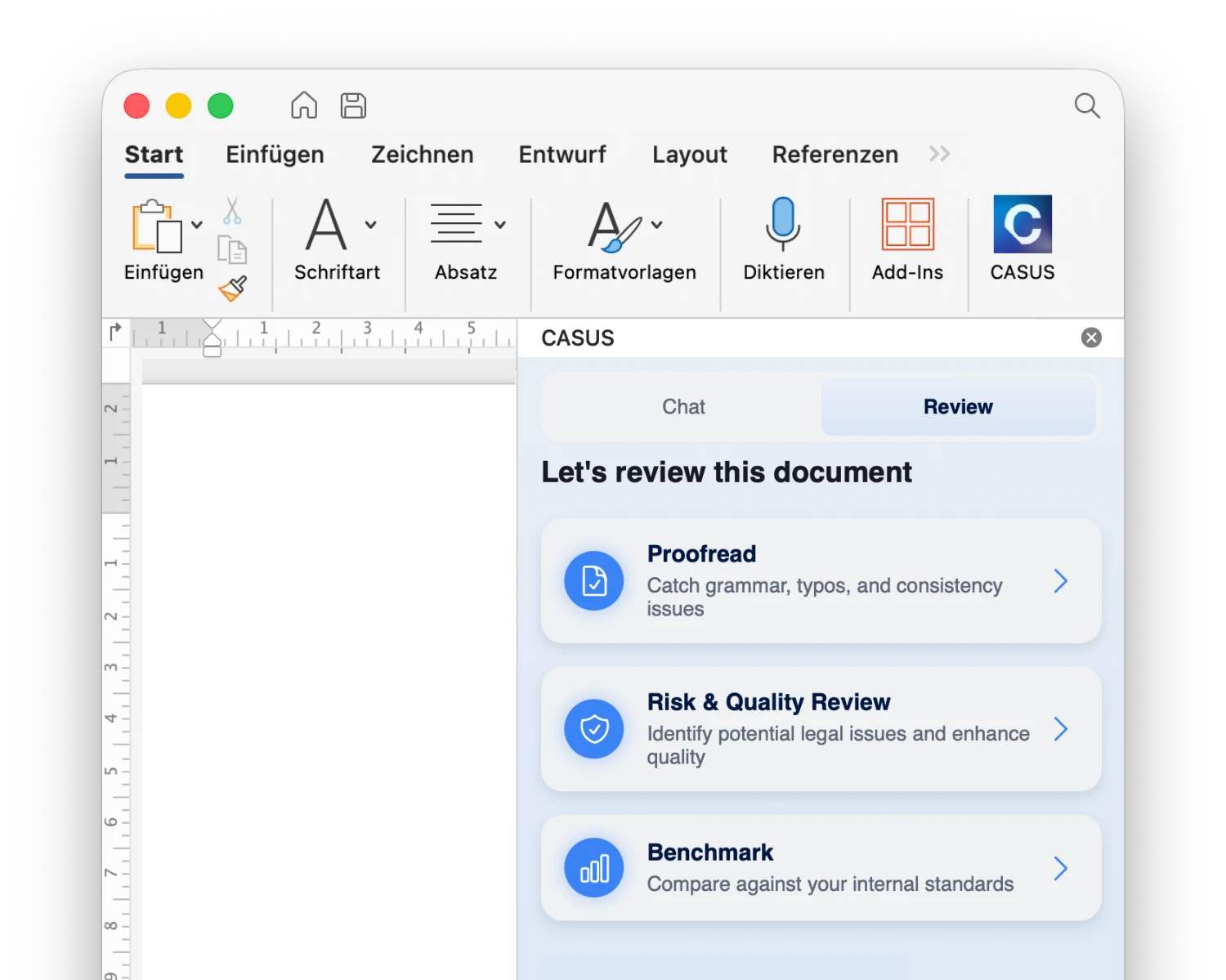
A tool that focuses only on reviewing contracts instead of managing the entire lifecycle.
Key benefits:
- Speed up legal review: These tools scan contracts and highlight potential problems or unusual clauses.
- Help compare drafts quickly: They can show differences between versions, making it easier to spot what changed.
- Best for:
Legal teams that already have a place to store contracts but want AI to make reviewing faster and less painful.
9. Sirion
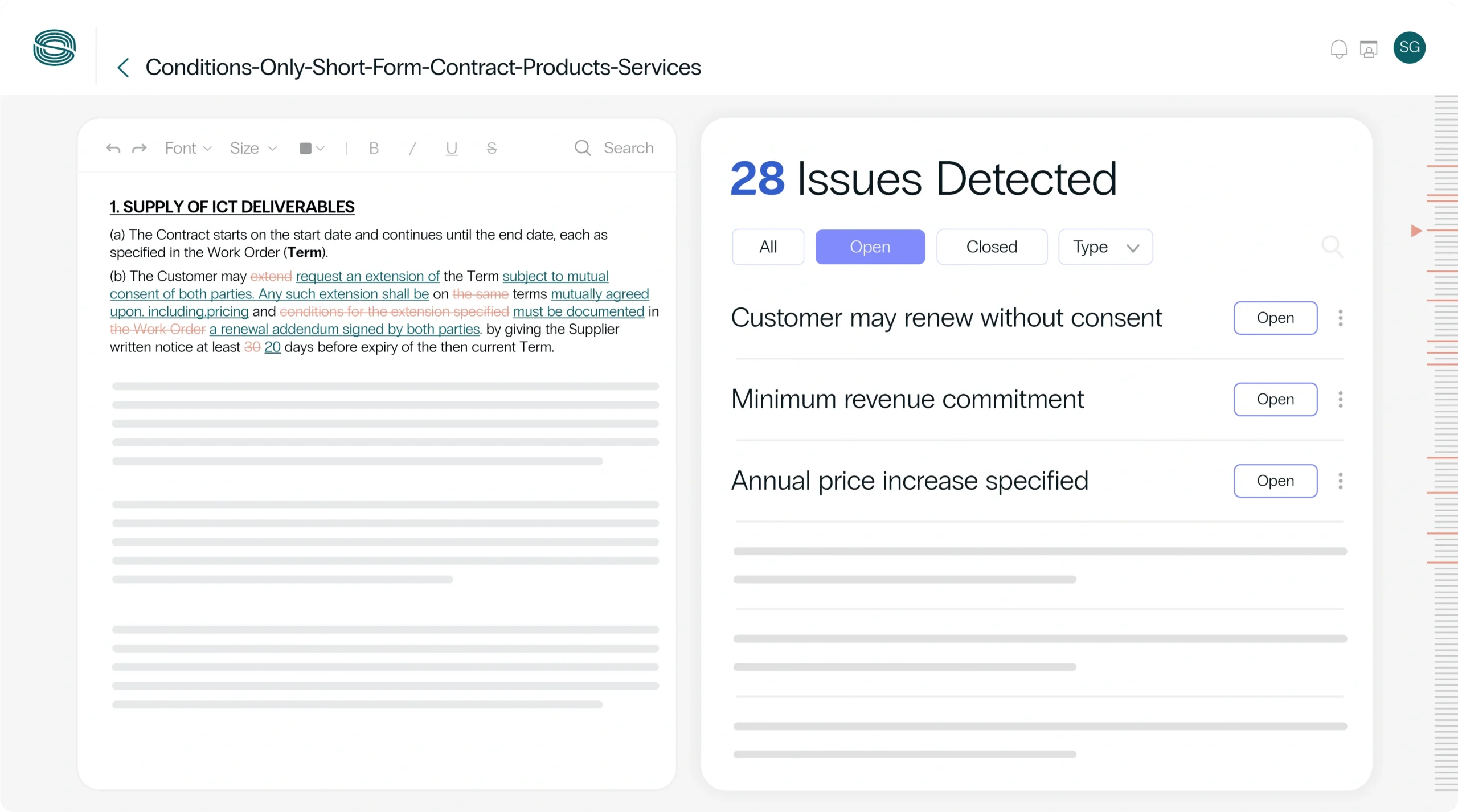
Sirion is built for large companies with many long-term, high-value contracts (for example, with major suppliers or service providers).
Key benefits:
- Connects contracts to real performance: It helps you track whether suppliers are actually delivering what the contract promised.
- Makes complex agreements easier to manage: When contracts are long and detailed, Sirion helps you keep track of obligations, targets, and penalties.
Best for:
Enterprises managing many large, multi-year contracts and needing strong post-signing oversight.
How to Choose the Right AI Contract Tool for You
Here’s how to think about your choice in practical terms.
1. Start with your biggest pain
Ask yourself a few questions:
- What hurts most today?
- Is it slow hiring or messy HR contracts?
- Are sales deals slowing down at the contract stage?
- Are you losing money on vendor renewals you forgot about?
Choose a tool that directly fixes your biggest problem first. For HR contracts and people data, Factorial will usually be the most natural fit. For complex legal or sales workflows, another CLM might be better.
2. Think about who will use the software every day
Who will spend the most time in the system? HR and managers? Legal? Sales or procurement?
Pick something that fits well with their work. A legal-heavy platform can be overwhelming for HR. An HR tool might be too basic for a large legal department. The closer the tool matches your users, the faster adoption will be.
3. Make sure it connects to your other tools
You don’t want to waste time and copy and paste data between systems. Check whether the tool integrates with your HR system, your CRM, your finance or billing tools, and your e-signature platform.
For HR contracts, Factorial’s big advantage is that contracts live in the same place as employee data, payroll, and time off, so everything stays in sync.
4. Check how easy it is to use
Ask for a demo and look for clear, simple screens and ask to see how many steps it takes for common actions. Check how many clicks it takes to do basic tasks you do every day. If it feels confusing in a demo, it will be even worse once it’s rolled out to the whole company.
5. Look at long-term value, not just price
Price matters, but consider the bigger picture: how much time will this save each week? How many mistakes or missed renewals could it prevent? How much faster will it close deals or allow new hires to start?
If a tool saves even a few hours a week across your team, or avoids one expensive mistake, it often pays for itself.
Manage HR contracts smarter with Factorial
If you want a simpler, more reliable way to handle HR contracts from the first offer letter to the latest promotion, Factorial is built for that.
It gives you:
- Automated workflows for creating and updating contracts
- Contracts that always match the HR and payroll data behind them
- A full history of every change for audits so you have peace of mind
- AI help across the platform to reduce repetitive work
Instead of treating contracts as separate documents floating around in drives and inboxes, Factorial makes them part of your day-to-day HR reality. Request a demo to see the platform in action ask all the questions you need to in order to make an informed decision.

Disclaimer: The information presented on this page is based on publicly available sources. The comparisons between Factorial and other providers are intended solely for the illustration of the respective software features, pricing and functionalities. All information regarding features, prices, and integrations may be subject to change without prior notice. Factorial assumes no liability for the accuracy, completeness, or timeliness of the information presented. We recommend contacting the respective providers directly to obtain the most accurate and up-to-date information. All legal regulations regarding Spanish fair advertising and competition law are fully observed by us; if you have any concerns, please reach out to us. The comparisons presented do not constitute a final evaluation or recommendation for any provider, but serve solely as an informational source.