A company can only thrive when it has high-performing employees, making it vital to have the best performance management software to track your team’s strengths and weaknesses. For managers and HR professionals, keeping track of performance reviews, KPIs, and professional development for each team member is a significant challenge. The right software streamlines these processes, automating key steps to help you effectively monitor and guide your team’s progress and align their contributions with core business objectives.
Key Facts
- Performance management software provides a digital framework for setting goals, tracking progress, facilitating feedback, and conducting reviews to support employee development.
- The Persistence Market Research team reports that the global Enterprise Performance Management Software market is projected to grow from US$7.9 billion in 2026 to US$14.7 billion by 2033.
- The website selectsoftwarereviews.com notes that a significant challenge for businesses is that 58% of companies still use spreadsheets to track and monitor employee performance, a method prone to errors and inefficiency.
- According to data from selectsoftwarereviews.com, organizations that implement continuous performance feedback are 44% better at talent retention than those that do not.
Contents
- What is Performance Management Software?
- What are the Core Functions of a Performance Management System?
- What are the Benefits of a Performance Management System?
- Top Performance Management Software for 2026
- How to Choose Performance Management Software for Your Business
- FAQs
What is Performance Management Software?
Performance management software is a tool that helps companies and managers organize, understand, and manage the performance of their team members. It can be used as a collaborative tool, allowing line managers, heads of departments, and HR professionals to access individuals’ records, set strategic goals, and is often a core part of a broader talent management system.
Good performance management software will allow you to track and evaluate performance against KPIs, giving you insight into where individuals need more training and professional development. You’ll usually find features like automated reminders for performance reviews, reporting, goal setting and gamification and rewards for good performance.
What are the Core Functions of a Performance Management System?
A performance management system tracks employee performance in a consistent, measurable way. It involves processes that focused on skills, resources, and support to maintain and improve employee performance in line with company goals. Effective performance management systems are typically built on four key stages: planning, monitoring, evaluating, and rewarding.
These systems facilitate employee evaluation tools for planning and establishing performance goals in line with organizational objectives, and regularly monitor and review your team’s progress through 360-degree feedback. A good performance management system also rewards high-performing or much-improved staff members through employee recognition programs.
What are the Benefits of a Performance Management System?
There are plenty of benefits to having a performance management system and software to support it:
- Higher retention: Having all your performance management resources organized and centralized will allow you to give regular feedback to your team members, helping them to develop their skills, progress their careers and therefore feel more valued. You should notice a reduction in employee turnover.
- Increased engagement: Your staff are more likely to be engaged with their work if they know that you’re invested in improving their performance and professional development.
- Builds trust: You’ll have better relationships with your team members if you’re having regular appraisals and check-ins with them.
- Better business performance: Your organization is more likely to meet its objectives, as your teams will know what they need to do to be successful in their roles and should all be working towards the same overall goals.
Top Performance Management Software for 2026
Now that you understand what performance management software does and the benefits of having one, let’s take a look at the top performance management systems for 2026. This guide reviews a variety of options on the market that will help you choose the right one for your business.
1. Factorial ⭐⭐⭐⭐⭐
Flexible performance management software with automation, templates and tracking to get the most out of your team.
Overview
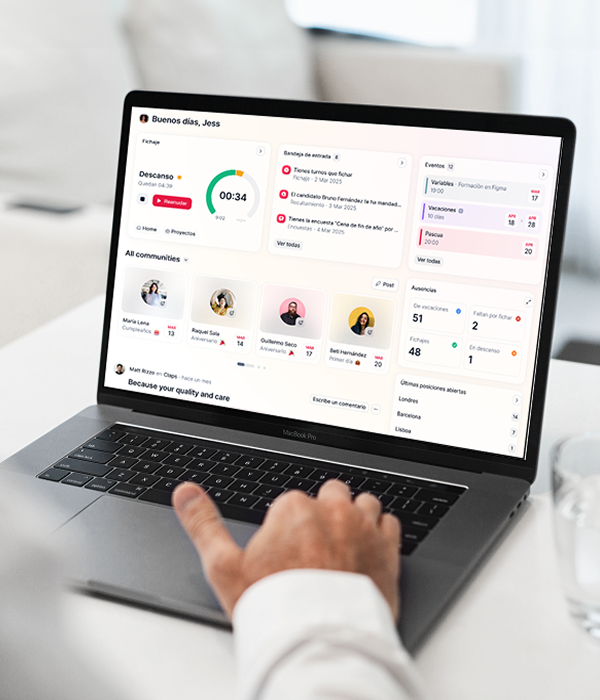
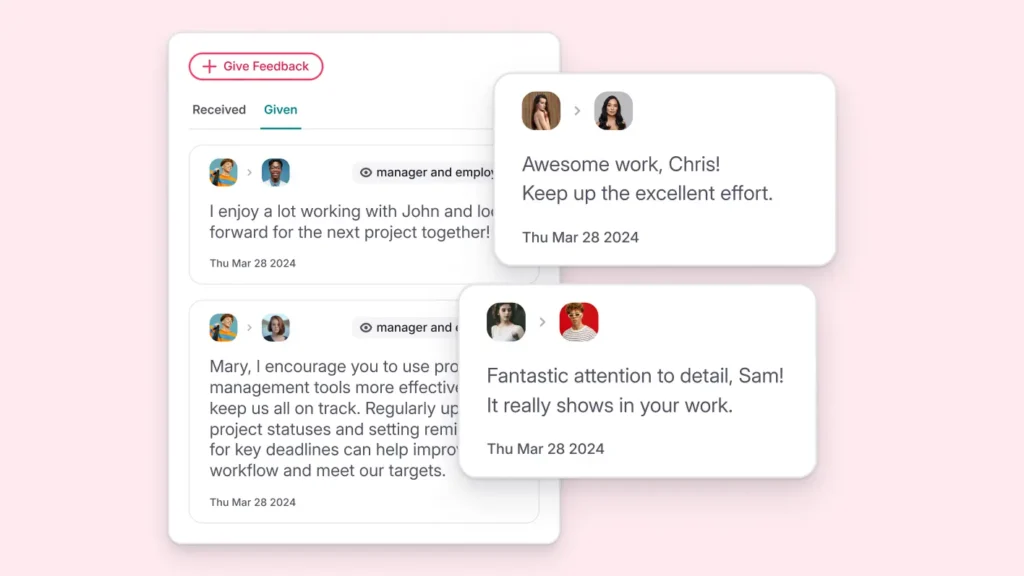
Factorial’s performance management software offers a complete solution for small and medium businesses for efficiently tracking and managing employee performance. You can take control of your performance reviews, using Factorial’s suggested questions to save time or writing your own in various formats to create a customized plan for your business.
With Factorial, you’ll gain insight into every level of your workforce by assigning the best reviewers for each individual, and you can even automate the process so performance reviews are sent out monthly, yearly, or on your own timescale. Having a centralized place to store your evaluations and responses alongside all your other HR data ensures you can oversee the review process effectively while also protecting your team members’ confidentiality. Factorial is an all-in-one business management software that saves time and resources.
Pros
✅Intuitive and easy-to-use interface
✅Use suggested performance review questions or write your own
✅Automatically include new hires in the performance review cycle
✅Integrated with analytics, so you can run custom reports such as group performance data by team
✅Facilitates the entire performance cycle, from identifying competencies to reviews to reports
Cons
❌No app for PC, so you can only use the web-based version and mobile app
❌Best suited to small to medium-sized businesses, with accessibility for larger enterprises coming soon
User reviews
Customers love that performance management is just one part of the Factorial app, and that you can centralize all your HR processes such as onboarding, time tracking, and document management. Its holistic approach to HR means that rather than performance management becoming just another one of your jobs to do, it becomes an easy, automated part of your processes to enhance business performance rather than bog you down.
Performance Management Features
1. Flexible performance review options
To keep performance reviews fair, it’s best to use mostly the same questions for each employee. But every business is different, so you still need the option to write your own performance review questions.
With Factorial, you can use our suggested questions and write your own, then save them so they’re ready for the next round of appraisals. Plus, you can choose whether the answers are optional or mandatory and whether they will be submitted anonymously.
2. Automation
Take the effort out of performance management with automated email notifications when it’s time for appraisals to take place. There’s no need to upload data to Factorial as all feedback is submitted directly through Factorial, keeping everything centralized and organized. Set automated cycles for appraisals on a monthly, yearly or customized basis—whatever suits your team.
3. Centralize your data
Keep your performance appraisals alongside the rest of your HR data so you can check in on the review process whenever you need to. You’ll see the status of each evaluation with a progress tracker so you know whether your reviews are running on time.
Your line managers and other reviewers can edit questions and review comments as they come in straight from the platform, so there’s a record of everything all in one place.
4. Workforce insights and integration
Easily get 360 feedback for individuals by creating dynamic groups of reviewers. You can assign specific team members or even the entire company to give feedback on particular individuals. And with the option to add new hires into the performance review process and new supervisors whenever necessary, you’ll never lose track of your team’s progress.
5. Custom reporting
Use Factorial’s custom reports to track employee development and identify where team members need to improve. You can group data by office or team to pinpoint strengths and weaknesses and help you make informed decisions with quantitative and qualitative data.
6. Store meeting notes within the app
Make notes during performance reviews and store them in Factorial so you can view them before the next meeting. Set agendas to help keep your appraisals on track and to ensure you cover everything you want to with your team members.
7. Track employee development and skills
Use Factorial to detect training needs and create an action plan of training that needs to take place. View employee progress as they complete training sessions and courses and track how effective they are so you can make adjustments if you need to.
Pricing
Prices vary depending on choice of bundle.
Request a demo with a Factorial expert to find out more.
2. Personio ⭐⭐⭐⭐
A good option for small businesses, but users note that when using Personio’s performance management software, they often encounter technical issues and it can be slow to load.
Overview
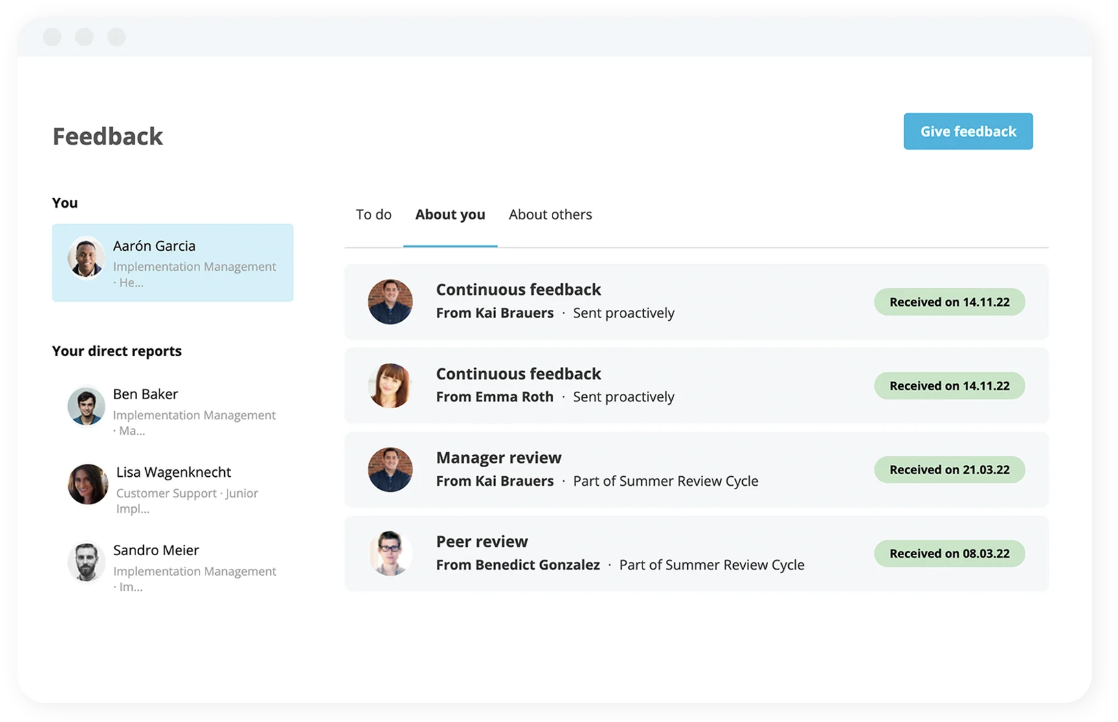
Personio’s key selling point is that it automates processes to help HR teams free up time for more strategic work. It prevents missed or late performance reviews as it lets employees know when they need to fill in their appraisal forms and reminds managers when it’s time to conduct the reviews.
Personio lets you create standardized staff appraisal forms to ensure that you ask all employees the same questions, allowing for fair reviews. With standardized rating scales, you can visualize these ratings across teams and see where management as well as individuals need to make improvements.
Pros
✅Set up performance cycles for your entire company or for individual teams and automatically remind employees to complete their reviews
✅Standardized appraisal forms and rating scales to allow for fair reviews
✅Link targets to bonus payments and automatically add them to payroll when met
Cons
❌Tools for performance management are new and are still in development
❌The platform is sometimes slow to load
❌No option to allow anonymous feedback
❌While standardized forms allow for fair reviews, the lack of customization means some businesses find it difficult to tailor appraisals to their business goals
User review
Personio users love that they can keep all their HR data in one place and that all the features integrate well with each other. It’s also intuitive to use and managers say that they didn’t have to provide much training to their teams on how to use it. However, many reviews state that the platform is sometimes slow to load and that it can be difficult to drill down into detail on reports. Lots of users say that the system and tools for performance management still need to be improved.
Pricing
Personio’s pricing starts at approximately $5 per employee per month for its base HR package, with performance management features available as add-ons. For a custom quote, you must contact Personio directly.
3. Paycor ⭐⭐⭐⭐
A solid option for smaller businesses, though it lacks advanced customization features and carries a significant cost that may not always be justifiable for a small business.
Overview
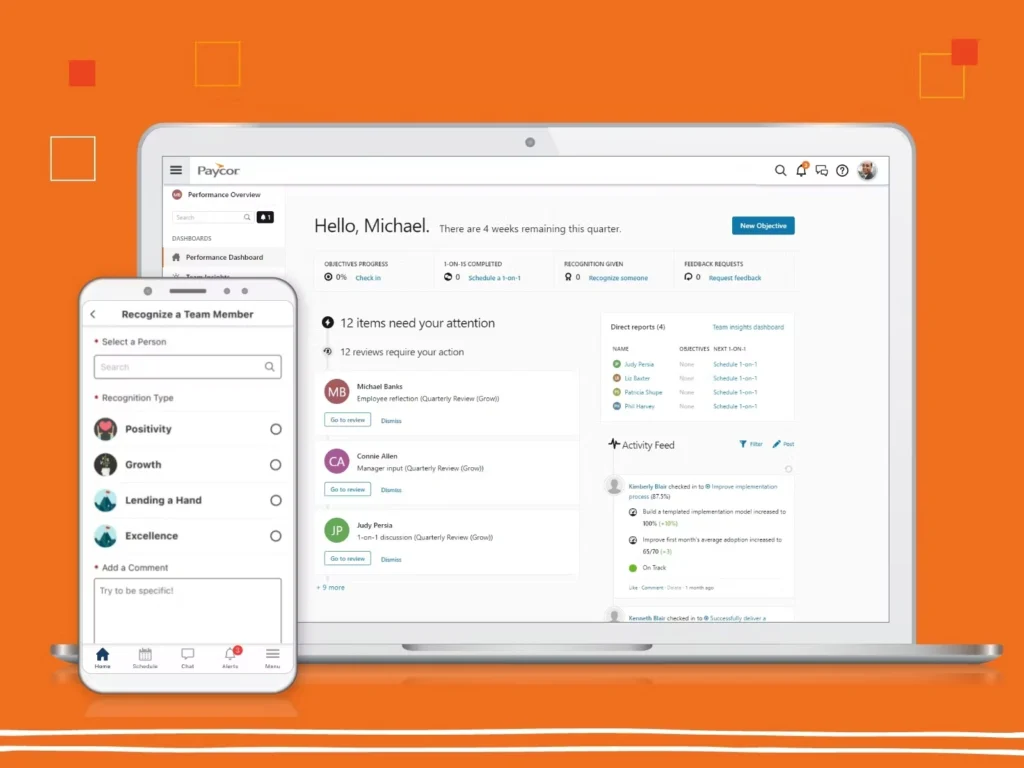
Paycor is aimed at small businesses, automating various HR tasks and offering easy-to-launch performance reviews. There’s one price for the entire software, meaning you might pay for features that you don’t use.
Paycor has all the features you’d expect it to have, including 360 feedback, guided processes for managers, insight into progress. However, if your business expands rapidly, your expenses will increase significantly, which may not fit into your budget.
Pros
✅Simple and easy-to-use interface
✅Easy setup for reviews and automated reminders
✅Get an overview of employee progress on the dashboard
✅Allows for 360 feedback to get a holistic view of how an individual is progressing
Cons
❌Customer service has room for improvement
❌Reporting and analytics could be more in-depth with more customization
❌Implementation process was rushed and left companies wanting a more comprehensive procedure
User reviews
Overall, users are happy with Paycor. It offers most features that small businesses need, and HR managers and business leaders find it easy to set up reviews with automated reminders. The interface is simple and intuitive, and most reviewers state that they have no trouble navigating the menus.
However, it’s clear that Paycor is focusing on small businesses, so once companies begin to grow and need better analytics, reporting, and bulk-upload functions, they may find that they outgrow this performance management software. Transitioning to another platform when you’ve already got lots of data can be time-consuming and leave you open to breaches of confidentiality if not done correctly, so it’s worth bearing in mind.
Pricing
Must contact company for a quote.
4. Zoho People ⭐⭐⭐⭐
A comprehensive performance management system for small to medium-sized businesses, but struggles with integration and automation.
Overview
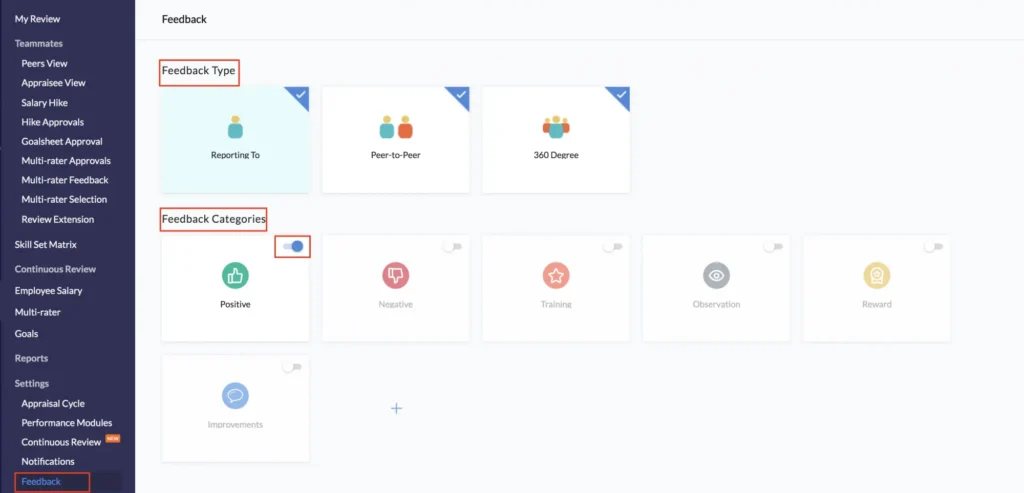
Zoho People is an HR solution that is best suited to SMBs. With its performance management feature, you can gather 360-degree feedback, set goals, and conduct evaluations. Its interface is simple and intuitive, allowing you and your team to get started quickly. As a modern employee evaluation tool, Zoho People further supports continuous performance management and development-focused processes.
A pain point for companies is its slow performance as well as reports about having issues logging in. Users note that they can’t customize reports and workflows enough, and it lacks advanced customization.
Pros
✅Intuitive and easy to use
✅Ability to add specific training courses for individuals
✅Score employee performance and compare with other team members
Cons
❌No email notifications for scheduled performance reviews
❌Users report intermittent issues with integrations
❌No bulk-upload feature
User reviews
Zoho People users love how simple it is to use and how you can keep all your HR operations in one place. Many reviews mention being able to add training courses for each team member, and that the dashboard is easy to read and understand. However, reviewers also commonly complain that the performance management software isn’t customizable, making it difficult to add business-specific appraisal questions. Ultimately, once businesses outgrow Zoho People, they may have to go through the hassle of transferring to another performance management system.
Pricing
Zoho People offers several pricing tiers, with paid plans starting at $14 per user per month (billed annually) for the Essential HR plan.
5. CIPHR ⭐⭐⭐⭐
Great for succession planning, but can be slow to load and difficult to use.
Overview
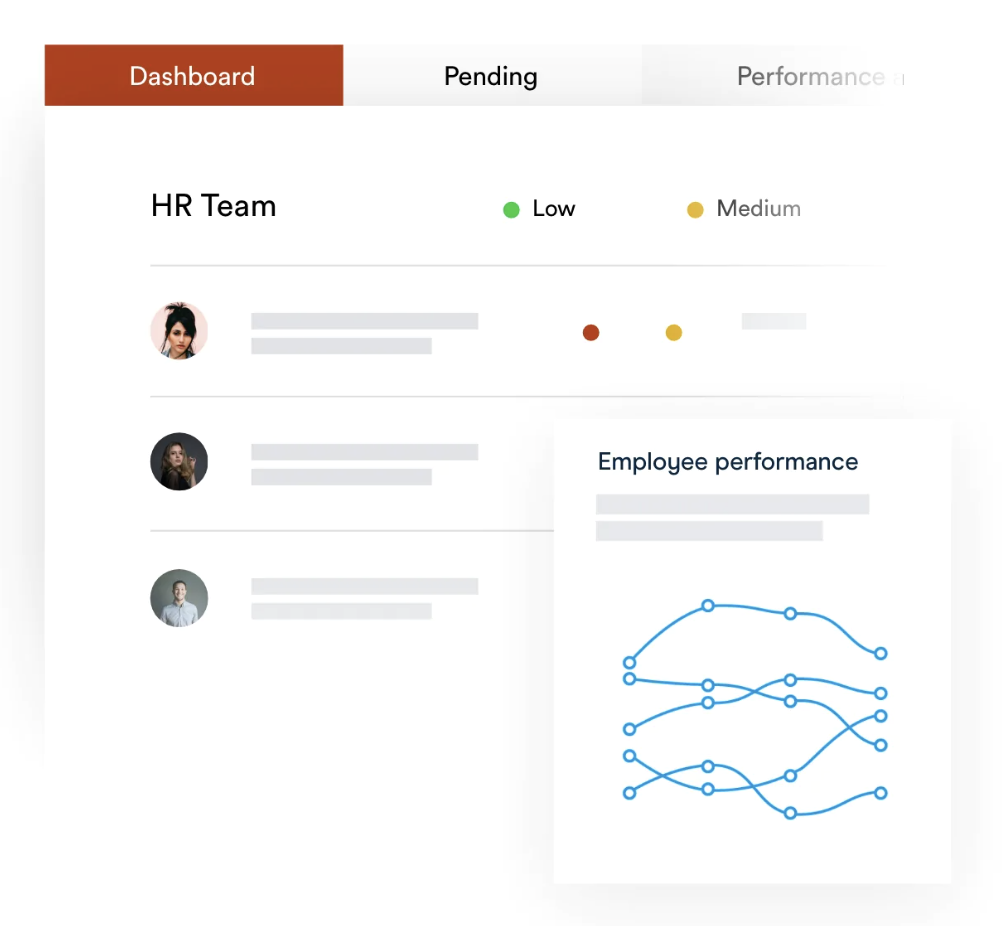
CIPHR prides itself on offering detailed HR metrics to help you with succession planning and talent development. It allows you to add nine-box grid criteria and then enables you to build talent pools for your business-critical roles. It can auto-populate talent pools with a role’s direct reports if those people satisfy your minimum nine-box grid criteria, reducing the time it takes to assess your team’s skills.
Pros
✅ Good product support
✅ Customization available
✅ Easy to access on mobile as well as PC
Cons
❌ Can be slow to load
❌ Not always easy to use, with some sections of the app difficult to navigate
❌ Learning how to create your own reports is tricky
❌ It’s expensive
User reviews
Users speak highly of CIPHR’s customer support and onboarding, and that the software is customizable so you can make it relevant to your business. However, users also mention that reporting can be tricky to learn if you’ve not got strong Excel skills. Customers also say that the platform is expensive as you have to pay for each part of the performance management software as an add-on.
Pricing
Only available on request, but the performance management system is offered as an add-on, meaning you’ll pay extra to access it.
6. Lattice ⭐⭐⭐⭐
A cohesive performance management software, but delays in deployment frustrate customers.
Overview
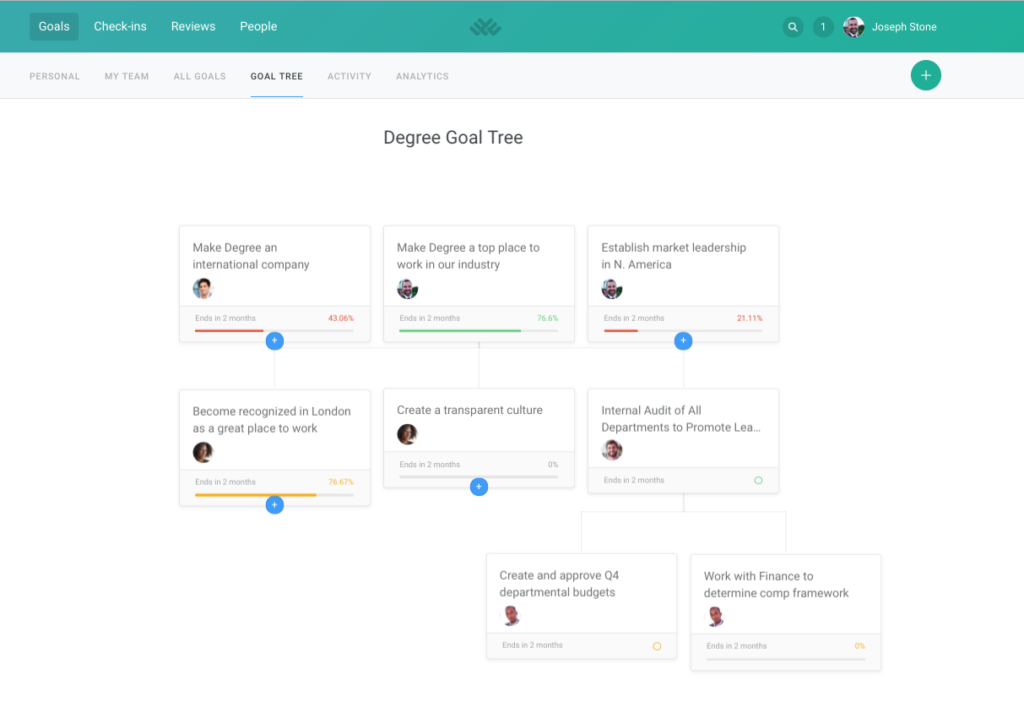
Lattice is an all-in-one performance management software that brings together workflows for performance management, employee engagement surveys, compensation management, and career development. You can update OKRs and goals as and when you need to and link individual goals to team goals, so everyone is working towards the same aim. You can also store 1:1 performance evaluation notes within the app that you can refer back to whenever you need them. As an OKR software, Lattice allows you to align organizational and individual objectives easily.
Pros
✅ Very easy to use
✅ Range of survey functions, including for on/offboarding and engagement
✅ Easy to construct your own performance review cycles
Cons
❌ Surveys aren’t 100% anonymous
❌ Slow to deploy new features and misses deadlines
❌ Some users say reports are unorganized
❌ Hard to add two managers for one employee
User reviews
Customers say that Lattice is very easy to use and that the human focus of the software gives it an edge. Users also like how customizable the platform is, allowing you to add your own workflows, cycles, and survey questions. However, many customers complain that they have missed deadlines on new feature deployments.
Pricing
Lattice’s Talent Management module, which includes performance features, starts at $11 per user per month. Additional modules like Engagement or Grow can be added for $4 per user per month each. There is a minimum annual agreement of $4,000.
7. Sesame ⭐⭐⭐⭐
Customizable and flexible to an organization’s needs, but can be difficult to use and the mobile app needs work.
Overview
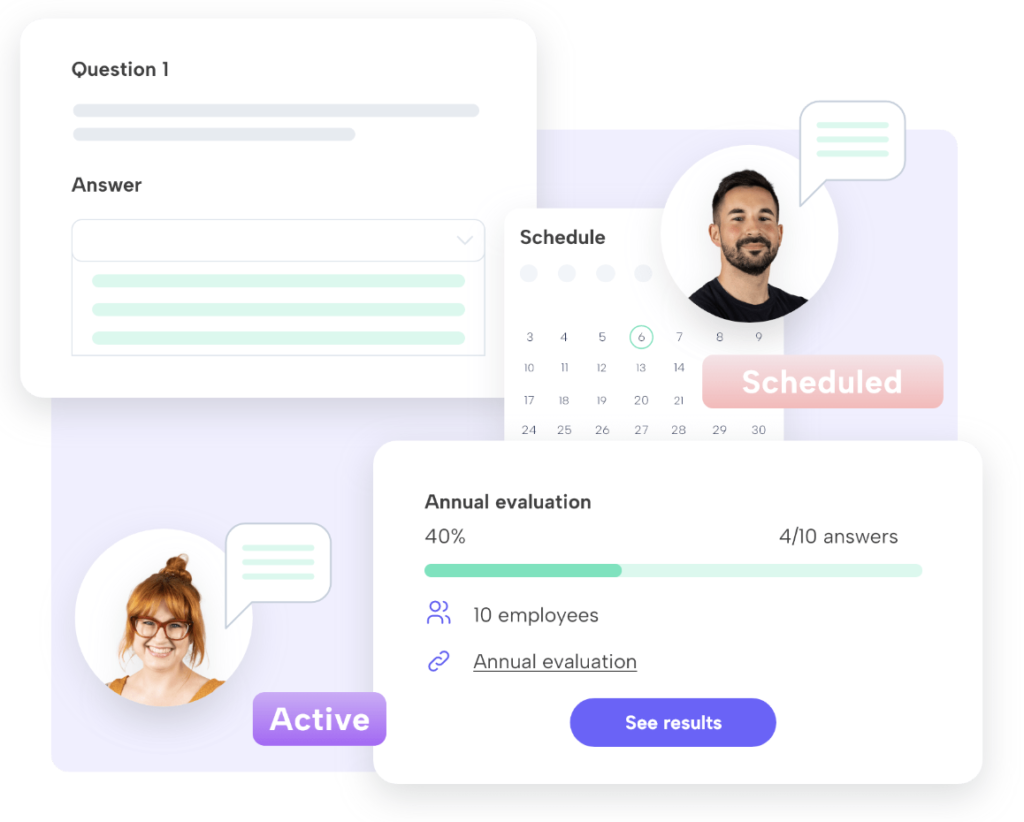
Sesame says that it allows companies to digitize their HR processes by simplifying and automating them. Its performance management system allows you to make custom questionnaires, schedule your performance evaluations, and view information in visual graphs to help you analyze performance across your team.
Pros
✅ Easy to implement
✅ Get a visual representation of key information
✅ Choose between 90, 180, 270, or 360-degree feedback
Cons
❌ Not very intuitive
❌ Mobile app often crashes
❌ Slow customer support
User reviews
Customers that use Sesame mainly praise it on its time tracking and leave request features rather than its performance management system. They say that it’s great to be able to view information in a variety of formats and that you can choose who is giving feedback during performance reviews. However, many users also mention that the mobile app crashes, the dashboard can be confusing to use, and there is a lack of administrator permissions, which means lower-level employees could make changes.
Pricing
Sesame HR offers multiple plans, with the HR Professional plan, which includes performance management, starting at $6.00 per user per month.
8. Leapsome ⭐⭐⭐⭐
A comprehensive tool with excellent templates and customizable modules, but UX is clunky.
Overview
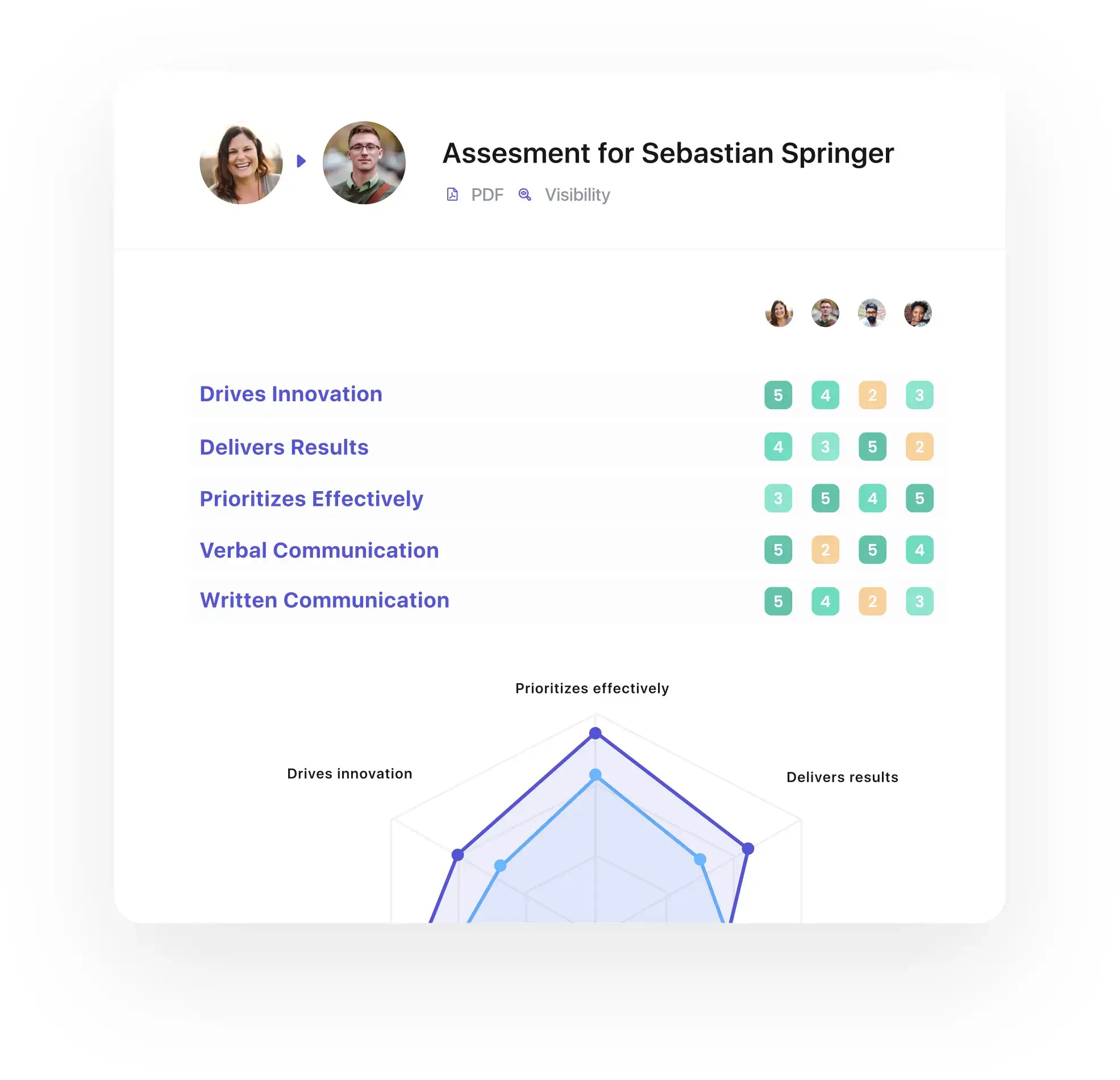
Leapsome is HR software that aims to drive performance, increase engagement, and automate processes. You can use performance review templates to suit your business and use their analytics to gain insight into your team’s performance, as well as conduct project, leadership, or 360-degree feedback reviews. Leapsome is strong as a continuous performance management system, enabling ongoing feedback and holistic evaluation cycles.
Pros
✅ Great customer support
✅Integrates with a range of other software
✅ Customizable dashboard to allow you to see the information that’s important to you
Cons
❌ Some find the UX clunky
❌ No dark mode feature
❌ Some find the graphs difficult to interpret
User reviews
Leapsome is loved for its feedback loops and customizable performance reviews, with lots of praise for its competency matrix. However, users sometimes find the UX clunky—there is no auto-login feature, and some tabs are placed in counter-intuitive places. Plus, it can be tricky to interpret data from complex graphs.
Pricing
Leapsome’s modular pricing starts at around $8 per user per month, with costs varying based on the specific modules selected. For a detailed quote, you must contact Leapsome.
How to Choose Performance Management Software for Your Business
Now you’ve seen our picks for the best performance management software, you’ll need to make a decision on which one is best for your business. With so many performance management systems to choose from, it can be hard to make that final decision.
Key Features to Look For
Modern performance management is shifting away from annual reviews toward continuous, development-focused methods. When evaluating software, prioritize platforms that support this shift. According to profit.co, key features for 2026 include goal alignment tools (OKRs), continuous feedback mechanisms, 360-degree reviews, AI-driven insights, and seamless integration with your existing HR systems.
Follow our steps to help you choose the right performance management software for your company:
- Define Your Core Needs: What are the essential features for your organization? Prioritize functionalities like goal setting (OKRs), continuous feedback, 360-degree reviews, and analytics.
- Evaluate Scalability: Consider your company’s growth trajectory. Will the software scale with you? Look for platforms that serve businesses of your size and can accommodate future expansion.
- Verify Integrations: Ensure the software integrates smoothly with your existing HR tech stack, such as your HRIS and payroll systems, to create a unified data flow.
- Assess Budget and ROI: Look beyond the sticker price. Consider the total cost of ownership and the potential return on investment from increased productivity, higher retention, and improved engagement.
Streamline Your Performance Management with Factorial
Ready to replace outdated spreadsheets and manual review cycles? Factorial’s all-in-one HR platform gives you the tools to set clear goals, automate feedback, and run insightful performance reviews. See how you can build a high-performing culture and drive meaningful growth.

FAQs
What is the best performance management software?
The best performance management software is a flexible, all-in-one solution that automates reviews and provides clear insights into team progress. Factorial is a top-rated choice for SMBs, offering customizable templates, automated workflows, and integrated reporting to help you track goals and develop your team effectively.
The information presented on this page is based on publicly available sources, but not limited to personio.com, paycor.com, zoho.com, ciphr.com, lattice.com, sesamehr.com, leapsome.com, Capterra public reviews, G2 public reviews, and Trustpilot public reviews. The comparisons between Factorial and other providers, are intended solely for the illustration of the respective software features, pricing and functionalities. All information regarding features, prices, and integrations may be subject to change without prior notice. Factorial assumes no liability for the accuracy, completeness, or timeliness of the information presented. We recommend contacting the respective providers directly to obtain the most accurate and up-to-date information. All legal regulations regarding US fair advertising and competition law are fully observed by us; if you have any concerns, please reach out to us. The comparisons presented do not constitute a final evaluation or recommendation for any provider, but serve solely as an informational source.