Starting a new job is exciting, but it can also feel a little overwhelming. There is a lot to take in, and new hires often spend their first week trying to figure out where they fit in, who to talk to, and what is actually expected of them. That is exactly why a good onboarding meeting matters so much.
When you take the time to structure that first meeting well, you set the tone for everything that follows. When new employees feel more confident, managers can also feel at ease, and the whole team gets off to a better start. A good onboarding sets everyone up for success and ensures the company stays on the right track.
In this guide, we are going to walk you through everything you need to know about running a great onboarding meeting, whether you are a manager, an HR professional, or a new hire preparing for your first day at your new job.
What Is an Onboarding Meeting?
An onboarding meeting is the first step of the onboarding process. It is the first touchpoint between a new employee and the company where they will work. Usually, this meeting is a formal sit-down between a new employee and their manager or HR representative, but it can take other forms as well. It usually happens on the first day or during the first week of employment, and it sets the foundation for the employee life cycle.
An onboarding meeting is more than just a welcome chat. Of course, as the first meeting between employee and employer, it plays an important role in welcoming a new employee. But it is also conversation designed to help the new hire understand their role, the work culture, and what they need to do to succeed. It is also a chance for managers to get to know the new person and start building trust early on in the working relationship.
These meetings can happen in person or as part of a remote onboarding, but the goals are the same either way: make the new employee feel welcome, set clear expectations, and give them all of the tools they need to hit the ground running.
Purpose of Onboarding Meetings
So why does an onboarding meeting actually matter? Can’t a new hire just read the employee handbook and figure things out?
In theory, yes. In practice, it’s a bit more complicated than that.
Reading a company policy document does not tell you who the go-to person is when your laptop breaks. It does not explain the team’s communication style or what your first 30-60-90 days look like for your specific role. And it definitely does not help make you feel like part of the team. If anything, being left to figure things out during onboarding for yourself can alienate you as a new hire.
Here is what a well-run onboarding meeting actually does:
- Reduces anxiety: New hires who know what to expect from day one are less stressed and more focused.
- Speeds up productivity: According to Glassdoor, 49 percent of employees who went through effective onboarding reported contributing to their team within the first week.
- Improves retention: We have also found that a good onboarding experience improves retention during the first year.
- Builds trust: A one-on-one conversation signals that the company values the employee, not just their output.
- Clarifies priorities: Instead of guessing what to work on first, the new hire leaves the meeting with a clear sense of direction.
Getting an onboarding meeting right is one of the most impactful things a manager or HR team can do.
Types of Onboarding Meetings
Not all onboarding meetings look the same. Depending on your company size, the role, and the setup (remote vs. in-office), the format can vary quite a bit.
Here are the most common types of meetings new hires may encounter during onboarding:
- The first-day welcome meeting: This is usually a brief meeting focused on introductions. It is designed to help the new hire feel settled before diving into details.
- The role-specific onboarding meeting: This is a longer conversation between the new hire and their direct manager. It covers job responsibilities, performance expectations, tools and troubleshooting any issues, and goals for the first 30, 60, and 90 days.
- The HR onboarding meeting: This one is typically run by HR and covers company policies, benefits enrollment, compliance, and administrative tasks like system access.
- The team onboarding meeting: This brings the new hire into a group setting to meet their colleagues, understand team dynamics, and get a feel for how work gets done day to day.
Many companies use a mix of all of these, especially during the first few months of employment. Remember that follow-up meetings are just as important as the first session. They give managers and new hires a chance to review progress towards goals and address any gaps before they become bigger problems.
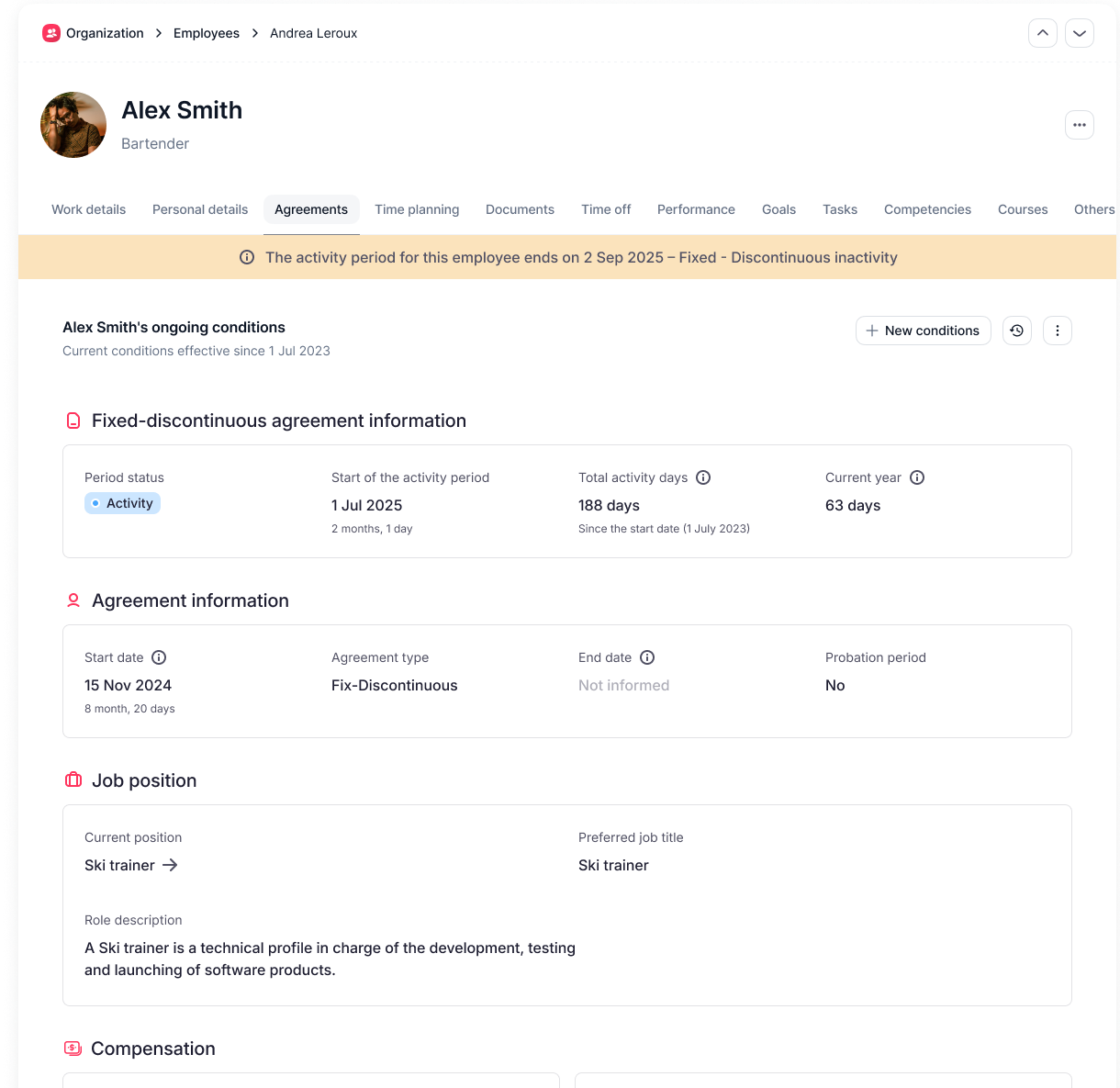
Onboarding software can help companies structure their processes in a way that takes the administrative burden off their shoulders. When you have the support of an AI platform like Factorial that unifies HR, Finance, and IT in one place, your team can focus on other things that actually move the business forward. Factorial helps HR set new employees up as well and makes it easy to integrate them into the company by moving them seamlessly from the hiring process to the onboarding process and beyond.

What to Expect From an Onboarding Meeting
If you are a new hire, knowing what to expect can help you show up prepared and confident. Here is a breakdown of the main components almost every onboarding meeting agenda will cover.
Welcome and Introductions
An onboarding meeting agenda usually starts with a warm welcome and some introductions. This is not just small talk. Breaking the ice early helps the new hire feel more at ease and gives both sides a chance to start building a working relationship.
Managers might introduce the new hire to key team members during this phase. Even if formal introductions happen later, knowing a few names and faces right away makes a big difference.
Setting Expectations
This is often the most important part of the meeting. Clear expectations prevent a lot of confusion down the road.
During this section, expect to talk about:
- The core responsibilities of the role
- What success looks like at 30, 60, and 90 days
- How performance will be measured and reviewed
- Communication norms and working hours
- Any probationary period requirements
Communicating clearly about these things early means the new hire can focus their energy in the right direction from day one. However, don’t share too much information at once, because it can be overwhelming. It is easier to share policy documents than it is to explain things in person. The best option may be to include all of the info above in an onboarding welcome document as part of the Welcome Kit.
Logistics and Admin
No one loves this part of onboarding, but it is necessary. This section covers the practical stuff:
- Company policies, code of conduct, and compliance requirements
- Benefits enrollment deadlines
- IT setup, software access, and security protocols
- Office or remote work logistics
Getting admin out of the way early means the new hire can shift their focus to actual work faster.
Resource Mapping
This is a section that many companies skip, but it is incredibly helpful. Resource mapping means giving the new hire a clear picture of how the business is organized. This includes:
- An org chart showing team structures
- A diagram of how the business works
- A list of go-to contacts for different requests (IT, HR, finance, etc.)
- Any shared documents, knowledge base, or tools they will need access to
New hires who understand what’s what and who they can turn to for help can work more independently and ask better questions sooner.
Onboarding Meeting Agendas
Now let’s get into the practical side of running an onboarding meeting. Whether you are a manager running your first session or an HR professional looking to improve the process of onboarding teams regularly, here is how to do it well.
Prepare for the Meeting
Good onboarding meetings do not happen by accident. They require preparation, and that preparation starts before the new hire’s first day.
Here is what to do in advance:
- Set up their workstation or remote access so they are not waiting around on day one.
- Send a welcome email a few days before they start. Include an agenda for the first week so they know what to expect.
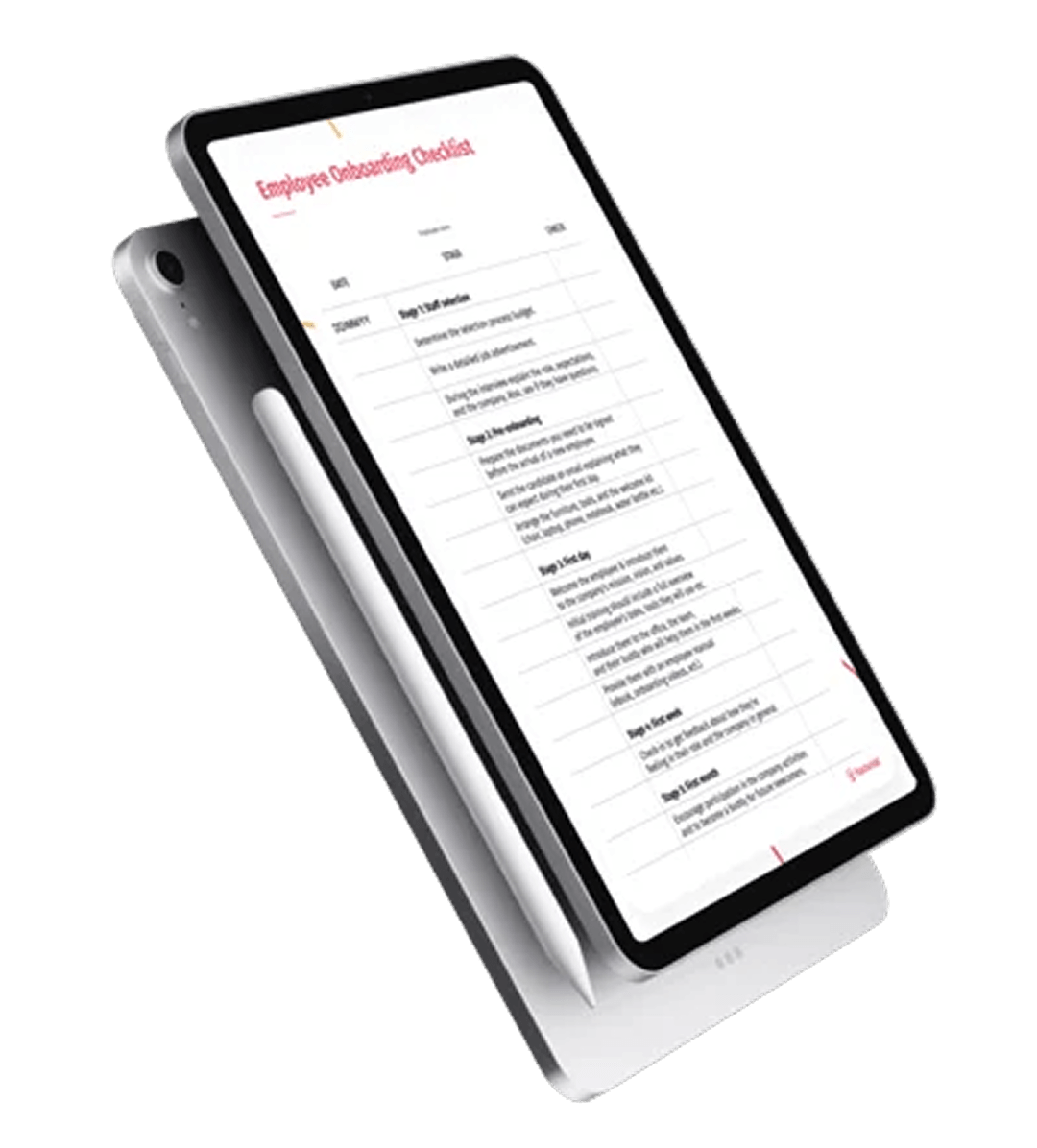
- Prepare an onboarding checklist using a template. Checklists help you stay organized and make sure nothing gets missed.
- Gather key onboarding documents like your employee handbook, org chart, benefits overview, and other resources.
- Schedule follow-up meetings in advance so the 30, 60, and 90-day check-ins are already on the calendar.
Preparation shows the new hire that they are joining a company that has its act together. It also saves everyone time.
Structure the Meeting
A well-structured onboarding meeting has a clear beginning, middle, and end. Here is a simple framework you can adapt:
Opening (10-15 minutes)
- Welcome the new hire(s) and make introductions.
- Give a quick overview of what the meeting will cover.
- Ask a few casual questions to help them feel comfortable.
Core discussion (30-45 minutes)
- Walk through the role, responsibilities, and 30-60-90-day goals.
- Cover logistics, policies, and IT setup.
- Go over the org chart and resource map.
- Share key contacts and explain who handles what.
Q&A and next steps (15-20 minutes)
- Open the floor for questions.
- Confirm the next meeting date and what the new hire(s) should focus on in the meantime.
- End on a positive note that encourages them ask for help when stuck.
Sticking to an agenda like this keeps the meeting focused and ensures you cover everything that matters.
Onboarding Questions to Ask
Asking the right questions makes a big difference. Good questions help you understand the new hire as a person, not just as a set of job skills.
Here are some questions worth including:
For managers to ask new hires:
- What does your ideal work environment look like?
- How do you prefer to receive feedback?
- What are you most excited about in this role?
- Is there anything you are nervous or unsure about?
- What do you need from me to be successful?
For new hires to ask their manager:
- What does success look like in the first 30 days?
- Who should I go to when I have a question about [specific area]?
- How does the team usually communicate day to day?
- What are the biggest challenges someone in this role typically faces?
- Is there anything helpful to know that we have not covered yet?
These questions open up real conversations. They help managers spot potential issues early and help new hires feel like their perspective matters.
What to Say During the Onboarding Meeting
If you are running the meeting, a few framing techniques go a long way.
- Start with genuine enthusiasm: “We are really glad you are here, and we want to make sure your first few weeks go as smoothly as possible.” It sounds really simple, but it sets the right tone.
- When setting expectations, be direct and specific. Avoid vague phrases like “just do your best.” Instead, try: “In your first 30 days, the main goal is to get familiar with our tools and processes. We are not expecting you to produce deliverables right away.”
- When wrapping up, always confirm next steps clearly. Tell them exactly what to focus on in their first week and who to contact if they need help. A little structure in your language goes a long way.
Onboarding Agenda Best Practices
Running a great onboarding meeting is just one piece of the puzzle. The most effective onboarding programs treat it as an ongoing process, not a one-time event. Research and experience show that it takes anywhere from three months to a full year for a new hire to reach full productivity.
Here are the best practices that make the biggest difference:
- Use checklists and SOPs: Onboarding checklists help you stay consistent and ensure every new hire gets the same experience. Templates are a great starting point for building your own process.
- Check in regularly: Do not wait for the 90-day review to find out things are not going well. Schedule short 1-on-1s during the first few weeks to answer questions, review progress, and give feedback, especially during any probationary period.
- Personalize the experience: Not every new hire has the same strengths, work style, or background. Ask them about their preferences and motivations, and adjust your approach accordingly. A developer fresh out of college needs a different onboarding experience than a senior manager coming from a competitor.
- Involve the team: Onboarding is not just a manager’s job. Get colleagues involved through buddy systems, team lunches, or informal introduction calls. The sooner a new hire builds relationships, the faster they will feel at home.
- Gather feedback: After the first month, ask the new hire survey questions about the onboarding experience on what worked well and what could have been better. This helps you improve the process for the next person.
Onboard Employees Smoothly with Factorial
Running a great onboarding meeting takes a lot of preparation and follow-through. But as your team grows, the admin side of things can pile up fast.
Onboarding software helps companies build a consistent process without burying HR in paperwork. And with an AI platform like Factorial bringing HR, Finance, and IT together in one place, your team gets time back to focus on work that actually matters.
Factorial moves new hires smoothly from the hiring stage straight into onboarding and beyond. The first few weeks of a job shape how an employee feels about a company for a long time. Make them count. Get a free demo of Factorial to see how it can support your team.
FAQs
The five stages are pre-boarding, orientation, training, integration, and ongoing development. Each stage builds on the previous one to help new hires gradually become confident, productive members of the team.
An onboarding meeting is a structured first conversation between a new hire and their manager or HR team. Its goal is to welcome the employee, set clear expectations, and give them the resources they need to succeed in their new role.
Start with a genuine welcome and a clear agenda, be specific about role expectations and next steps, and end by confirming who the new hire should contact if they need help.
Managers should ask about the new hire's work preferences, feedback style, and any concerns. New hires should ask about 30-day goals, team communication norms, and who the go-to contacts are for key functions.
Prepare by creating an agenda, gathering key documents like the org chart and employee handbook, setting up the new hire's tools and access in advance, and scheduling follow-up check-ins before the meeting even starts.